
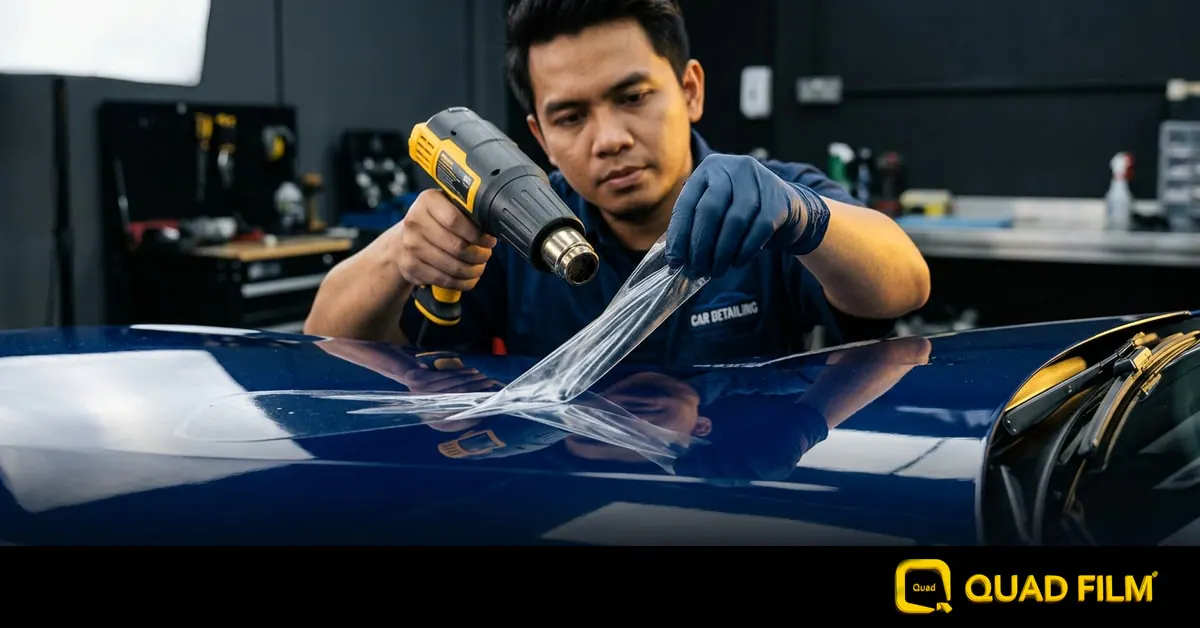
- On original, fully cured factory paint, correctly removed PPF does not damage your paint.
- The horror stories almost always involve resprayed or repainted panels where the paint had not fully cured before filming.
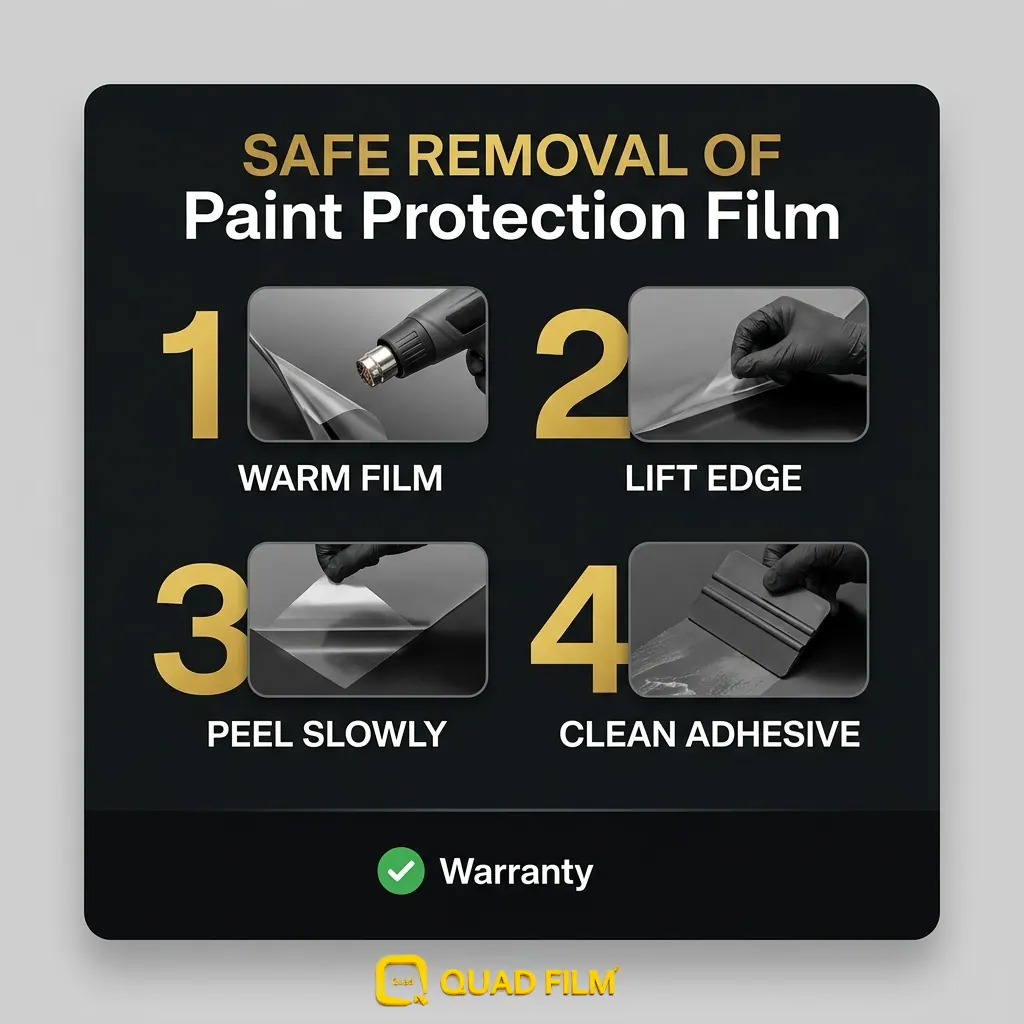
- Safe removal means warming the film, peeling it slowly, and using plastic tools with adhesive remover, never a cold rip.
- Used-car buyers should learn their paint history, since a previously resprayed panel is the real risk.
- Let any fresh respray cure on your body shop and installer's advice before applying PPF, and remove film within its lifespan.
The question of whether PPF damages paint on removal worries a lot of owners, and the honest answer is that on healthy factory paint it does not, when it is removed correctly. The genuine risk shows up on resprayed or poorly cured panels, which is where almost every horror story comes from. PPF is a consumable meant to be installed and removed safely, so the goal is knowing your paint and using a reputable installer. Here is the full picture.
Does PPF Damage Paint When Removed?
No, correctly removed PPF does not damage original, fully cured factory paint. Factory paint is baked and bonded at the production line, so the film's adhesive releases cleanly when the film is warmed and peeled slowly. What people remember as PPF ruining paint is almost always a repainted panel, where the underlying respray was never strong enough to begin with.
So the accurate way to frame it is that the paint underneath decides the outcome, not the film itself. On solid factory paint, removal is a routine, clean job. On a weakly bonded respray, the film can lift the repaint, and that is a paint problem, not a PPF flaw.
Why Factory Paint Is Usually Safe
Factory paint is safe because it is fully cured and tightly bonded to the panel. Original equipment paint is applied and oven-cured under controlled conditions, so the base, colour and clear coat form a hard, well-adhered system. PPF adhesive is designed to bond to that clear coat and then release from it with gentle heat, which is why professional removal leaves the surface intact.
This is also why PPF is widely used on brand-new cars without worry. The film protects the clear coat from chips and swirls for years, and when it is time to remove or replace it, the adhesive comes away cleanly from a surface that was always stronger than the bond holding the film on. Our complete paint protection film guide for Malaysia covers how that protection works day to day.
Why Resprayed and Repainted Cars Are the Real Risk
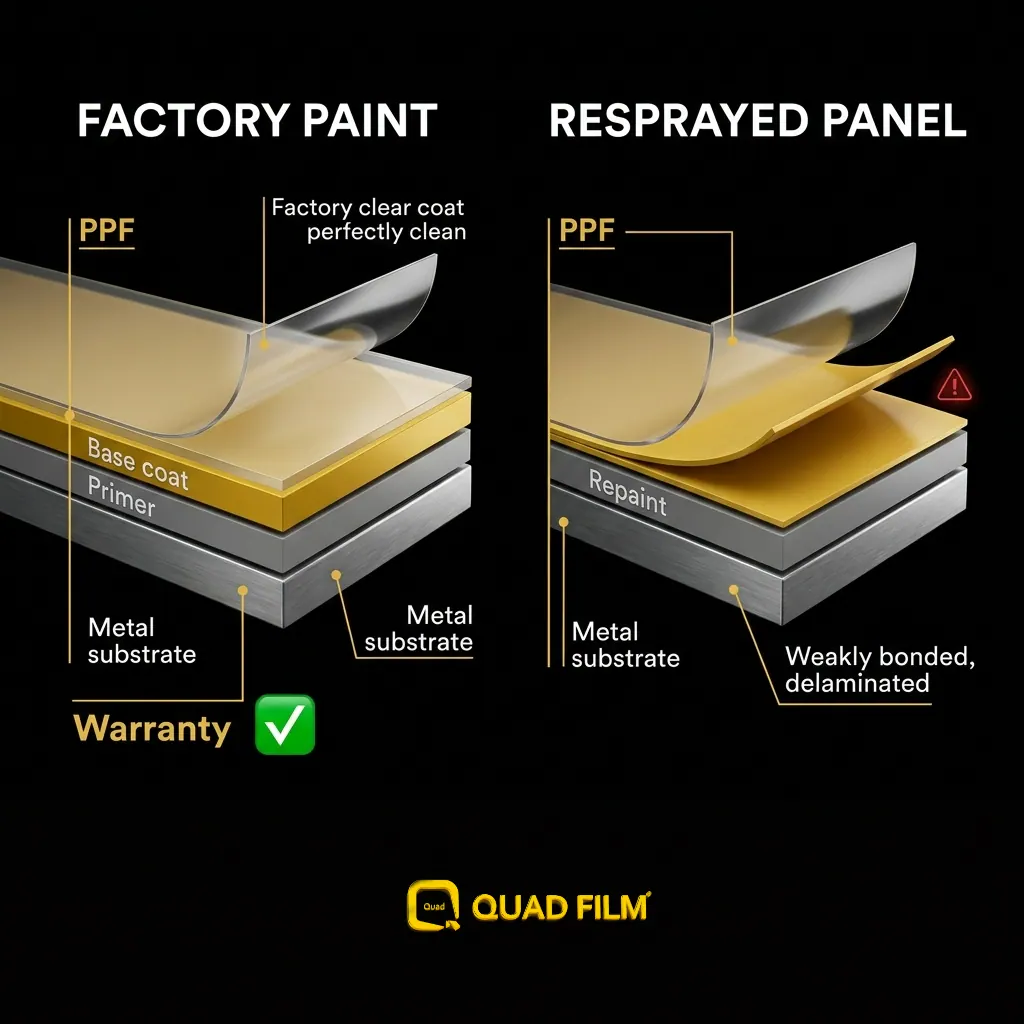
Resprayed panels are the real risk because aftermarket paint is often weaker than the film bonded on top of it. A body shop repaint may not be fully cured, the surface prep may be rushed, or the adhesion to the original layers may be poor. When PPF is applied over that, the film can end up gripping the repaint more strongly than the repaint grips the panel, so removal pulls the paint.
This is especially relevant in Malaysia, where many cars have had a bumper or door resprayed after a knock. The car looks perfect, but the repaired panel carries a hidden weakness. It is not the PPF that fails, it is the repaint that was never robust enough to keep.
How to Know If a Panel Has Been Resprayed
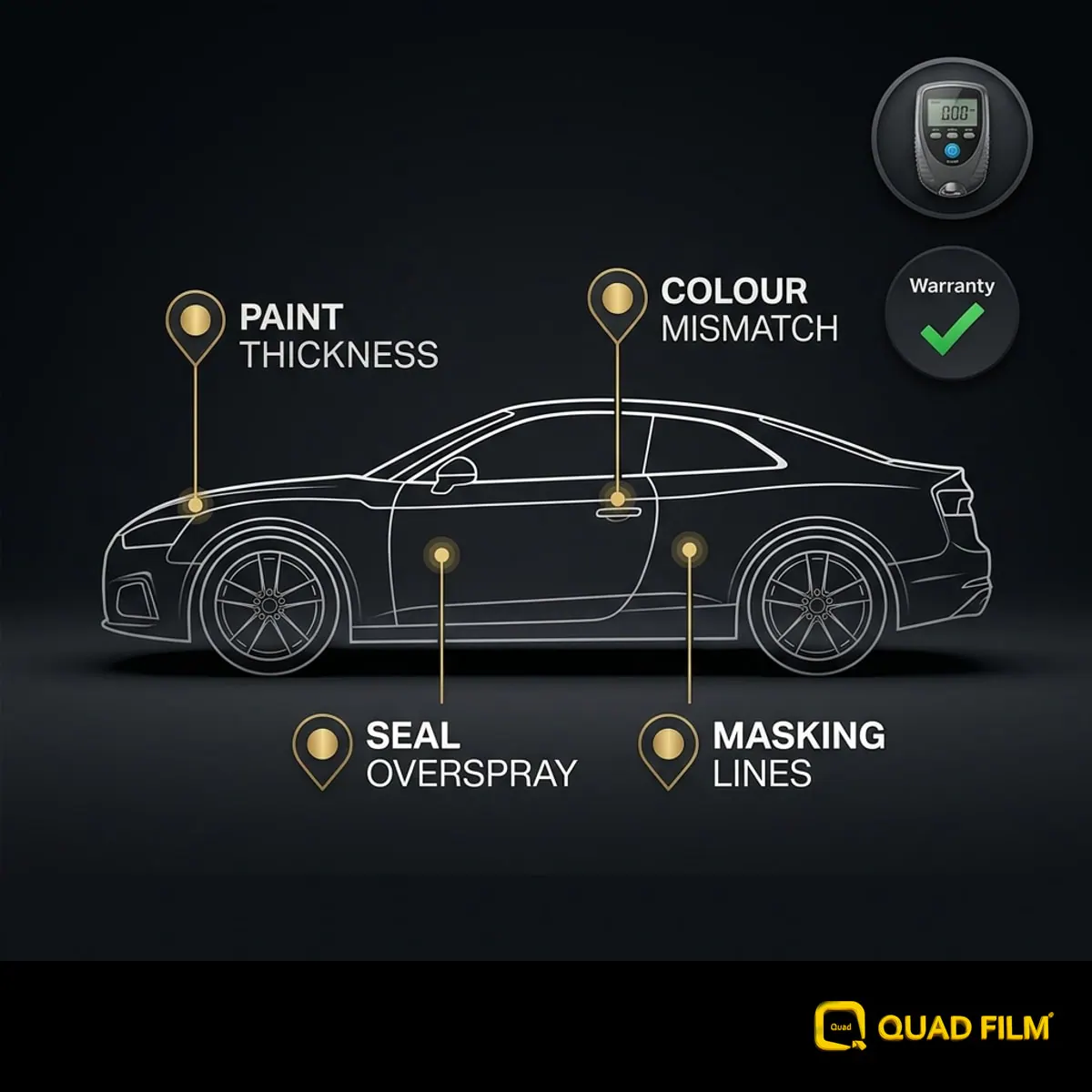
Used-car buyers can look for clues before filming. A paint depth gauge that reads much thicker on one panel, slight colour or texture mismatches, overspray on rubber seals or plastic trim, and masking lines in door jambs all point to a respray. If you are unsure, a detailer or installer can measure paint thickness across the car. Knowing this before you commit to PPF lets you treat repaired panels with extra care or hold off until they are sound.
How Long to Wait After a Respray Before PPF
You should let fresh paint fully cure and outgas before applying PPF, following your body shop and installer's guidance. New paint continues to release solvents for a period after spraying, and sealing it under film too early traps that process and weakens the bond. Rushing this step is one of the most common ways a good repaint goes wrong under film.
Rather than chase a fixed number of days, ask the shop that did the work how long their system needs, and have your installer confirm the panel is ready. The wait is commonly several weeks, but the right figure depends on the paint used and the conditions, so defer to the professionals who sprayed it.
How Safe PPF Removal Actually Works
Safe removal is a controlled, patient process. The installer warms the film with a heat gun or steam to soften the adhesive, lifts an edge, and peels slowly at a low angle so the film releases rather than tears. Any adhesive residue is cleaned off with a plastic tool and a dedicated adhesive remover, never a blade or a hard scrape.
Done this way on factory paint, the panel is left clean and undamaged, ready for fresh film or simply the bare clear coat. The opposite approach, ripping cold film quickly in the heat of the day, is what stresses the surface and risks lifting anything weak underneath.
What Raises the Risk of Paint Pulling
Several things increase the chance of paint coming away. Leaving film on far past its lifespan lets the adhesive harden and bake in the sun, making it grip too tightly. Cold DIY removal without heat tears the film and stresses the surface. Cheap film with low-grade adhesive can also bond unevenly. And underneath it all, a weak respray remains the biggest single factor.
The takeaway is to remove or replace film within its rated life and always with heat. Quad Film's tiers give you a clear lifespan to plan around: QUANTUM at 10 mil lasts about 7 years with roughly 99% self-healing, QUATTRO at 8.5 mil also around 7 years, and QUANTA at 7.5 mil around 5 years, with finishes like QUATRIX satin, QUBOND matte and QUARMOR gloss. Staying within those windows keeps removal easy.
How to Protect Yourself Before You Install
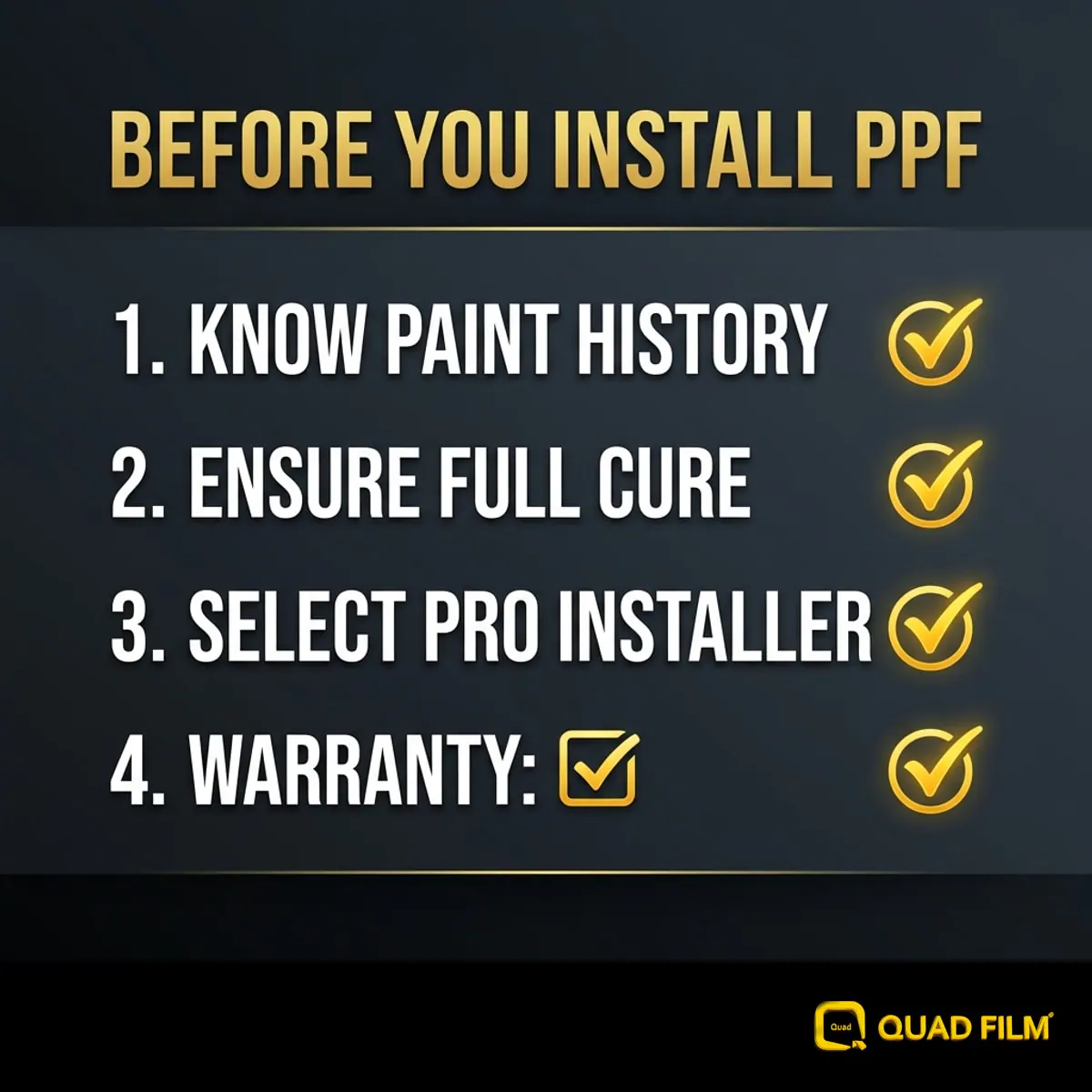
Protect yourself by sorting out three things before any film goes on. Disclose and check the car's respray history so repaired panels are handled correctly. Choose a reputable installer who measures paint, preps properly and stands behind their work. And ask directly about the warranty and the removal policy so you know what is covered.
A good installer will happily talk through all of this, because safe install and safe removal are part of the service. If you are weighing how much to cover, our guides on which car parts actually need PPF and PPF price and cost in Malaysia help you plan, and if you are choosing between protection types, see PPF versus ceramic coating.
What This Means Before You Film or Remove PPF
On sound factory paint, PPF removed properly is a clean, routine job that leaves your paint intact, which is why it is trusted on new cars everywhere. The real care is reserved for resprayed panels, so know your paint history, let any fresh respray cure on professional advice, use a reputable installer, and remove film within its lifespan with heat. Do that and PPF protects your paint for years and comes off without drama.
FAQ
Does PPF ruin your paint when you take it off?
Not on original, fully cured factory paint when it is removed correctly with heat. The adhesive releases cleanly, leaving the clear coat intact. Damage is mainly a risk on resprayed or poorly cured panels.
Will PPF pull paint off a repainted bumper?
It can if the repaint was not fully cured or was poorly prepped, because the film may bond more strongly than the repaint holds to the panel. Treat repaired panels with extra care and proper cure time.
How do I know if my car has been resprayed?
Look for higher paint thickness readings on one panel, slight colour or texture mismatches, overspray on seals and trim, and masking lines in door jambs. A detailer can confirm with a paint depth gauge.
How long should I wait after a respray before applying PPF?
Long enough for the paint to fully cure and outgas, which is commonly several weeks but depends on the paint and conditions. Follow your body shop and installer's specific recommendation rather than a fixed number.
Can I remove PPF myself at home?
It is risky without heat and the right technique. Cold ripping can tear film and stress the surface. Warming the film and peeling slowly is safest, and a professional removal avoids guesswork.
Does leaving PPF on too long increase the risk?
Yes. Past its rated lifespan the adhesive hardens and bakes in the sun, making it grip more tightly and harder to remove cleanly. Replace or remove within the film's lifespan.
Does Quad Film's warranty cover safe removal?
Warranty terms vary by film tier and installer, so ask your installer directly what the warranty and removal policy include before you commit. The film tiers do give a clear lifespan to plan removal around.
Protect your Investment today
Don't wait for stone chips to ruin your paint. Speak to our experts about custom PPF and Tinting solutions.