
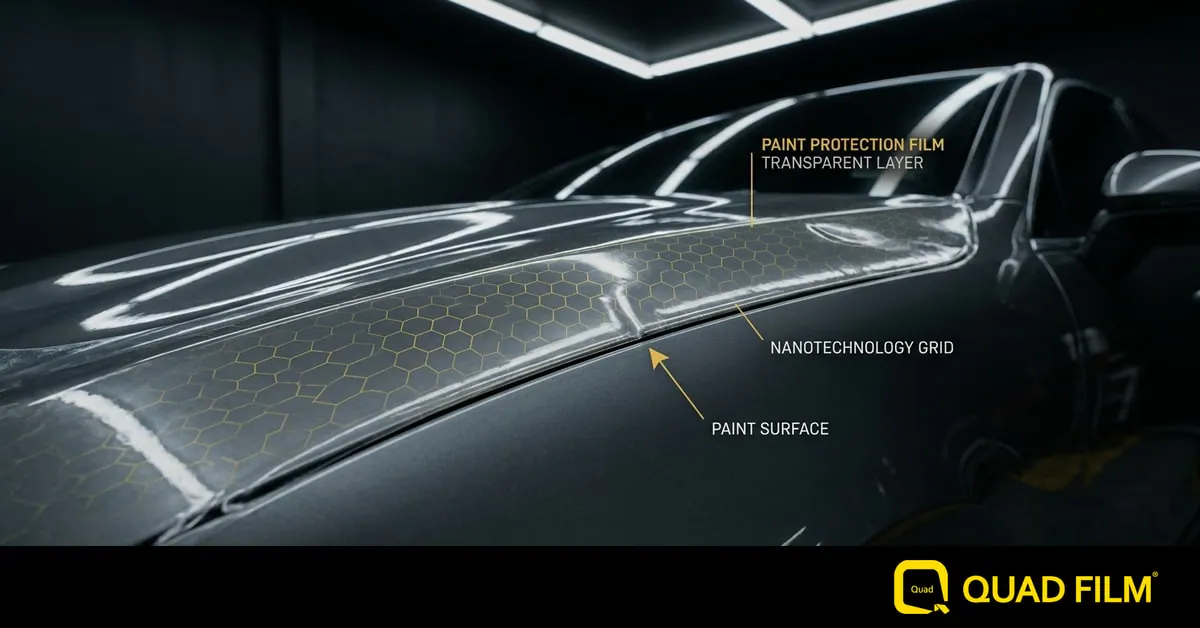
- PPF is a transparent polyurethane film that physically shields your car's paint from stone chips, scratches, UV damage and road contaminants. Quality films self-heal minor scratches on their own.
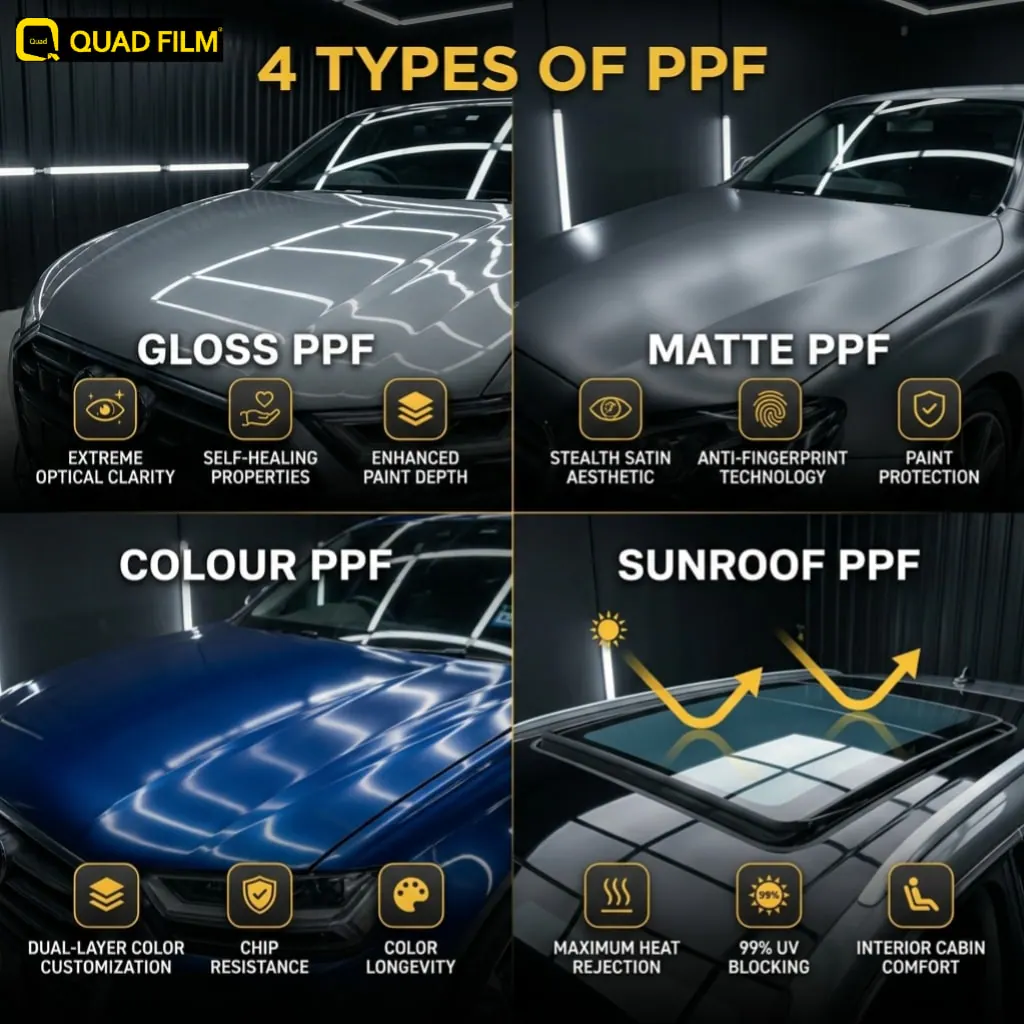
- Four main types are available in Malaysia: gloss (invisible protection), matte (satin finish), colour (change appearance without respray) and sunroof PPF (heat and UV rejection for glass roofs).
- Where you apply PPF depends on how you use your car. At minimum, cover the front bumper, bonnet and side mirrors. Full body coverage makes sense if you plan to keep the car long term or drive highways regularly.
- Prices for a full car start from around RM 9,000 for a mid-range gloss film (QUANTA Sedan) and go up to RM 20,000 for flagship-grade protection (QUANTUM MPV), depending on film thickness, vehicle size and installer.
- Always check the film's self-healing rate, warranty length, TPU material quality and installer credentials before committing. A low price with no warranty is not a bargain.
Paint protection film in Malaysia has gone from a niche upgrade to one of the most talked-about ways to keep a car looking new. Between highway gravel on PLUS expressways, UV levels that regularly hit 11 to 13 on the index, open-air parking at shopping malls and the occasional careless door ding, Malaysian conditions are tough on paintwork. This guide covers what PPF actually is, how it works, the types you can choose from, where to apply it, what it costs, how it handles our climate and how to pick the right film without overpaying.
What Is Paint Protection Film and How Does It Work?
Paint protection film is a transparent polyurethane film that sits directly on your car's painted surfaces. Think of it as a physical barrier between the outside world and your factory paint. It absorbs the impact of stone chips, minor scratches, bird droppings, tree sap and road debris so the paint underneath stays untouched.
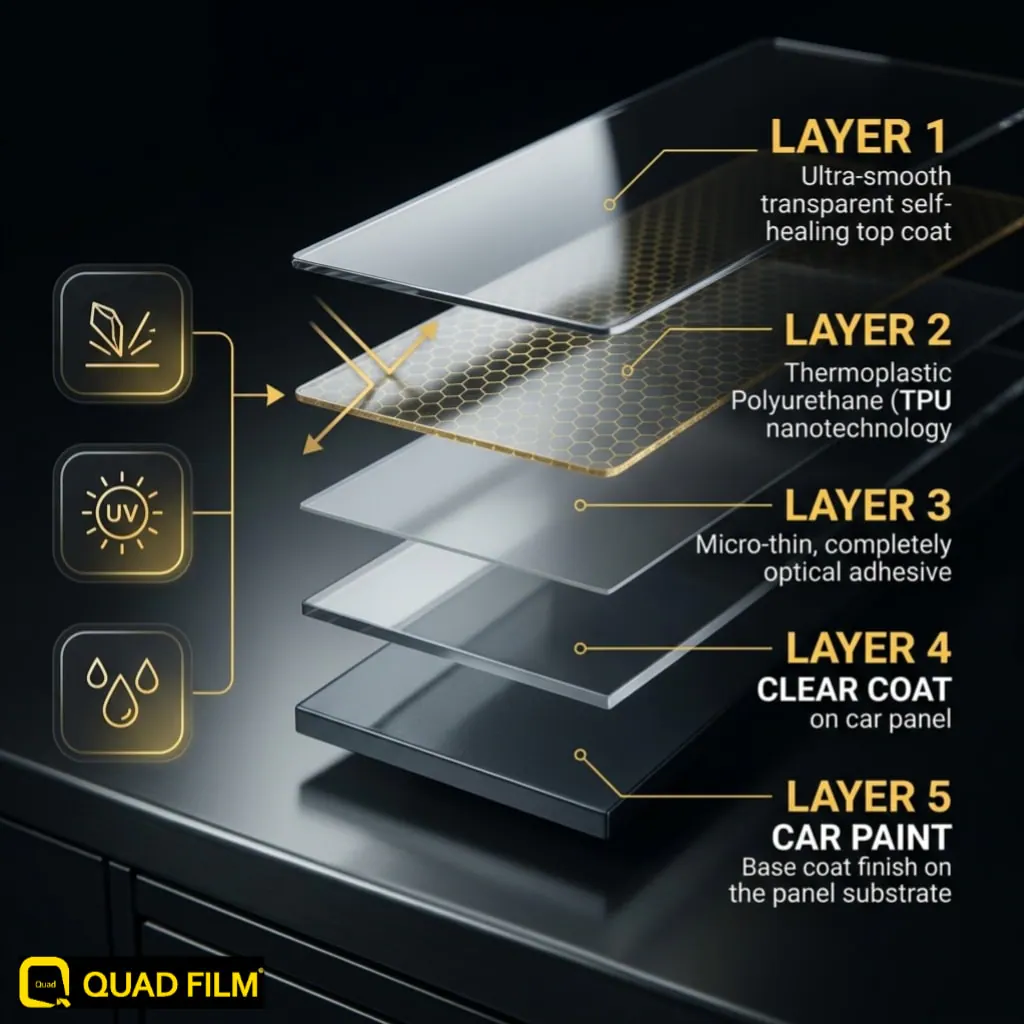
The film is made from thermoplastic polyurethane (TPU), a flexible material that stretches and conforms to curved body panels. Quality PPF uses a double-layer TPU structure that improves anti-fouling, anti-corrosion and anti-scratch performance. Quad Film's PPF range, for example, uses this double-layer construction across all its film tiers.
One feature that sets modern PPF apart is self-healing technology. When the film picks up a light scratch or swirl mark, heat causes the top layer to reform and close the mark. In Malaysia, this works in your favour. Afternoon sun on a parked car generates enough surface heat to trigger the self-healing process without any extra effort from you.
Other properties built into the film:
- UV rejection that prevents paint from fading or oxidising under prolonged sun exposure
- Stain resistance that makes it easier to clean off bird droppings, insect residue and road tar
- Hydrophobic surface on certain films that causes water to bead and roll off, carrying dirt with it
The film is optically clear on gloss variants, so it does not change the colour or depth of your original paint. Once installed by a trained professional, it is nearly invisible.
Types of PPF Available in Malaysia
Not all PPF looks or performs the same. The four main categories serve different needs and budgets.
Gloss PPF
This is the standard clear film. Once applied, it is virtually invisible. It preserves your car's original factory colour and shine while adding a layer of physical protection. Gloss PPF is the most popular choice for owners who want protection without changing the car's appearance.
Film thickness matters here. A thicker film absorbs more impact. For example, Quad Film's flagship QUANTUM is 10 MIL thick and offers greater stone chip resistance than the mid-range QUANTA at 7.5 MIL, but it also costs more. Self-healing rates vary too. Quad Film's QUANTUM achieves up to 99% scratch recovery, while its mid-range QUANTA sits at 98%.
Matte PPF
Matte PPF gives your car a satin or matte finish while still providing full paint protection. This is popular among younger car owners and anyone who likes the matte aesthetic but does not want to commit to a permanent matte respray. The film converts a glossy factory finish into a smooth, non-reflective surface.
Matte and satin films are available in similar thickness tiers as gloss options. Quad Film offers two lines, QUBOND (matte) and QUATRIX (satin / semi matte), both at 7.5 MIL with 5-year warranties. The key difference from gloss is purely visual.
Colour PPF
Colour PPF lets you change your car's appearance and protect the paint at the same time. Available in multiple colours, it works like a coloured wrap with built-in PPF protection. The advantage over a traditional vinyl wrap is that colour PPF includes the self-healing, UV rejection and scratch resistance of a proper paint protection film. And because it is not a permanent respray, you can remove it later and return to the original paint.
Sunroof PPF (Including EV-Specific)
Designed specifically for panoramic glass roofs, sunroof PPF rejects heat and UV through the glass panel. This is especially relevant for EV owners with large glass roofs on models like the Tesla Model 3/Y or BYD Atto 3.
Quad Film's EV Sunroof PPF uses magnetron sputtering technology infused with 24 layers of rare earth metals including gold and silver to reflect heat away from the glass. In Quad Film's own testing, this film reduced interior temperature from 52 degrees Celsius to 22 degrees Celsius while blocking over 99% of UV. For EV owners, the reduced heat load means less strain on the air conditioning system and better battery range. In a controlled test at 33 to 35 degrees ambient temperature, the Quad EV Sunroof PPF retained 63% battery after 140 km compared to 53% with a competing brand, a 10% power saving.
Where Should You Apply PPF on Your Car?
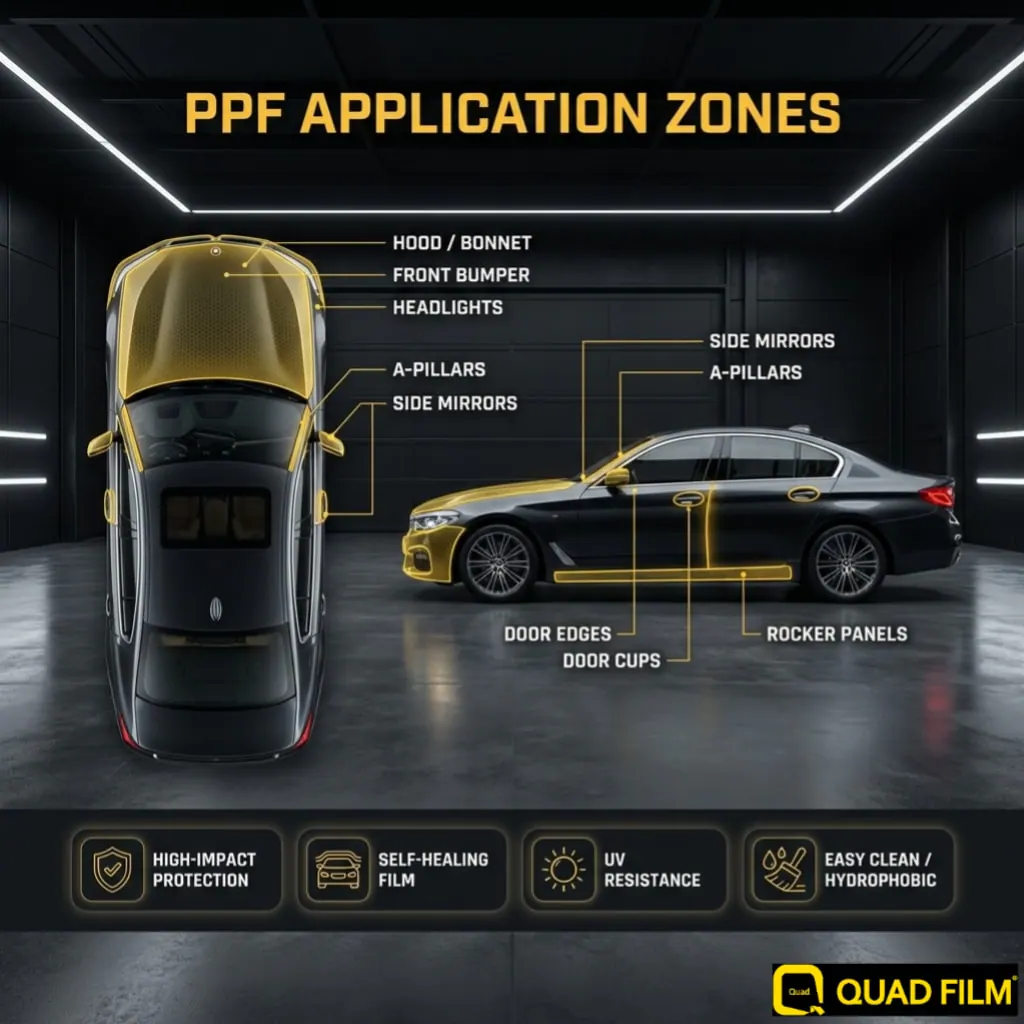
The logic is straightforward: protect the areas that get hit the most.
High-impact zones that take the most daily punishment:
- Front bumper and bonnet (hood): These face oncoming road debris, gravel and insects head-on, especially on highways
- Side mirrors: Exposed to lane-change debris and parking lot contact
- Door edges and door cups: Scratched every time someone opens the door or reaches for the handle
- Rocker panels: Sit low and catch stones kicked up by the front tyres
- Headlights: Susceptible to yellowing, hazing and stone chips over time
- A-pillars: Catch wind-driven debris at highway speed
Partial coverage vs full body coverage:
A front kit (bumper, bonnet, fenders, mirrors) is the most common starting point. It covers the areas most exposed to stone chips and highway debris. This is a practical choice if you want solid protection on a controlled budget.
Full body coverage protects every painted panel. This makes more sense if you drive highways often, park outdoors regularly, plan to keep the car for more than three to five years, or simply want complete peace of mind. It also helps maintain higher resale value since the original paint stays untouched.
For Malaysian drivers, consider your daily routine. If you commute on the PLUS highway, park at outdoor mall lots, or live in an area with ongoing construction, the front of your car takes a beating. Start there, and expand coverage if your budget allows.
How PPF Performs in Malaysian Conditions
Malaysia's tropical climate is one of the harshest environments for car paint anywhere in the world. Here is how PPF handles each challenge.
UV exposure: Malaysia sits near the equator with a UV index that regularly reaches 11 to 13 during peak hours. PPF blocks UV radiation from reaching the paint surface, preventing the gradual fading and oxidation that makes unprotected paint look dull after a few years.
Heat and humidity: Daytime temperatures frequently exceed 35 degrees Celsius, and humidity stays above 70% most of the year. Quality PPF made from stable TPU material is tested for high-temperature environments. It will not yellow, bubble or peel prematurely under these conditions.
Rain and contaminants: The monsoon season brings heavy rain, and road surfaces accumulate tar, oil and organic contaminants. PPF's stain resistance makes it easier to wash off tree sap, bird droppings and tar spots that would otherwise etch into unprotected clear coat. Hydrophobic variants take this further by causing water to bead and roll off.
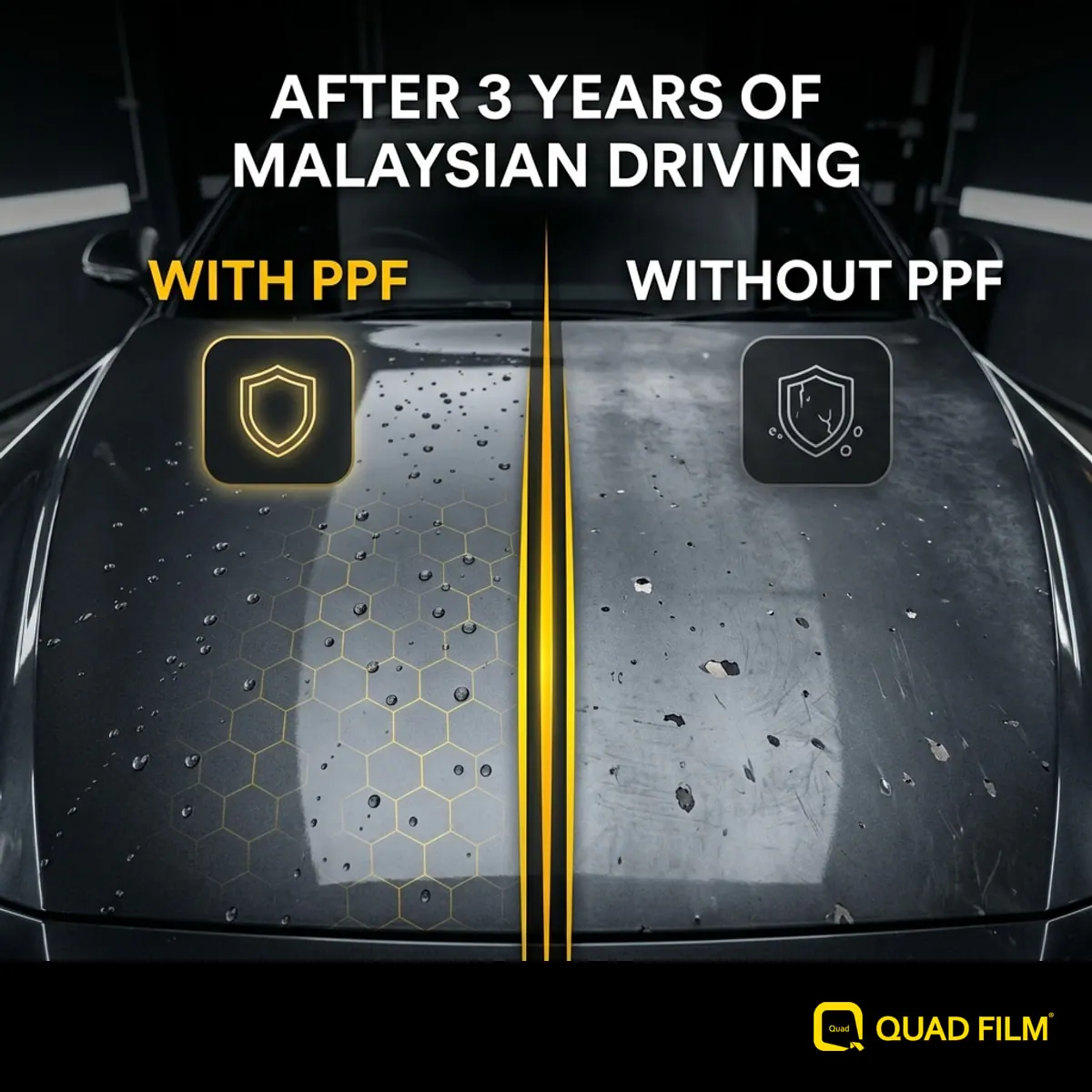
Highway gravel and stone chips: Long stretches on PLUS, KESAS, DUKE and other expressways expose the front of your car to flying stones and debris. PPF absorbs the impact. Where bare paint would chip, the film takes the hit and either self-heals or shows only surface-level marks on the film itself.
How Much Does PPF Cost in Malaysia?
PPF pricing depends on four main factors: film quality and thickness, the amount of coverage (partial or full body), your vehicle's size and the installer's expertise.
To give you a realistic sense of pricing, here are Quad Film's published rates for full car coverage in Malaysia:
- QUANTA gloss PPF (7.5 MIL, 5-year warranty): RM 9,000 (Sedan) to RM 16,000 (MPV)
- QUATTRO gloss PPF (8.5 MIL, 7-year warranty): RM 12,000 (Sedan) to RM 18,000 (MPV)
- QUANTUM flagship gloss PPF (10 MIL, 7-year warranty): RM 15,000 (Sedan) to RM 20,000 (MPV)
- QUARMOR hydrophobic gloss PPF (7.5 MIL, 5-year warranty): RM 10,000 (Sedan) to RM 17,000 (MPV)
- QUBOND matte PPF (7.5 MIL, 5-year warranty): RM 12,000 (Sedan) to RM 16,000 (MPV)
- QUATRIX satin / semi matte PPF (7.5 MIL, 5-year warranty): RM 12,000 (Sedan) to RM 16,000 (MPV)
- Customize colour PPF (5-year warranty): quoted on request
- Titanium Sunroof PPF: RM 800 to RM 1,800 depending on roof size
Other brands may price differently, but these ranges give you a solid benchmark for what quality PPF costs in Malaysia today.
If full body coverage stretches your budget, a hybrid package is worth considering. Quad Film offers packages that combine PPF on the high-impact front panels (bumper and bonnet) with Gtechniq Crystal Serum Light ceramic coating on the rest of the car. These start from RM 3,600 for a standard car with the QUANTA film tier.
The price differences between film tiers reflect real differences in thickness, self-healing performance, adhesion strength and warranty coverage. A thicker film with a longer warranty and higher self-healing rate costs more upfront but protects better and lasts longer.
PPF vs Ceramic Coating: What Is the Difference?
This is one of the most common questions from first-time buyers, and it is important to understand that these are two different products that solve different problems.
PPF is a physical film. It creates a thick, flexible barrier over the paint. It absorbs stone chips, prevents scratches and self-heals minor surface damage. It is the only product that provides genuine physical impact protection.
Ceramic coating is a liquid chemical layer applied to the paint surface. Once cured, it creates a hard, hydrophobic shell that repels water, makes the car easier to wash and adds gloss. But it does not protect against stone chips or deep scratches because it has no physical thickness to absorb impact.
The two products can be combined. Some owners apply PPF to high-impact areas (front bumper, bonnet, mirrors) and ceramic coating to the rest of the car. This gives you physical protection where it matters most and easy-clean hydrophobic properties everywhere else. Quad Film offers ready-made hybrid packages that bundle front PPF coverage with Gtechniq Crystal Serum Light coating, so you do not have to source the two separately.
How to Choose the Right PPF for Your Car
With multiple brands and film types on the market, here is what to look for.
Film thickness: Measured in MIL (thousandths of an inch). Thicker films absorb more impact. A 7.5 MIL film is a solid mid-range choice. A 10 MIL film offers the best stone chip resistance for highway-heavy drivers.
Self-healing rate: Top-tier films like the Quad Film QUANTUM offer up to 99% scratch recovery. This means most light scratches and swirl marks disappear on their own when exposed to heat. Lower-quality films may have weaker or no self-healing capability.
TPU material quality: The base material matters. Look for double-layer TPU structures from established suppliers. Quad Film, for instance, uses Lubrizol TPU paired with Ashland adhesive across its entire PPF range. These combinations resist yellowing, hold up under tropical heat and remove cleanly when the film reaches the end of its lifespan.
Warranty: A meaningful warranty signals that the manufacturer stands behind the product. Look for 5 to 7 year coverage on mainstream films. Be cautious of any installer offering a very low price with no warranty or a vague "lifetime" claim with no documentation.
Installer credentials: Even the best film performs poorly with a bad installation. Look for certified, trained installers with a clean, controlled workspace. Ask to see past work. A dusty, open-air installation environment is a red flag.
Red flags to watch for:
- Pricing that is significantly below market rates with no clear explanation
- Unknown film brands with no traceable manufacturer
- No written warranty or warranty that only covers peeling but not yellowing
- Installers who cannot name the specific film series they are using
Caring for Your PPF After Installation
Once your PPF is installed, a few simple habits will keep it performing well for its full lifespan.
- Wait 48 to 72 hours before washing the car. The adhesive needs time to fully bond.
- Hand wash preferred. Use a gentle car shampoo and a soft microfibre wash mitt. Avoid automated car washes with abrasive brushes.
- Do not use harsh chemicals such as solvent-based cleaners, heavy cutting compounds or abrasive polishing pastes on the film.
- Remove contaminants early. Bird droppings, tree sap and insect residue should be cleaned off within a day or two. While PPF resists staining, leaving contaminants too long can still leave marks.
- Park smart when possible. Covered parking reduces UV and heat exposure, extending the film's appearance over time. But quality PPF is built to handle outdoor parking, so this is a bonus, not a requirement.
Is PPF Worth It for Your Car?
The decision comes down to simple maths and how you use your car.
If you drive regularly on Malaysian highways, park outdoors, or plan to keep your car for three years or more, the cost of PPF is almost always less than the cost of repainting chipped panels, touching up scratches and dealing with faded paint at resale time.
PPF preserves the original factory paint in the condition it was in on day one. When you eventually sell or trade in the car, the paint underneath is still clean, unchipped and unfaded. Buyers notice. Resale value stays higher.
If you are unsure which type of PPF suits your car and driving pattern, compare the film types above, decide on your coverage area, then speak to a certified installer for a proper assessment.
Protect Your Car with Quad Film
Quad Film is a US-based manufacturer of premium automotive films with over 20 years of experience and a presence in more than 40 countries. The company uses magnetron sputtering technology and 36 distinct rare earth metals across its film products, backed by strategic partnerships with Porsche, Mercedes-Benz, Land Rover and BMW.
For PPF, Quad Film offers a full range of options:
- Gloss PPF in three tiers: QUANTA (7.5 MIL), QUATTRO (8.5 MIL) and QUANTUM (10 MIL), with self-healing rates up to 99% and warranties from 5 to 7 years
- Matte and Satin PPF through QUBOND (matte) and QUATRIX (satin / semi matte), both with 5-year warranty
- Hydrophobic PPF with QUARMOR, combining gloss finish with built-in water-repelling properties
- Colour PPF for full appearance changes with paint protection included
- EV Sunroof PPF with 24 layers of rare earth metals, over 95% heat reflection and proven battery savings for electric vehicles
- Hybrid packages pairing front PPF coverage with Gtechniq Crystal Serum Light ceramic coating
All Quad Film PPF products use a double-layer TPU structure with Lubrizol TPU and Ashland adhesive, backed by a 100% money-back guarantee for workmanship through authorized installers.
To find an authorized installer near you, visit Quad Film Installers or get in touch through the Quad Film contact page for a consultation.
Frequently Asked Questions
How long does PPF last in Malaysian weather?
Quality PPF lasts 5 to 7 years or more depending on the film grade, even under Malaysia's tropical UV, heat and humidity. Thicker films with higher-grade TPU and adhesives tend to hold up longer. Regular maintenance (hand washing, prompt removal of contaminants) helps extend the film's lifespan.
Can PPF be removed without damaging the paint?
Yes. Professional-grade PPF is designed to be removed cleanly without leaving glue residue or damaging the original paint underneath. This is one of the key advantages of using quality film with proper adhesive technology. Always have a trained installer handle the removal.
Does PPF work on matte or wrapped cars?
Yes, but you need to use the right product. Matte PPF is designed specifically for matte finishes, whether factory matte paint or vinyl-wrapped surfaces. Applying gloss PPF over a matte surface would change its appearance to a glossy finish, which is not what most matte car owners want.
Is PPF the same as a car wrap?
No. A car wrap (vinyl wrap) is primarily a cosmetic product used to change the car's colour or appearance. It offers minimal protection against stone chips and scratches. PPF is an engineered protective film made from thermoplastic polyurethane with self-healing, UV rejection and impact absorption built in. Colour PPF bridges the gap by offering both an appearance change and genuine protection in one product.
Can I apply PPF myself or does it need professional installation?
PPF requires professional installation. The film needs to be precisely cut (often using computer-aided design patterns), applied in a dust-free environment and carefully worked onto curved surfaces without bubbles, creases or contamination. Even a small speck of dust trapped under the film creates a visible defect. A certified installer with proper training, tools and a controlled workspace is the only way to get a clean, long-lasting result.
Protect your Investment today
Don't wait for stone chips to ruin your paint. Speak to our experts about custom PPF and Tinting solutions.