
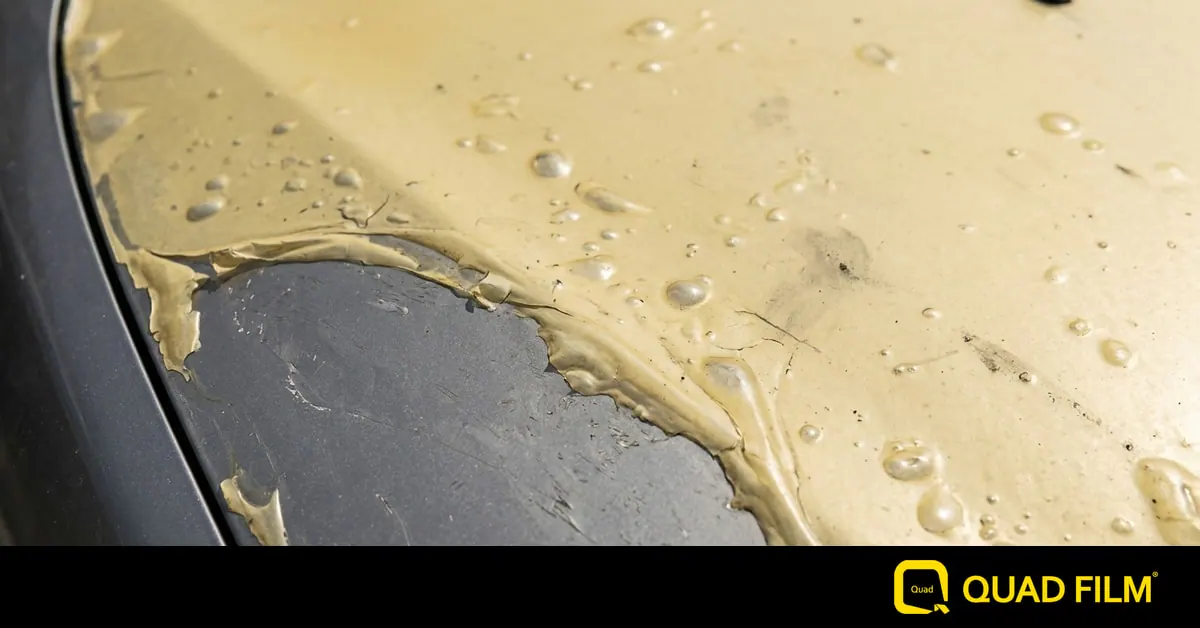
- PPF hydrolysis is moisture breaking down the film and its adhesive, which is why cheap PPF turns yellow, hazy and sticky in Malaysia.
- Our high heat, humidity above 80 percent and open-air parking speed up the reaction, so low grade film can fail in 6 to 12 months.
- Material matters most. PVC and TPH films degrade fast, while quality aliphatic TPU resists yellowing and hydrolysis for years.
- Catch it early. Yellowing, hazing, edge lifting, bubbling and a gummy feel are the main warning signs.
- Choose film by material, adhesive quality, warranty and installer skill, not by the lowest quote.
PPF hydrolysis is the main reason cheap paint protection film in Malaysia turns yellow, cloudy and sticky long before it should. If you have seen a bonnet where the film looks hazy at the edges or feels gummy to the touch, you have likely seen hydrolysis at work. This guide explains what the reaction is, why our climate accelerates it, how to read the warning signs early, and how to choose film that survives years of tropical heat and rain.
What Is PPF Hydrolysis, and Why Film Turns to Glue
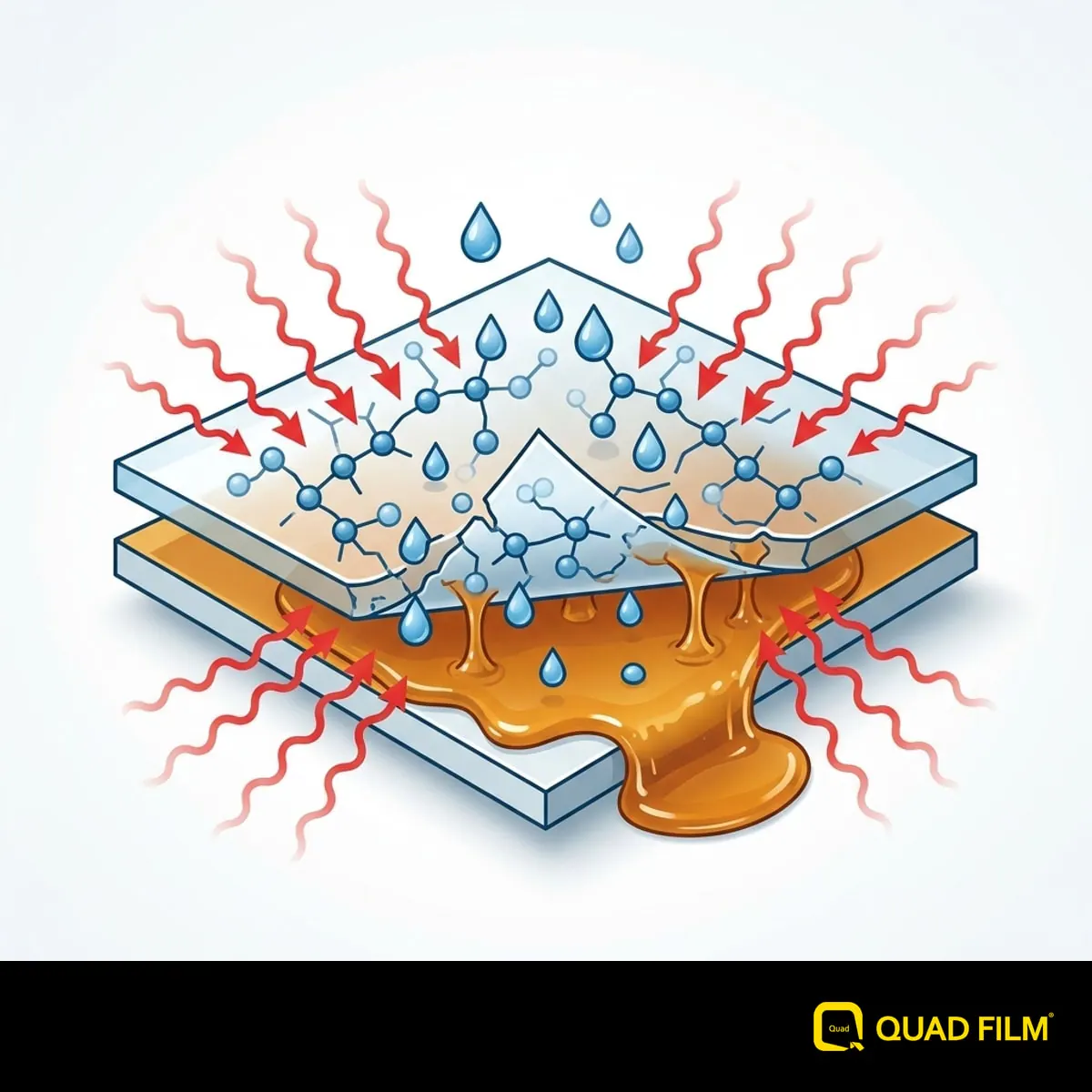
PPF hydrolysis is a chemical reaction where water molecules slowly break the polymer and adhesive bonds inside paint protection film. As those bonds weaken, the film loses clarity, yellows, and the glue layer underneath softens into a sticky mess. In simple terms, moisture digests low grade film until it behaves more like glue than protection.
Every PPF has two parts that water can attack. The top film layer gives clarity and self healing, and the adhesive layer holds it to your paint. Cheap film uses materials and glue that are not built to resist constant moisture. Over time water seeps in, reacts with the chemistry, and the bonds that keep the film clear and flexible start to fall apart. The result is the yellow, hazy, peeling film you see on older cars that were wrapped on a budget. For a fuller picture of how film should perform, our complete guide to paint protection film in Malaysia is a useful starting point.
Hydrolysis Is Not the Same as Normal Wear
It is worth separating hydrolysis from the everyday marks any film picks up. Light scratches and swirls are surface level and, on quality film, self heal with heat. Hydrolysis is different because it attacks the film from the inside as moisture breaks the polymer and adhesive bonds. You cannot polish it out or heal it away, and once it sets in the only real fix is removal and replacement. That is why prevention through material choice beats any cure.
Why Malaysia's Humidity Wrecks Cheap PPF Fast
Malaysia gives PPF one of the harshest tests on earth. Daytime temperatures sit in the low to mid 30s Celsius, humidity often climbs above 80 percent, and the monsoon brings months of heavy rain. Add long hours in open-air carparks, and cheap film faces nonstop heat and moisture that push hydrolysis into overdrive.
Heat and water work together. Humidity supplies the moisture that starts hydrolysis, and heat acts like an accelerator that makes the reaction run faster. A film that might last several years in a cool, dry country can fail in well under a year here. According to Quad Film, quality TPU film is built to last 5 to 10 years in Malaysian conditions, while cheap PVC or TPH film can break down in as little as 6 to 12 months. The gap is not small, and it is driven almost entirely by material quality and climate.
It helps to picture how a typical Malaysian car actually lives. Most of us park in open-air mall lots and roadside bays, sit in traffic under a midday sun that can push the UV index to 11 to 13, then drive home through a sudden downpour. Highway commuters on the PLUS, KESAS and DUKE expressways add hot tarmac and road spray on top of that. Each cycle of soak, bake and soak again is exactly the condition hydrolysis feeds on, and cheap film has no defence against it.
What makes our climate uniquely punishing on PPF:
- Constant high humidity. Air that stays above 80 percent for most of the year keeps a steady supply of moisture pressed against the film.
- Daily heat cycling. Surfaces heat up under the sun and cool at night, and that repeated expansion and contraction stresses weak adhesives.
- Monsoon rain. Months of heavy rain mean the film is rarely fully dry, so low grade layers never get a chance to recover.
- Open-air parking. Long hours with no shade expose budget film to the full combination of heat, UV and water at once.
How PPF Hydrolysis Actually Happens, Chemistry Made Simple
You do not need a science degree to understand hydrolysis. It happens in three stages: moisture gets into the film, heat speeds up the reaction, and the chemical bonds finally break so the adhesive turns gummy. Here is each stage in plain language.
Step 1: Moisture Seeps Into the Film
Rain, washing, condensation and humid air all carry water. On cheap film, the edges and any small lifted spots let moisture work its way under and into the layers. Lower grade adhesives also absorb water more readily, which gives hydrolysis a foothold from day one.
Step 2: Heat Speeds Up the Reaction
Malaysian sun pushes surface temperatures on a parked car far above the ambient reading. That heat acts as energy for the reaction. The hotter and more humid the conditions, the faster water breaks the polymer chains. This is why a car parked daily under open sky degrades faster than one kept in a covered bay.
Step 3: Bonds Break and the Adhesive Gums Up
As the bonds fail, the film yellows and clouds, and the once firm adhesive turns soft and sticky. At this point the film no longer protects the paint and can be difficult to remove cleanly. On poor quality film, this is the stage where it genuinely turns to glue.
The important takeaway is that all three stages are driven by the film's chemistry, not by how often you wash the car. Good aftercare slows the process at the edges, but it cannot save a film that was never built to resist moisture in the first place. This is why the material you start with matters more than anything you do afterwards.
TPU vs TPH vs PVC, Which PPF Resists Humidity
The single biggest factor in whether your PPF survives Malaysia is the base material. There are three common types: PVC, TPH and TPU. They differ sharply in lifespan, yellowing resistance, and how well they shrug off moisture. The table below shows how they compare.
| Factor | PVC PPF | TPH PPF | TPU PPF |
|---|---|---|---|
| Base material | Vinyl (PVC) | Thermoplastic hybrid | Thermoplastic polyurethane |
| Typical lifespan in Malaysia | 6 to 12 months | 1 to 3 years | 5 to 10 years |
| Yellowing resistance | Poor | Moderate | High |
| Self healing | None | Limited | Yes, up to 98 to 99 percent on Quad Film |
| Hydrolysis resistance | Very low | Low to moderate | High with aliphatic TPU |
| Removal | Often leaves residue | May leave residue | Clean and residue free |
| Relative cost | Lowest | Low to mid | Highest |
| Best suited for | Very short term or budget jobs | 1 to 3 year ownership | Long term ownership and resale |
PVC PPF: Cheapest and Fails Fastest
PVC, or vinyl, is the lowest cost option and the most vulnerable to hydrolysis. It has no real self healing, yellows quickly under UV, and often becomes brittle or sticky within months. It is the film most likely to leave glue residue when removed. If a quote looks too good to be true, PVC is usually why.
TPH PPF: A Short Term Budget Hybrid
TPH is a thermoplastic hybrid that sits between PVC and TPU. It performs better than PVC and costs less than TPU, but it still tends to yellow and degrade faster in constant heat and humidity. It can work as a short term choice, but it is not the film you want if you plan to keep your car for years.
TPU PPF: The Hydrolysis Resistant Standard
TPU, or thermoplastic polyurethane, is the premium standard and the most resistant to hydrolysis. Quality TPU resists yellowing, self heals light scratches, and removes cleanly. Quad Film uses a double-layer TPU structure built on high grade aliphatic TPU with alicyclic HMDI, which Quad Film states delivers anti-yellowing, UV resistance and hydrolysis stability that outperforms older HDI and MDI films. Quad Film pairs this with a single-component Ashland automotive adhesive that has been accelerated-aging tested to the equivalent of 10 or more years, and self healing rated at 98 to 99 percent across its range. To see how this differs from a coating, compare PPF versus ceramic coating in Malaysia and the difference between self healing coating and self healing PPF.
5 Signs Your PPF Is Already Hydrolysing
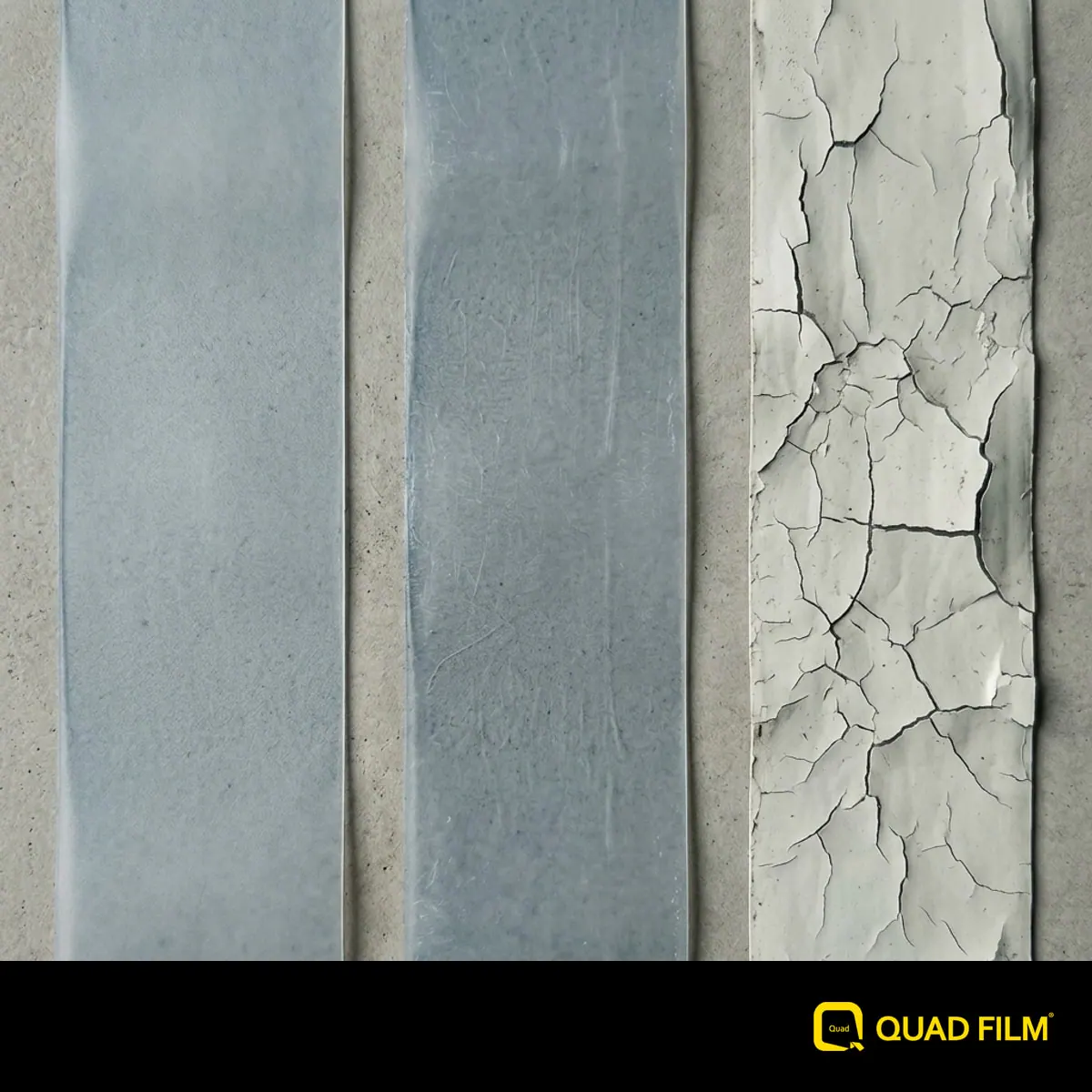
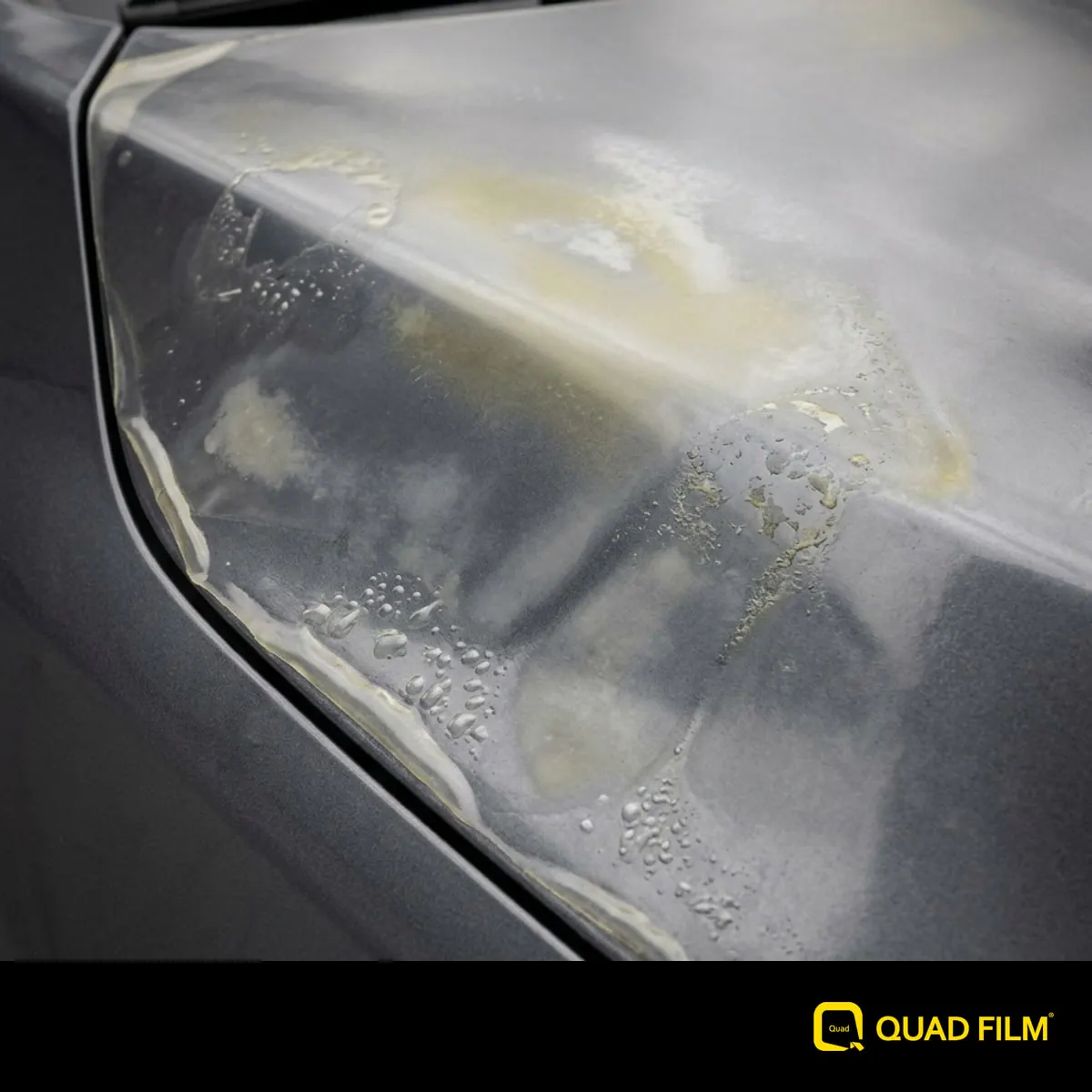
Hydrolysis rarely happens overnight. It shows clear warning signs as it progresses, and catching them early can save your paint and your money. Watch for these five symptoms, especially on older or budget film. If you notice several at once, it is time to inspect the film closely or speak to a professional.
- Yellowing or an amber tint, most visible on white and light coloured cars.
- Hazing or cloudiness that dulls the gloss and will not polish away.
- Edges lifting or peeling, often where moisture enters first.
- Bubbles or a mottled, orange-peel texture across the surface.
- A gummy or sticky feel, which signals the adhesive is breaking down.
Common Mistakes That Turn New PPF to Glue
Even good intentions can lead to early failure. Most premature hydrolysis traces back to a handful of avoidable choices made at the point of purchase. Avoid these and you remove most of the risk.
- Buying on price alone. The cheapest quote often means PVC or TPH film and a thin adhesive that cannot handle our climate.
- Choosing a weak installer. Poor edge wrapping and contamination during fitting create entry points for moisture. Even good film fails with a careless install.
- Ignoring the warranty. No clear warranty usually means the shop has little confidence the film will last. A real warranty tells you the material is rated for years, not months.
- Skipping aftercare. Letting bird droppings, tree sap and grime sit on the film, or scrubbing with harsh cleaners, can speed up degradation at the edges.
- Washing too soon after installation. Exposing fresh film to heavy water before the adhesive has fully bonded can let moisture reach the edges early.
- Trusting vague lifetime claims. A lifetime promise with no written terms is not a warranty, and it often hides low grade film that will not survive a few monsoon seasons.
How to Choose Hydrolysis Resistant PPF in Malaysia
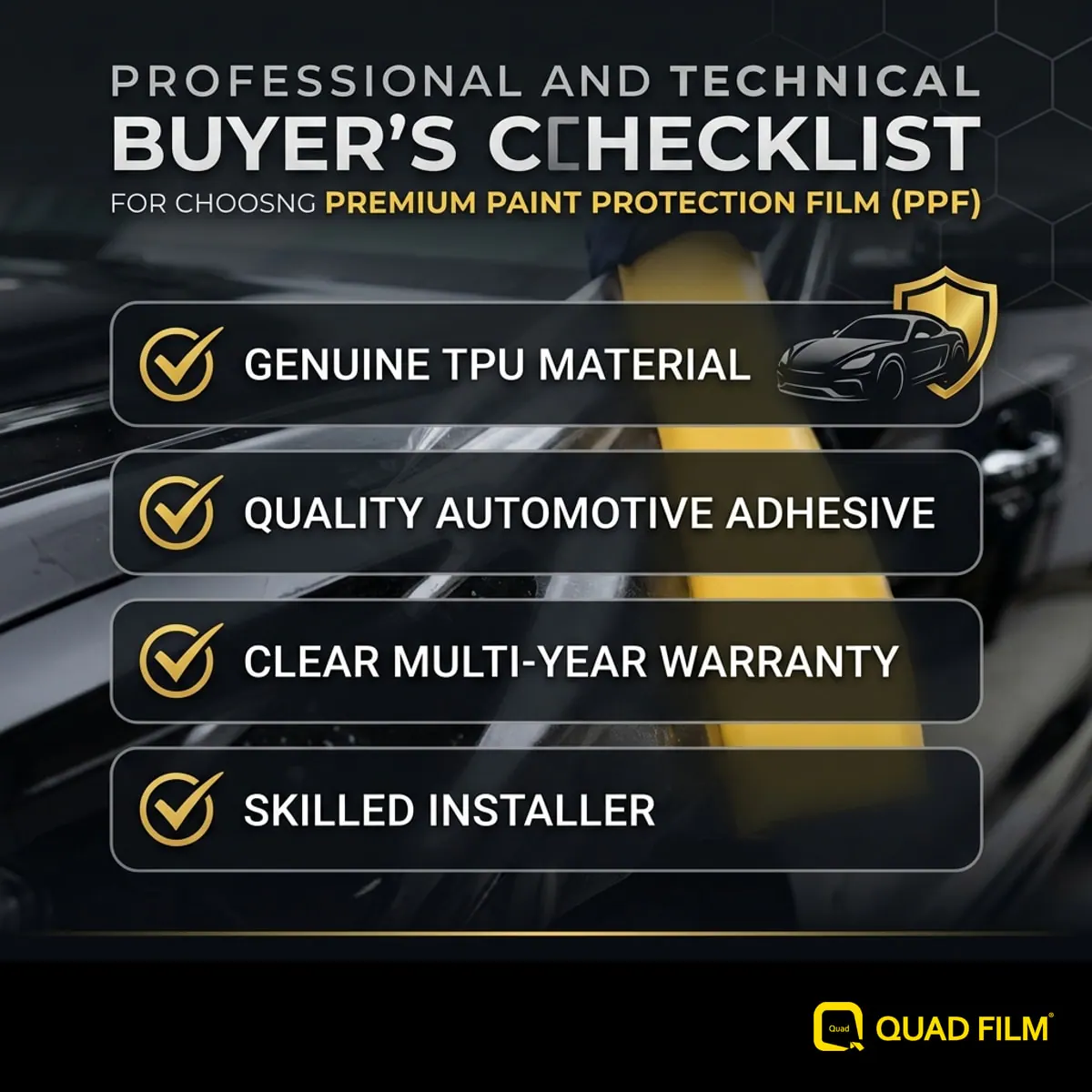
Choosing film that lasts comes down to four checks: the material, the adhesive, the warranty and the installer. Get these right and you avoid almost every common failure. Here is a simple checklist and a realistic price guide for Malaysian car owners.
- Confirm the film is genuine TPU, ideally aliphatic TPU built for anti-yellowing and hydrolysis resistance.
- Ask about the adhesive. A quality automotive adhesive is what keeps the film clear and removable years later.
- Check the warranty period and what it actually covers, including yellowing and delamination.
- Vet the installer. Ask to see their work and confirm they wrap edges properly.
- Match the film grade to how long you plan to keep the car.
- Ask whether the film is aliphatic TPU specifically, since this is the grade Quad Film links to anti-yellowing and hydrolysis stability.
- Get the warranty in writing, including what counts as a valid yellowing or delamination claim.
As a price reference, Quad Film lists full front PPF from around RM4,000 and full car coverage from around RM9,000 for its QUANTA series, with pricing varying by vehicle type and series. Its range runs from the QUANTA, QUATRIX, QUBOND and QUARMOR series at a 5 year warranty up to the QUANTUM and QUATTRO flagship series at a 7 year warranty. For a full breakdown of what you should expect to pay, our guide on how much PPF costs in Malaysia goes deeper. If you prefer a coloured or matte finish, the same TPU quality logic applies, as covered in our guide to matte and colour PPF in Malaysia.
How to Slow Hydrolysis With Good Aftercare
You cannot stop hydrolysis on cheap film, but on quality TPU you can slow it down and protect the warranty with a few simple habits. Aftercare will not rescue low grade film, yet on a proper TPU install it helps the edges stay sealed and clear for the full life of the warranty.
- Wait before the first wash. Give the adhesive time to fully bond after installation before exposing it to heavy water.
- Wash by hand with a gentle shampoo. Avoid harsh solvents and abrasive brushes that can open up the edges where moisture enters.
- Clear contaminants early. Remove bird droppings, tree sap and insect residue quickly so they do not work into the film edges.
- Dry the panels after rain when you can. Reducing standing water on the film gives moisture less time to push into the layers.
- Inspect the edges every few months. Catching early yellowing or lifting lets you act before the adhesive starts to gum up.
What This Means for Malaysian Car Owners
The lesson for any car owner here is simple. Hydrolysis is not bad luck, it is the predictable result of putting low grade film into a hot, humid climate. Choose genuine TPU film, a proven adhesive, a clear warranty and a skilled installer, and your PPF should protect your paint for years rather than turning to glue in months. If you are unsure what is on your car now, inspect the edges for yellowing or a sticky feel, then ask a Quad Film authorised installer for a material and warranty check before you commit to anything.
FAQ: PPF Hydrolysis in Malaysia
Does PPF turn yellow over time?
Low quality PPF does. PVC and cheaper TPH films yellow within months in Malaysian heat and UV. Quality aliphatic TPU film, like the TPU Quad Film uses, is engineered to resist yellowing for the life of its warranty.
How long does PPF last in Malaysia?
It depends on the material. According to Quad Film, quality TPU film lasts 5 to 10 years in local conditions, while cheap PVC or TPH film can fail in 6 to 12 months. Warranty length is a useful proxy, with quality film backed for 5 to 7 years.
Can you remove cheap PPF that has turned to glue?
Yes, but it is harder and slower. Once the adhesive has hydrolysed it can leave residue that needs careful heat, solvents and labour to clean off without harming the paint. Removing it early, before it fully gums up, is far easier.
Does PPF damage car paint when removed?
Quality TPU film removes cleanly and does not damage factory paint when fitted and removed correctly. The risk comes from cheap film with degraded adhesive or from poor removal technique, which is another reason material and installer quality matter.
Is TPU PPF worth the extra cost?
For most owners in Malaysia, yes. TPU resists the heat and humidity that destroy cheaper film, self heals light scratches, and helps protect resale value. Paying once for film that lasts years is usually cheaper than replacing failed film and repairing affected paint.
What causes PPF to turn yellow and sticky?
Yellowing and stickiness come from hydrolysis, where moisture breaks down the film and its adhesive. Heat and humidity speed it up, so cheap PVC and TPH films show it first. The top layer yellows and hazes while the glue underneath softens, which is the point people describe as the film turning to glue.
How can I tell if my PPF is TPU or PVC?
The clearest way is to ask your installer for the film series and material specification in writing. As a rough guide, PVC tends to feel stiffer, yellow quickly and lack any real self healing, while quality TPU stays clear, self heals light scratches and carries a multi year warranty. A price that looks too good to be true usually points to PVC.
Does ceramic coating stop PPF hydrolysis?
No. A ceramic coating adds gloss and makes the surface easier to clean, but it does not change the chemistry of the film underneath. If the base film is low grade PVC or TPH, it will still hydrolyse in our climate. Resisting hydrolysis comes from starting with quality aliphatic TPU, not from a topcoat.
Protect your Investment today
Don't wait for stone chips to ruin your paint. Speak to our experts about custom PPF and Tinting solutions.