
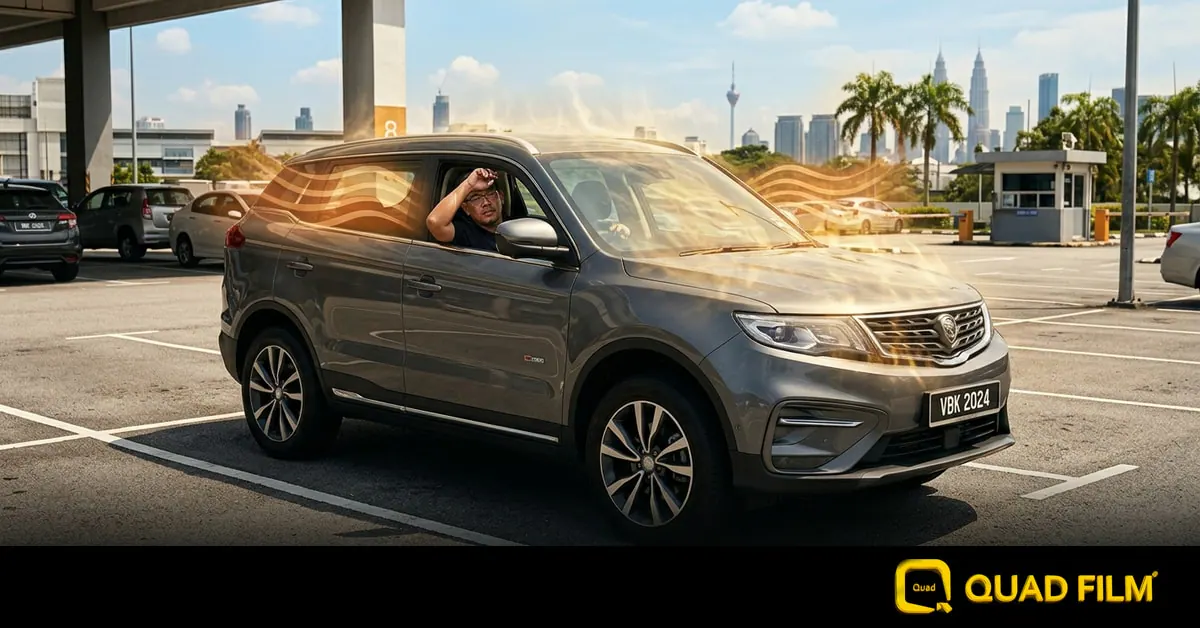
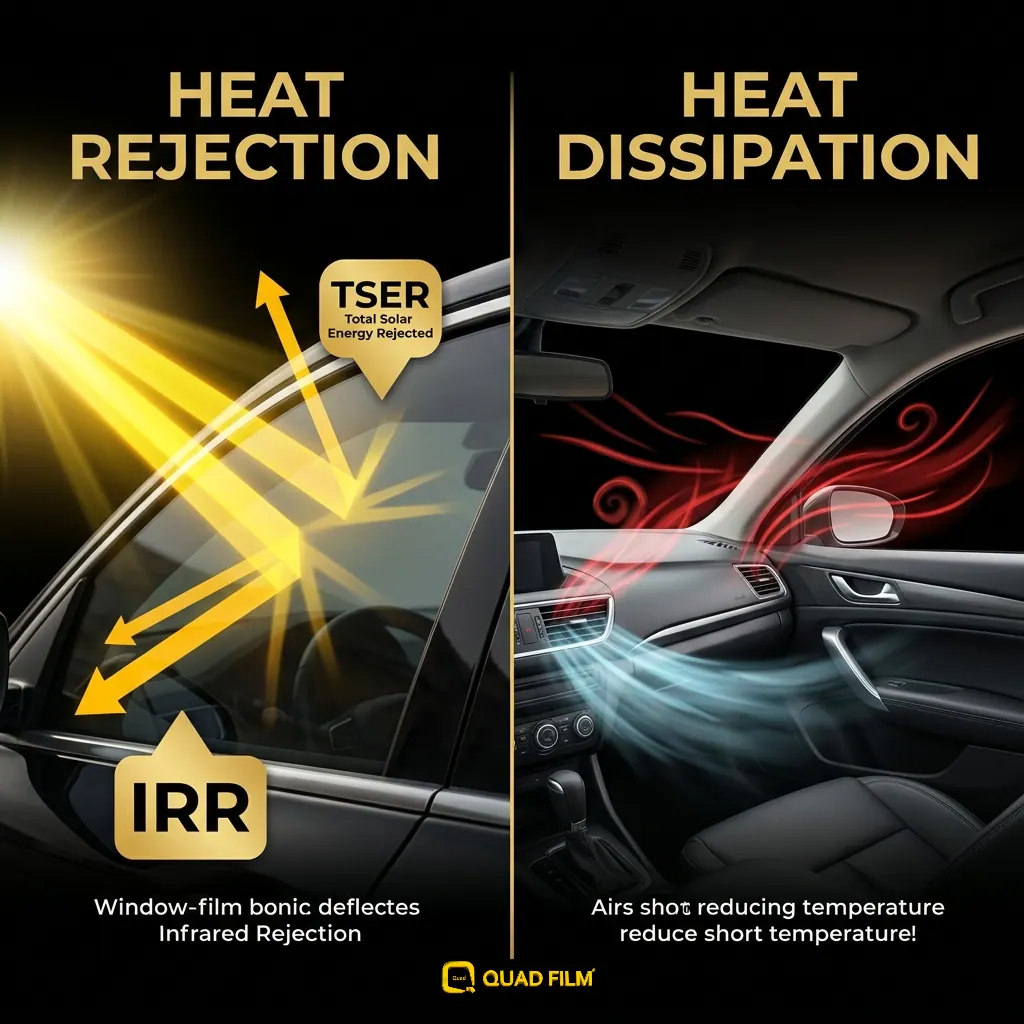
- Heat rejection is how much solar energy your tint blocks from entering, measured by TSER and IRR.
- Heat dissipation is how fast the heat already trapped in your seats, dash and air can escape once you drive.
- Good tint slows heat building up, but it cannot release heat that has already soaked into the cabin, so a parked car still feels hot at first.
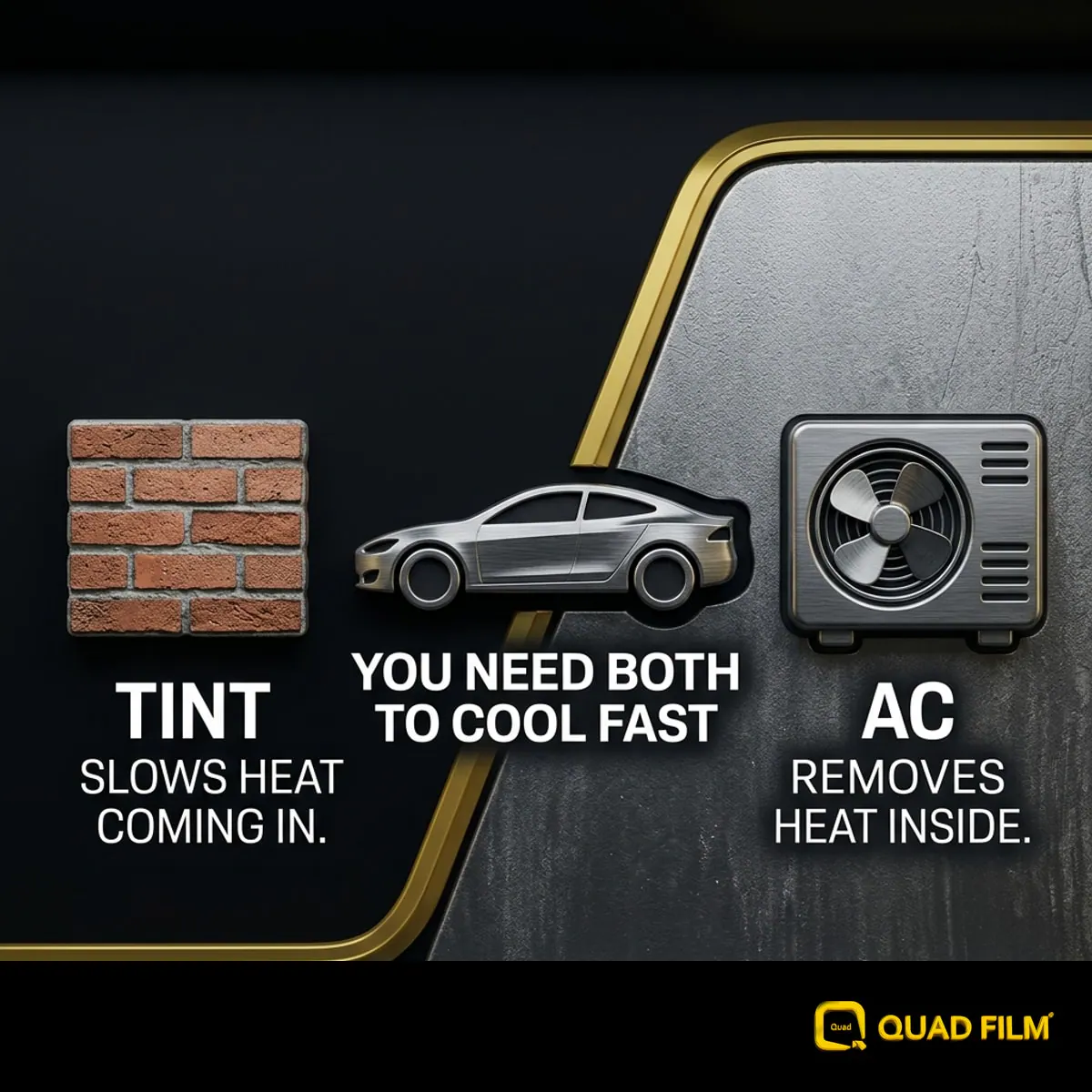
- Think of tint as an insulating wall and the AC as the cooler, you need both to feel cold quickly.
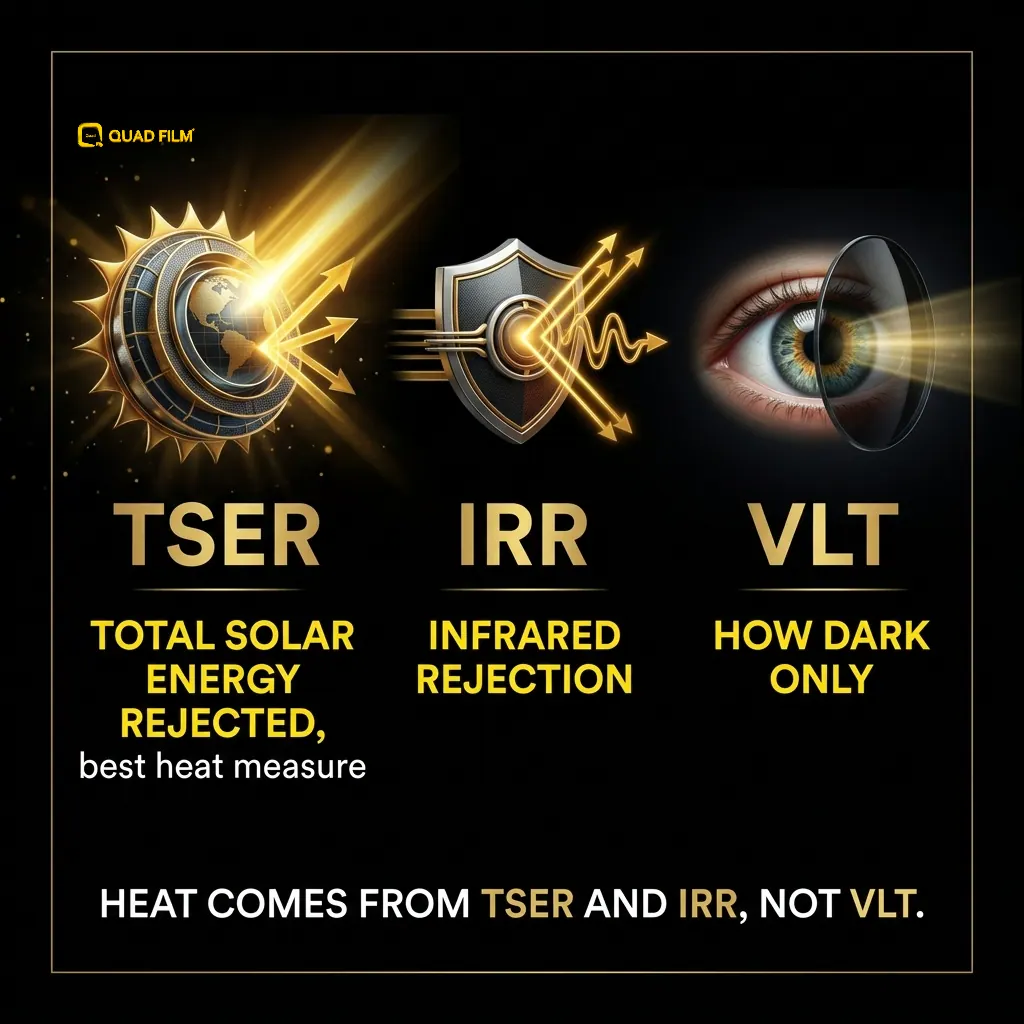
- Cooling power comes from a high TSER and IRR, not from how dark the film looks.
Understanding heat rejection vs heat dissipation in tint is the key to knowing why your cabin still feels hot for the first few minutes after parking in the sun, even with good ceramic film. These are two different things, and most owners only ever hear about one of them. The short version is that your tint is probably working fine, and the lingering heat is simple physics. Here is what is really happening and how to cool down faster.
Heat Rejection vs Heat Dissipation, What Is the Difference?
Heat rejection is how much solar energy a film stops from entering the cabin, while heat dissipation is how quickly trapped heat escapes once it is already inside. A high-quality tint is rated for heat rejection through its TSER and IRR figures, so it blocks a large share of the sun's energy at the glass. It says nothing about removing heat that has already built up in your interior.
That distinction matters because buyers expect a heat-rejecting film to make a parked car cold. It cannot do that on its own. It reduces how hot the cabin gets and how fast, but the heat that does get in, plus the heat stored in every surface, still has to be removed by airflow and air conditioning.
Why Your Cabin Still Feels Hot After Parking in the Sun
Your cabin feels hot because heat has soaked into the interior surfaces, not because the tint failed. When a car sits in the sun, solar energy that does get through the glass is absorbed by the dashboard, seats and trim, which then re-radiate that heat back into the air. A closed cabin behaves like a greenhouse and can climb far above the outside temperature.
When you get in, you are not just feeling hot air, you are feeling heat stored in everything around you. No window film can pull that stored heat out. That job belongs to ventilation and the AC, which is why even a beautifully tinted car feels warm for the first few minutes.
What Good Tint Actually Does
Good tint lowers the rate of heat buildup, so the cabin does not get as hot in the first place and the surfaces are less scorching. It reduces the starting temperature your AC has to work down from. What it does not do is actively release heat that has already been absorbed. Keeping these two ideas separate is the whole point, and it explains why a strong film still leaves a parked car warm at the moment you open the door.
The Wall vs Air Conditioner Way to Think About It
The easiest way to picture it is a well-insulated building. Tint is like an insulating wall that slows heat from coming inside, but a walled room still needs an air conditioner to actually get cold. The wall does not cool anything by itself, it just means the cooler has far less work to do and wins much faster.
Apply that to your car. The film is the wall and the AC is the cooler. On a parked car in the sun, you still rely on the AC to remove the heat that built up, but because a good film kept that buildup low, the AC reaches a comfortable temperature sooner and holds it more easily.
How Tint Helps Your Cabin Cool Faster Anyway
Even though it cannot release stored heat, good tint genuinely helps you cool faster. By blocking a large share of infrared at the glass, it lowers the peak temperature the cabin reaches, so the AC starts from a cooler baseline and reaches your set temperature sooner. The seats and steering wheel are also less painfully hot to touch.
The difference is most obvious over a day of errands. A poorly protected cabin reheats fully between every stop, while a well-rejected one stays more manageable, so each restart is quicker. If your current film disappoints here, our comparison of nano-ceramic versus sputtered tint and our look at sputtered versus multi-layer sputtered tint explain why construction changes real-world heat rejection.
Why This Saves an EV's Battery and Range
On an electric car the AC runs off the same battery that drives the wheels, so a lower heat load means the compressor works less hard and draws less energy. That directly softens the range loss you feel from running the AC in traffic. We unpack this in our guide on why the Zeekr X AC feels weak in KL heat, where the same heat-soak principle applies to a large-glass EV.
TSER vs IRR vs VLT, The Numbers That Actually Matter
The figures that decide cooling are TSER and IRR, not VLT. TSER, total solar energy rejected, is the best single measure of how much heat a film blocks. IRR describes infrared rejection specifically. VLT only tells you how dark the film looks, which has nothing to do with heat performance. A bright film can reject more heat than a cheap dark one.
This is why darker is not cooler is the single most important takeaway. You can stay within the JPJ limits of 70% VLT on the windscreen and 50% on the front sides, with unrestricted rear glass, and still get excellent heat rejection by choosing a high-TSER film. If a shop pushes darkness as the cooling fix, our explainer on why tint shops push ceramic film is worth a read.
How to Cool a Parked Car Faster
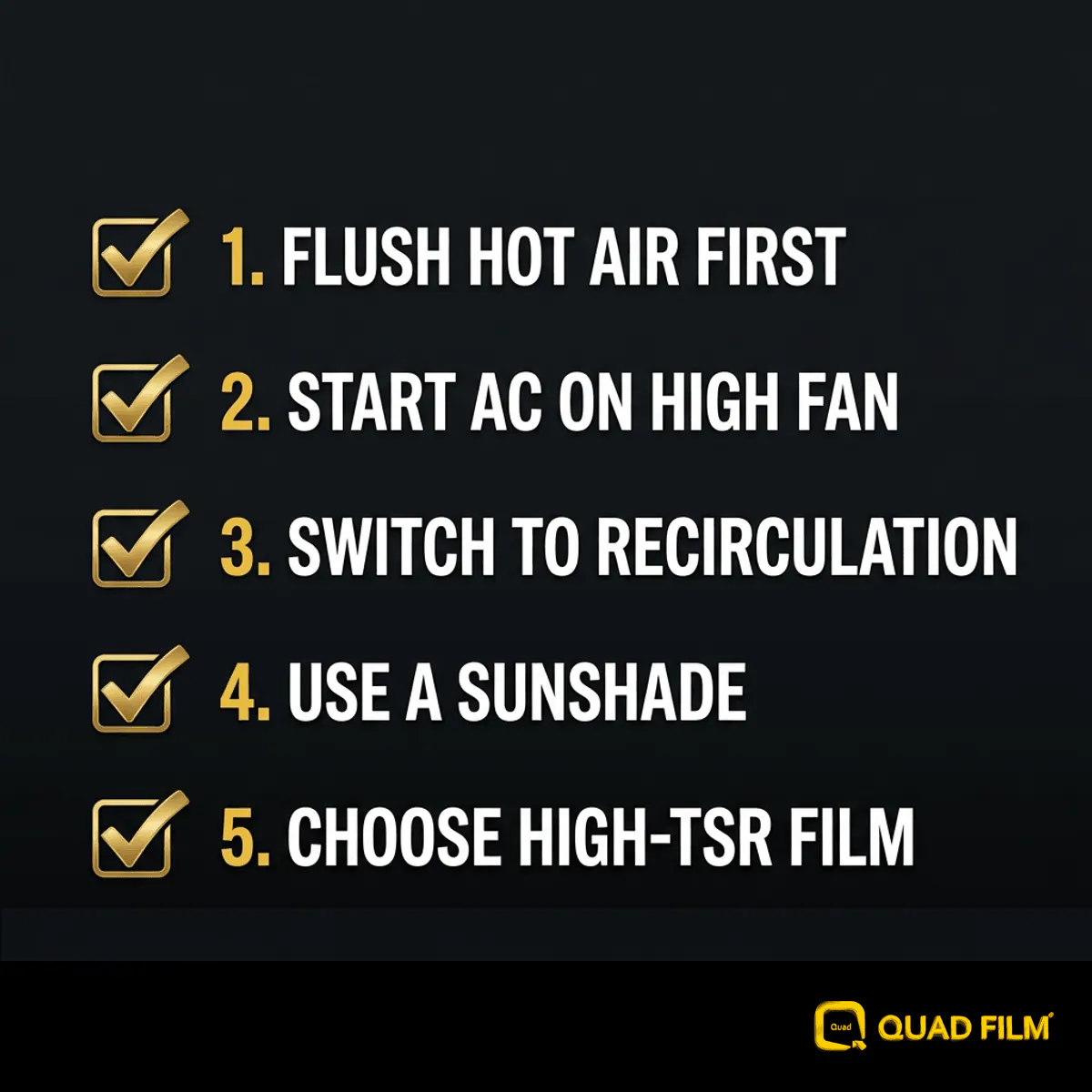
A few habits help the dissipation side, which tint cannot do for you. Open the windows or doors for a few seconds first to flush the hottest trapped air, then start the AC on a high fan setting before switching to recirculation so it stops pulling in hot outside air. Park in shade or a covered lot when you can, and use a sunshade on the windscreen and glass roof.
These steps speed up how fast the cabin sheds its stored heat, while your film keeps the next buildup low. Together they are what make the car feel cold quickly, rather than relying on either one alone. For budgeting a quality film, our car tinting cost guide for KL sets expectations.
Quad Film Options That Maximise Heat Rejection
Quad Film offers a clear ladder of films so you can match heat rejection to your budget. All prices are for a full-car SUV-size job, from Standard to XLarge.
| Film | Construction | Warranty | Heat highlight | Full-car SUV price |
|---|---|---|---|---|
| MEGALUX | 48-layer sputtered | 15 years | IRR99, TSER 72 to 85 | RM4,600 to RM5,000 |
| METALUX | 24-layer | 10 years | IRR99 | RM3,200 to RM3,600 |
| MAGNETRON | 12-layer | 8 years | IRR97 | RM2,200 to RM2,600 |
| MIRACLE | UV specialist | 7 years | Strong UV rejection | RM1,800 to RM2,200 |
| MATRIX | Nano-ceramic entry | 5 years | RFID and smart-tag friendly | RM1,000 to RM1,200 |
For the strongest heat rejection, MEGALUX leads on TSER, with METALUX and MAGNETRON as solid mid-tier picks. You can compare the full lineup on the Quad Film window tint page.
Common Misconceptions About Tint and Heat
The first misconception is that tint makes a parked car cold. It does not, it only slows how hot the car gets and helps the AC win faster. The second is that darker tint rejects more heat, when heat rejection depends on TSER and IRR, not shade. The third is that good tint means you can skip the AC, when in reality the AC is still the only thing that removes stored heat.
Clearing up these myths helps you set fair expectations and choose film by the right numbers. If you are still deciding whether to tint at all, our piece on whether the Zeekr X is good enough untinted and our guide to car tint and UV skin protection round out the picture.
Choosing Tint That Cools Your Cabin Faster
Your tint is not broken when the cabin feels hot after a long park, that is heat dissipation at work, and no film can release stored heat on its own. What a high-TSER film does is keep the buildup low so the AC reaches comfort faster and, on an EV, draws less battery doing it. Choose by TSER and IRR rather than darkness, add a few simple cool-down habits, and you get the fast, comfortable cabin you paid for.
FAQ
Why is my car still hot after ceramic tint?
Because the heat that built up has soaked into your seats, dash and air, and tint cannot remove stored heat. The film slows how hot the cabin gets, but the AC still has to clear what is inside.
Does window tint actually keep a parked car cool?
It keeps a parked car cooler than it would otherwise be by blocking solar energy, but it does not make it cold. You still need ventilation and the AC to remove the heat that gets in.
What is the difference between heat rejection and heat dissipation?
Heat rejection is how much solar energy the film blocks from entering, measured by TSER and IRR. Heat dissipation is how fast trapped heat escapes the cabin afterwards, which depends on airflow and the AC.
Is a higher TSER or IRR better for Malaysian heat?
Yes. A higher TSER means more total solar energy is rejected, which is the best single measure of cooling performance. IRR specifically tracks infrared rejection, and both matter more than VLT.
Does darker tint reject more heat?
No. Darkness is measured by VLT and is unrelated to heat rejection. A bright, high-TSER film can reject more heat than a cheap dark one.
How do I cool my car down faster after parking in the sun?
Flush the hot air by opening the windows briefly, run the AC on a high fan setting, then switch to recirculation. A sunshade and shaded parking reduce the buildup you have to clear.
Does good tint mean I can run the AC less in an EV?
Yes, in effect. A high-TSER film lowers the cabin heat load, so the AC works less hard and draws less battery, which reduces the range you lose to cooling in traffic.
Protect your Investment today
Don't wait for stone chips to ruin your paint. Speak to our experts about custom PPF and Tinting solutions.