
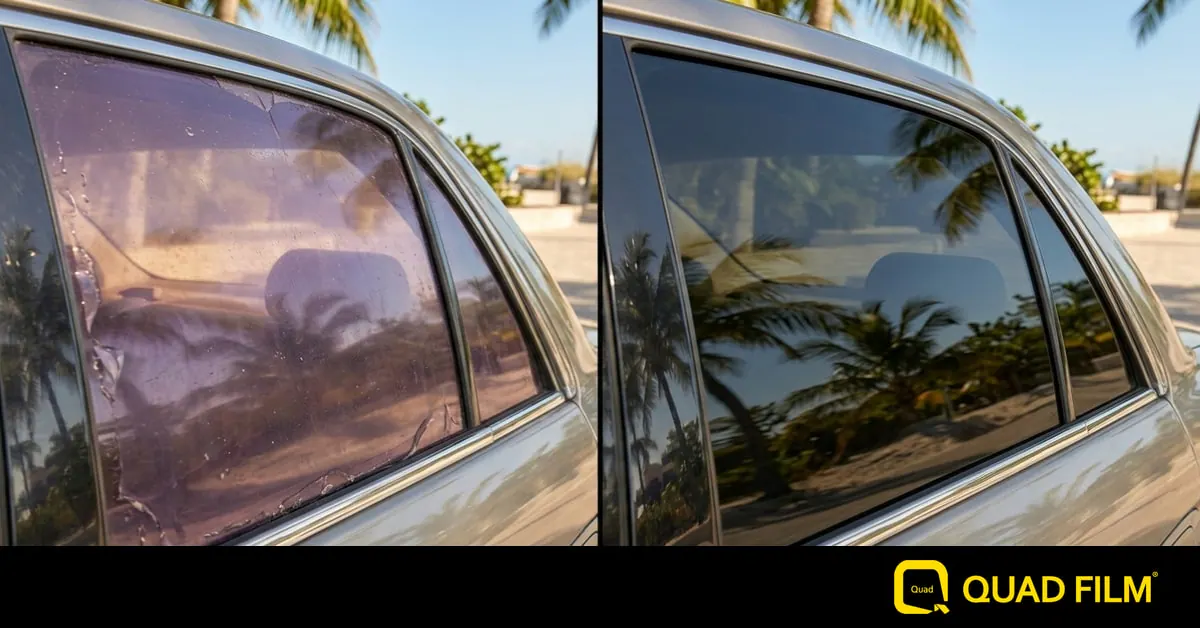
- Sputtered and multi-layer sputtered are not the same film, and the gap is a 3 to 5 times difference in lifespan.
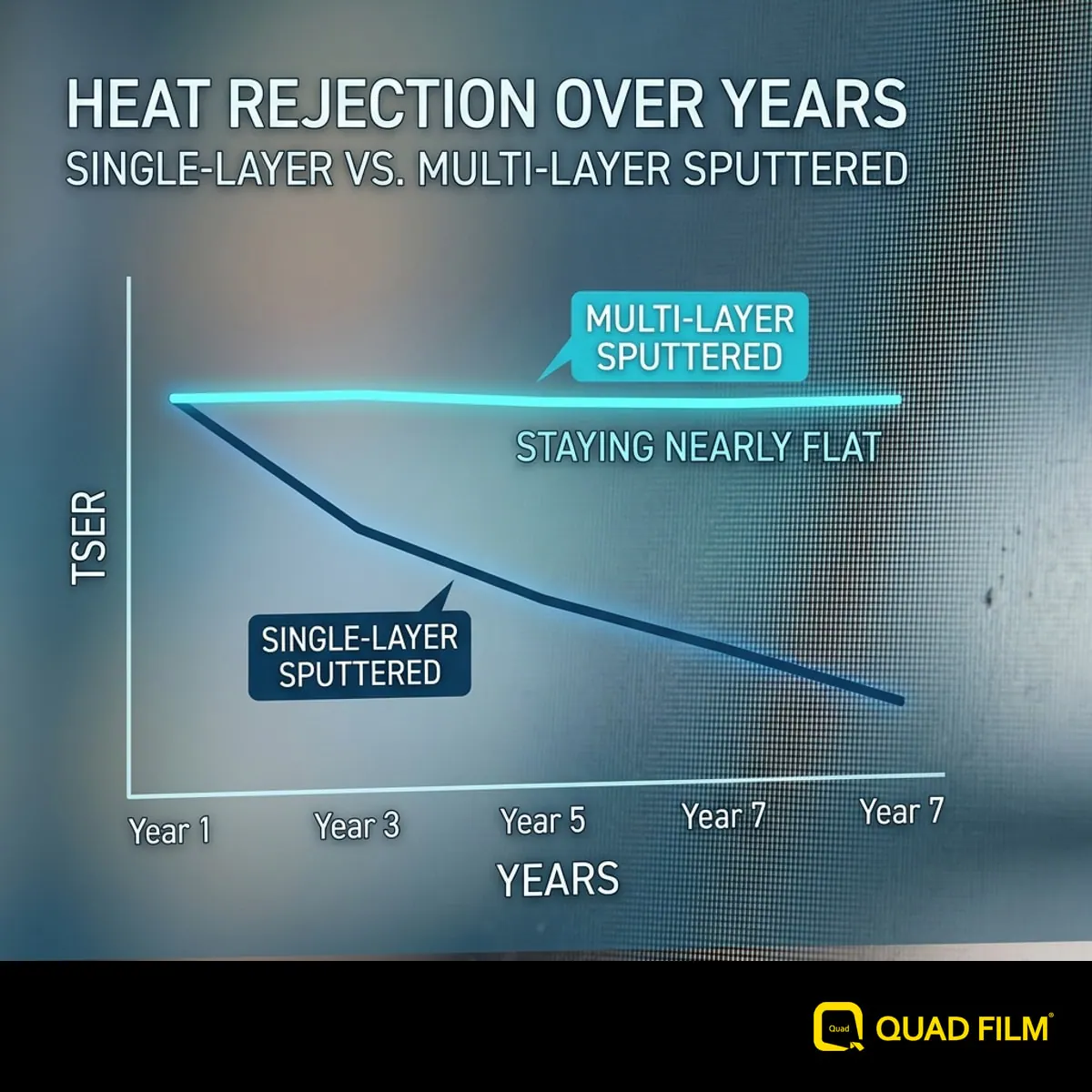
- A single metal layer oxidises and fades, while a multi-layer dielectric stack resists oxidation and holds heat rejection for years.
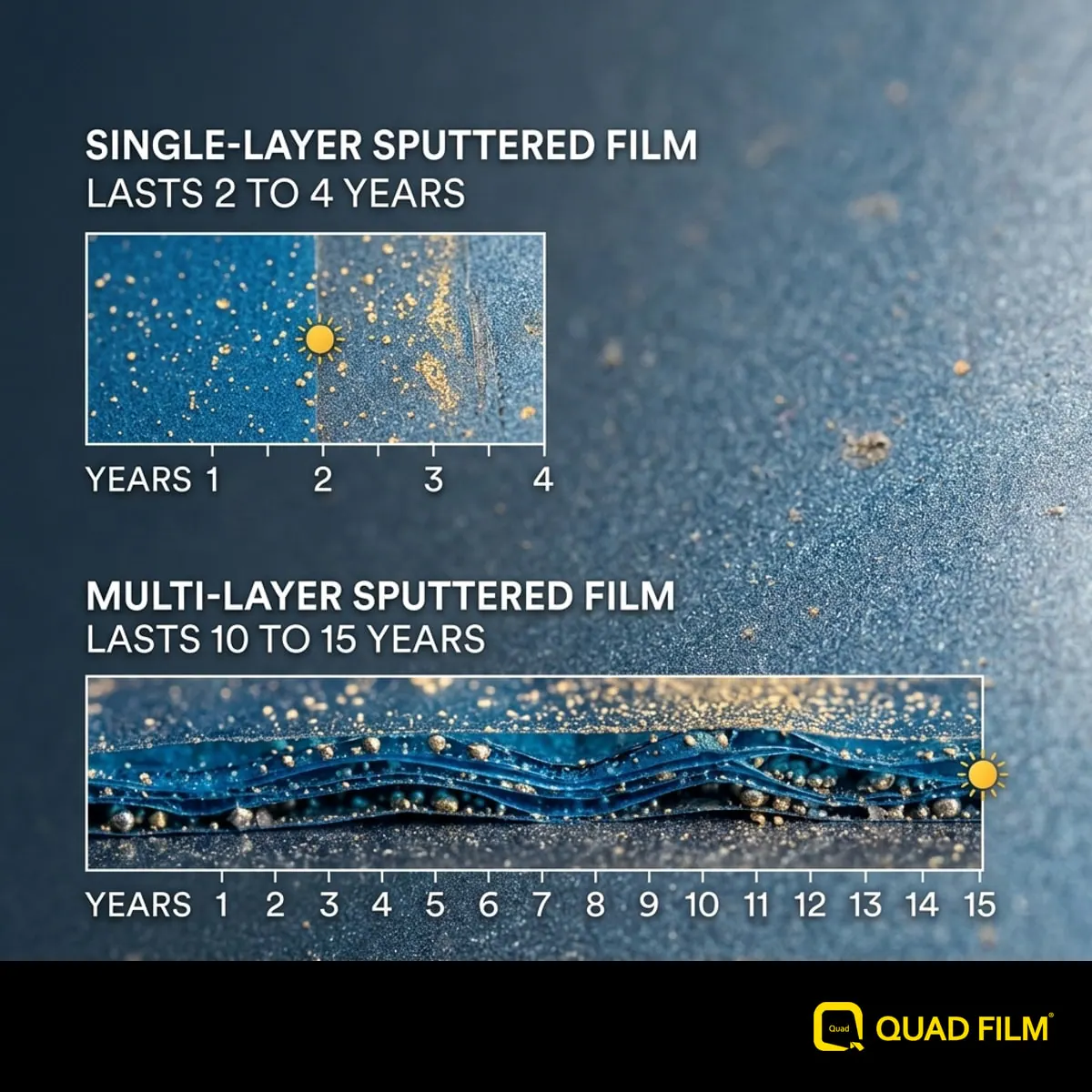
- Independent market sources put single-layer sputtered life at roughly 2 to 4 years, against 10 to 15 years for quality multi-layer film.
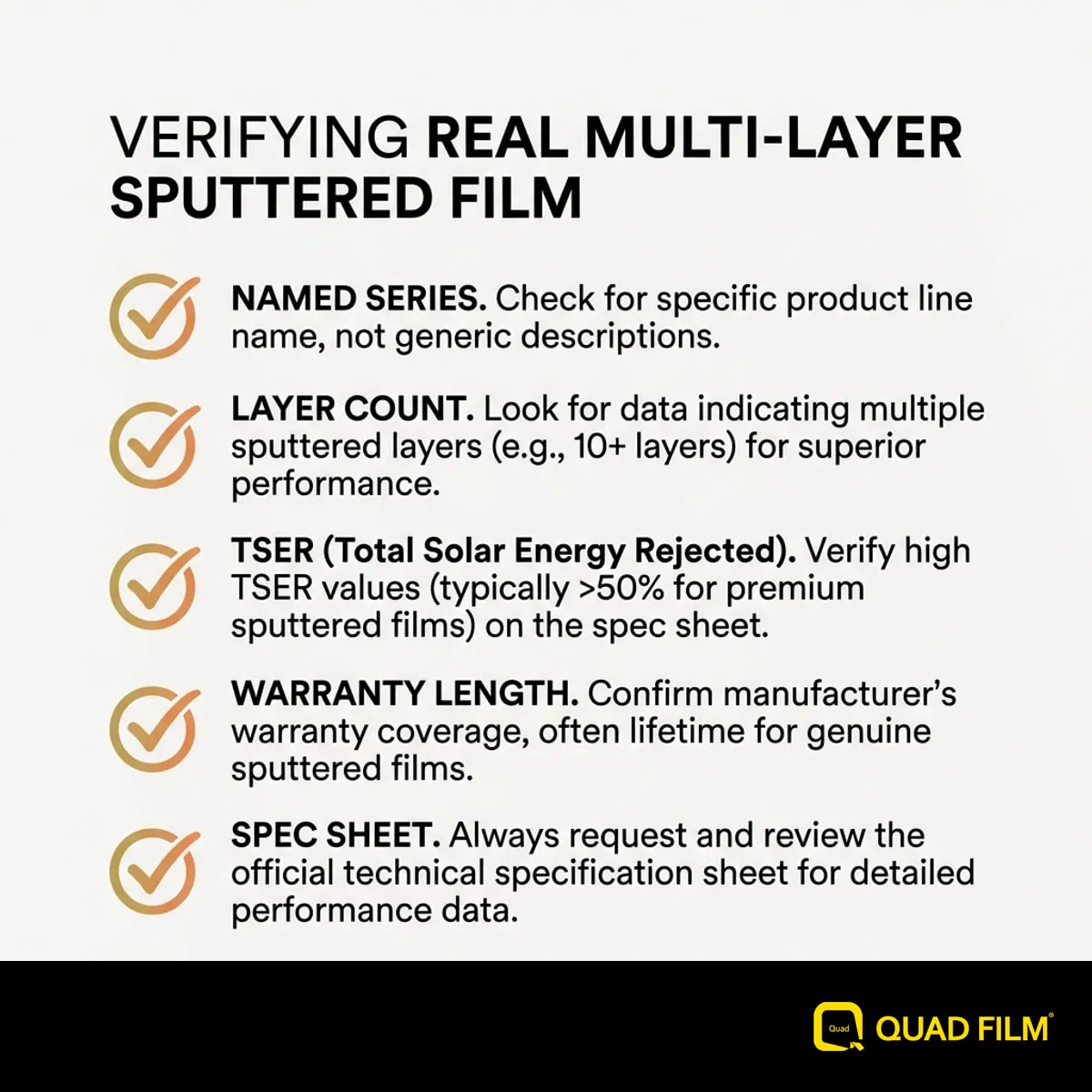
- Verify what you are buying with the named series, the layer count, the TSER, and the written warranty.
The difference between sputtered and multi-layer sputtered tint is not a marketing nuance, it is the difference between a film that fades in a few years and one that lasts well over a decade. Many buyers are quoted sputtered or metallic premium tint and assume they are getting the long-life product, when in fact a single-layer sputtered film and a multi-layer sputtered film age very differently. This guide makes the distinction concrete, explains the physics in plain terms, and shows how to confirm which one you are actually paying for.
Sputtered Is Not the Same as Multi-Layer Sputtered
Both films are made by sputtering, a vacuum process that deposits metal onto the film, so the names sound interchangeable. The difference is how many functional layers result. A single-layer sputtered film has essentially one metal layer doing the work. A multi-layer sputtered film stacks many ultra-thin metal and dielectric layers that work together. That structural gap drives every difference that follows, from how the film reflects heat to how long it survives tropical sun.
Here is the gap in plain terms before we go deeper.
- Single-layer sputtered: One continuous metal layer carries the reflection, which performs when new but is exposed to the slow chemistry of heat and moisture.
- Multi-layer sputtered: A tuned stack of many metal and dielectric layers shares the work, so no single exposed layer carries the whole load.
- Why it matters here: Under a UV index that regularly hits 11 to 13 and daytime heat above 35 degrees, that structural difference decides whether a film holds for a few years or well over a decade.
How Single-Layer Sputtered Film Works and Why It Oxidises
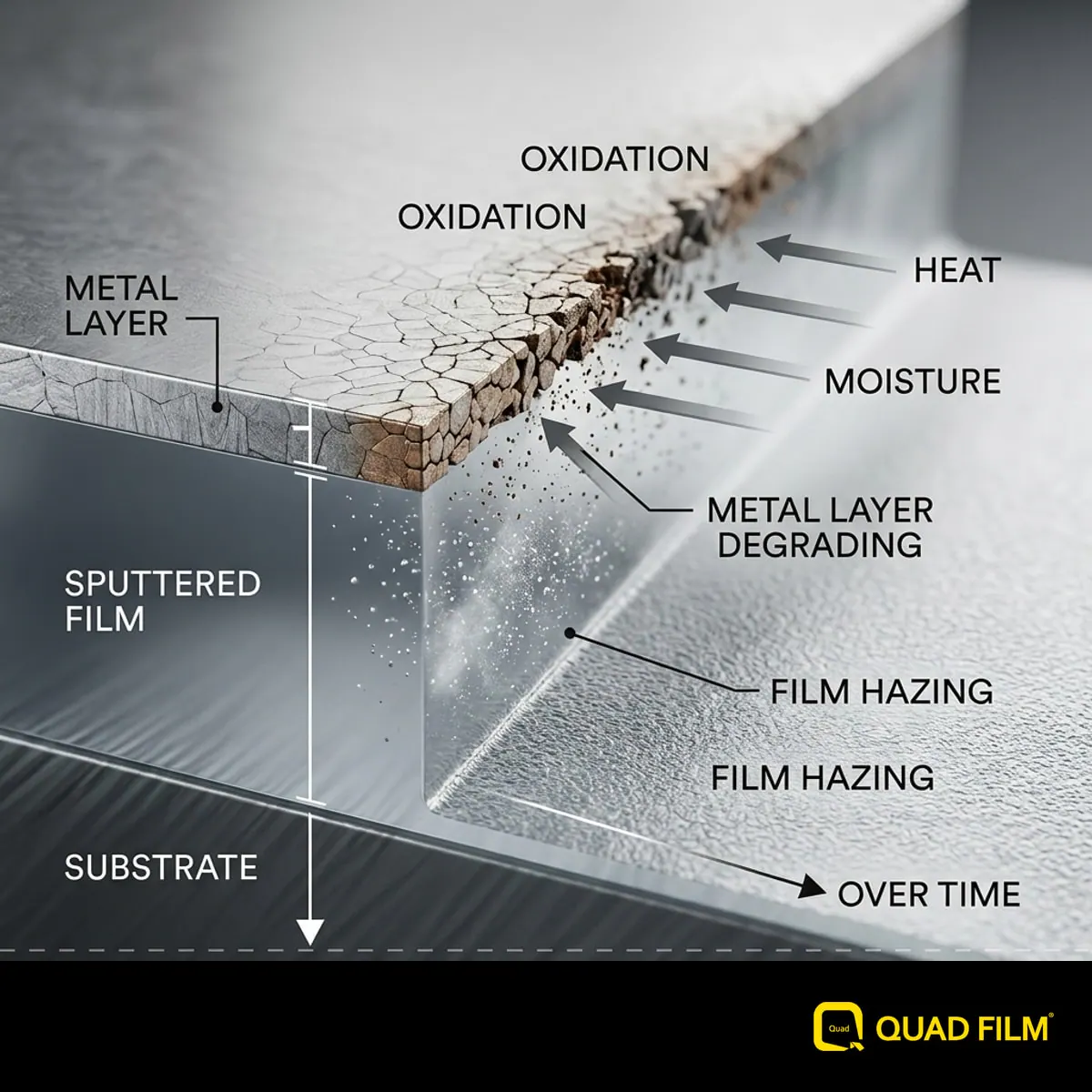
A single-layer sputtered film reflects heat using one continuous metal layer. It performs reasonably well when new, but that lone layer is exposed to the slow chemistry of heat and moisture over time. As it oxidises, the metal degrades, the film loses heat rejection, and the colour shifts, often toward a hazy or purplish look. According to third-party market sources such as Pro-XPEL, single-layer sputtered film can begin to oxidise and fade in roughly 2 to 4 years. That figure is an external market claim rather than a Quad Film specification, but it reflects the common experience with single-layer metal films in hot climates.
Signs a Single-Layer Film Is Ageing
You can usually see a single-layer film declining before it fails outright. The common signals in Malaysian conditions are these.
- Colour shift: The film drifts toward a purple or bronze haze as the metal degrades, a change covered in our guide on why cheap film turns purple.
- A hotter cabin: Heat rejection slips as the metal oxidises, so the car feels warmer on the same afternoon drive it once handled comfortably.
- Patchy or cloudy areas: Oxidation rarely spreads evenly, so you may notice hazing first on the glass that catches the most direct sun, such as the rear windscreen.
How Multi-Layer Sputtered Works: The Metal Stack
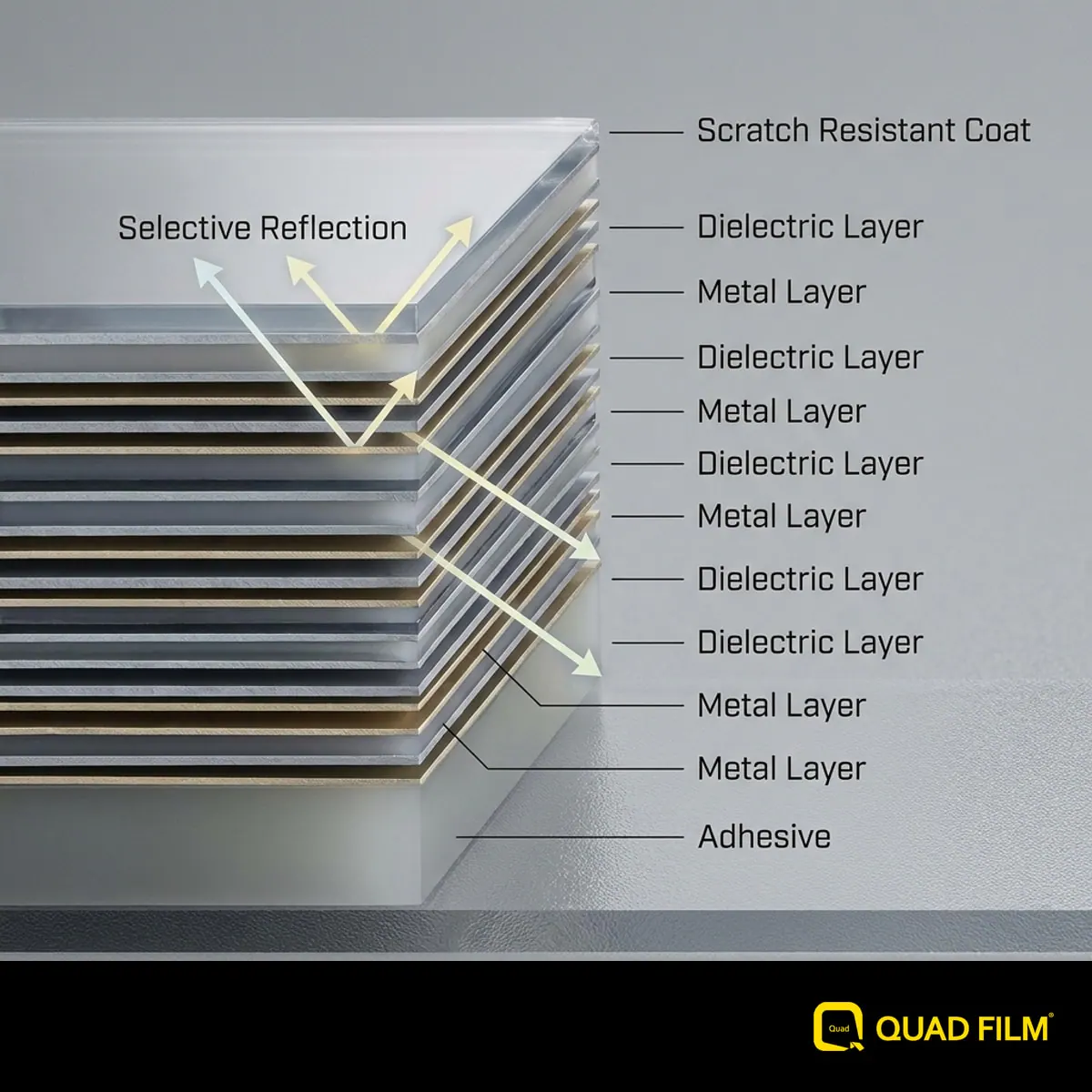
A multi-layer sputtered film works differently. Instead of one reflective layer, it uses a precisely engineered stack of many metal and dielectric layers that selectively reflect solar energy across the spectrum. Quad Film MEGALUX uses 48 layers and METALUX uses 24 layers, each at 4 mil, built from 36 rare earth metals in a German Leybold dual-vacuum chamber and engineered to resist oxidation. Because the reflection is spread across a tuned stack rather than carried by a single exposed layer, the film holds its heat rejection and colour far longer. This is the structural reason multi-layer film outlasts single-layer film by a wide margin.
Why the Stack Holds Up
The advantage is not only how the stack reflects heat, it is how it protects itself. Quad Film builds MEGALUX and METALUX from 36 rare earth metals deposited in a German Leybold dual-vacuum chamber, with the working layers sealed inside the stack rather than left exposed like a single metal layer. That construction is engineered to resist the oxidation that ages single-layer film, which is why a multi-layer film can hold a TSER of 72 to 85 percent on MEGALUX and 70 to 83 percent on METALUX over years rather than months. MEGALUX also blocks 99 percent of UV, the same radiation that accelerates fade on weaker films.
The Lifespan Gap: 2 to 4 Years vs 10 to 15 Years
This is where the distinction becomes a money decision. Independent market sources put single-layer sputtered film at roughly 2 to 4 years before noticeable oxidation, while quality multi-layer sputtered film is warranted far longer. Quad Film METALUX carries a 10-year warranty and MEGALUX a 15-year warranty. That is a 3 to 5 times difference in service life. A film that needs stripping and replacing every few years costs more over a decade than a film bought once, which is why the cheaper option is often the more expensive choice in the long run.
The Ten-Year Cost Picture
To see why lifespan is really a budget question, compare what each path costs across a decade rather than on day one.
| Film type | Typical lifespan | Quad Film series | Full Car from (Standard) | Replacements over 10 years |
|---|---|---|---|---|
| Single-layer sputtered | 2 to 4 years (third-party figure) | Not in Quad multi-layer range | Varies by shop | Around 3 to 5 times |
| Multi-layer sputtered (METALUX) | 10-year warranty | METALUX, 24-layer | RM3,200 | Once |
| Multi-layer sputtered (MEGALUX) | 15-year warranty | MEGALUX, 48-layer | RM4,600 | Once |
The single-layer route can look cheaper on the quote, but a film that needs stripping and refitting several times rarely ends up cheaper once the repeated labour and downtime are counted.
Performance Over Time
Lifespan is not only about the film surviving, it is about it still working. A single-layer film does not just fail at the end, it loses heat rejection gradually as the metal oxidises, so the cabin gets hotter year on year well before the film looks obviously bad. A multi-layer film holds its TSER much more steadily across its life, with MEGALUX rated at a TSER of 72 to 85 percent and METALUX at 70 to 83 percent. The practical result is that the multi-layer film keeps the car cooler for longer, not just looks better for longer.
What Holding Heat Rejection Means Day to Day
A steady TSER is not an abstract number, it shows up in how the car feels and runs.
- A cooler cabin on arrival: Holding a TSER of 70 to 85 percent across the range means less heat soak after a car sits in open-air mall parking, so the first minutes of driving are more comfortable.
- Less load on the air conditioning: When the film keeps rejecting heat, the system works less hard to cool the cabin on a 35 degree afternoon.
- Consistent looks and clarity: Because the stack resists oxidation, the film stays neutral and clear instead of drifting hazy, so night visibility and colour stay close to day one.
How to Tell What You Are Actually Being Sold
Because the names are so close, verification matters. Before you pay, confirm the details that separate the two films.
- Ask for the named brand and film series, not just the word sputtered or metallic.
- Ask for the layer count, since multi-layer film is defined by its stack.
- Ask for the TSER figure and check it is quoted as TSER, not only infrared rejection.
- Ask for the written warranty length, since a 10 to 15 year warranty signals a genuine multi-layer film and a short warranty signals single-layer.
- Ask to see the spec sheet and warranty card before payment.
Red Flags That Signal Single-Layer Film
A few answers tell you the quote is for a single-layer film dressed up in premium language.
- Only the word sputtered or metallic: With no named series and no layer count, there is nothing to verify.
- A short or vague warranty: A 1 to 3 year cover, or a lifetime claim with no document, rarely sits behind a genuine multi-layer film.
- Infrared rejection quoted alone: A headline infrared number with no TSER hides how the film performs across the whole solar spectrum.
- No spec sheet on request: A shop that cannot produce the spec sheet and warranty card before payment is asking you to trust the label, not the film.
How to Choose
If you keep your car for years or park daily in the sun, the multi-layer sputtered film is the clear long-term value, since it holds heat rejection and colour far longer. If budget is tight and the car is short-term, a single-layer film can work, as long as you go in knowing it will fade sooner. Either way, decide on the spec sheet, not the label. Quad Film full car pricing in the Standard range is about RM3,200 for METALUX and RM4,600 for MEGALUX. Ask a verified installer to quote a named multi-layer series with its warranty in writing. You can compare the range on the Quad Film window tint page and find a vetted fitter through the installer directory.
Closing
Sputtered and multi-layer sputtered tint share a name and almost nothing else when it comes to how long they last. One leans on a single metal layer that oxidises in a few years, the other uses an engineered stack that holds for over a decade. Confirm the series, the layer count, the TSER, and the warranty, and you will know exactly which film is going on your glass. For more, start with our complete car tint guide, then read how nano-ceramic compares to sputtered film, why proper multi-layer installation is so rare, why shops push ceramic film, why cheap film turns purple, and the best tint for a Tesla or EV.
Frequently Asked Questions
What is the difference between sputtered and multi-layer sputtered tint?
Single-layer sputtered film uses essentially one metal layer, while multi-layer sputtered film uses a stack of many metal and dielectric layers. The multi-layer stack reflects heat more selectively and lasts far longer.
How long does sputtered tint last?
Third-party market sources put single-layer sputtered film at roughly 2 to 4 years before oxidation, while quality multi-layer sputtered film is warranted for 10 to 15 years.
Why does metallic tint oxidise?
A single exposed metal layer reacts slowly with heat and moisture over time, which degrades the metal, reduces heat rejection, and shifts the colour toward a haze. A tuned multi-layer stack is engineered to resist this.
Is multi-layer sputtered worth the extra cost?
For long ownership or daily sun parking, usually yes, because a 3 to 5 times longer life means you buy once instead of replacing the film every few years.
How can I verify I am getting real MLS film?
Ask for the named series, the layer count, the TSER figure, and the written warranty length, then check the spec sheet and warranty card before paying. A long warranty is a strong signal of genuine multi-layer film.
How much does multi-layer sputtered tint cost in Malaysia?
Quad Film full car pricing in the Standard range is about RM3,200 for METALUX and RM4,600 for MEGALUX. Judge the value against lifespan, since METALUX carries a 10-year warranty and MEGALUX a 15-year warranty, rather than comparing the sticker to a short-life single-layer film.
Does multi-layer sputtered film affect signal like older metallic tint?
Signal friendliness is documented only for MATRIX nano-ceramic, which is the safe pick for the windscreen where toll tags and cameras sit. For a metal multi-layer film, confirm placement with your installer rather than assuming it is signal-safe. Our nano-ceramic versus sputtered guide explains the trade-off.
Can I tell single-layer from multi-layer film just by looking?
Not reliably on day one, since both look dark and clear when new. The difference shows over years as a single-layer film hazes and loses heat rejection. The only sure check upfront is the named series, the layer count, the TSER figure, and the written warranty.
Protect your Investment today
Don't wait for stone chips to ruin your paint. Speak to our experts about custom PPF and Tinting solutions.