
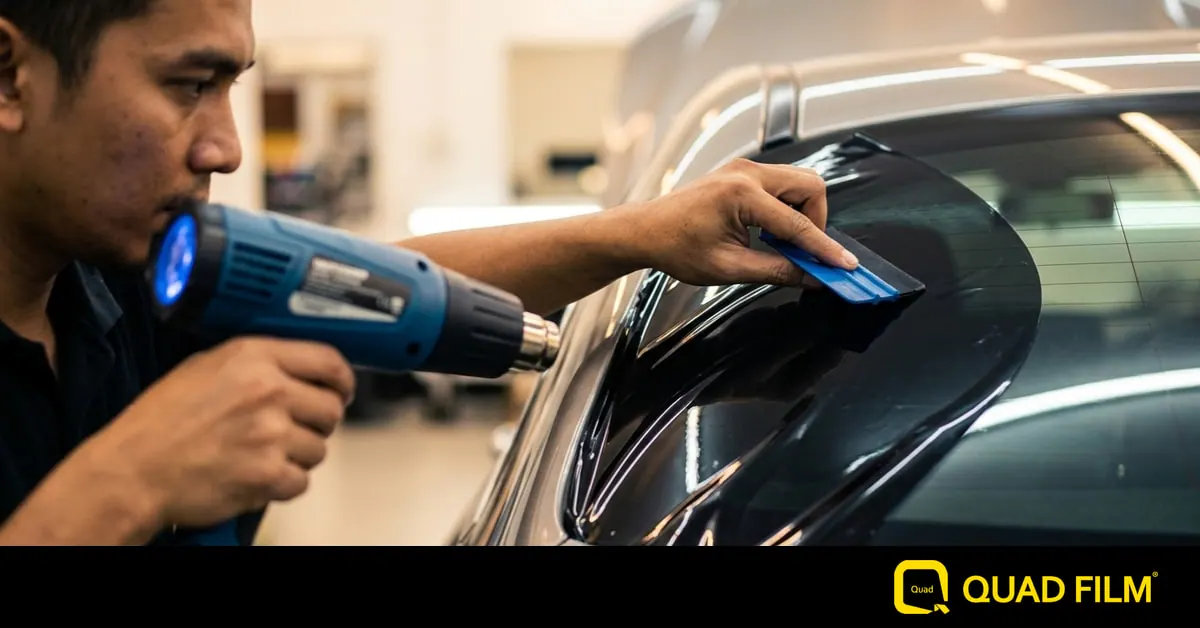
- Choosing premium film is only half the decision, since even the best film fails with a poor install.
- Multi-layer sputtered film is genuinely hard to fit, because the metal stack must be molded around curved glass without fracturing the layers.
- A bad install shows up as delamination, hazing, micro-fractures, and premature oxidation lines, not a film defect.
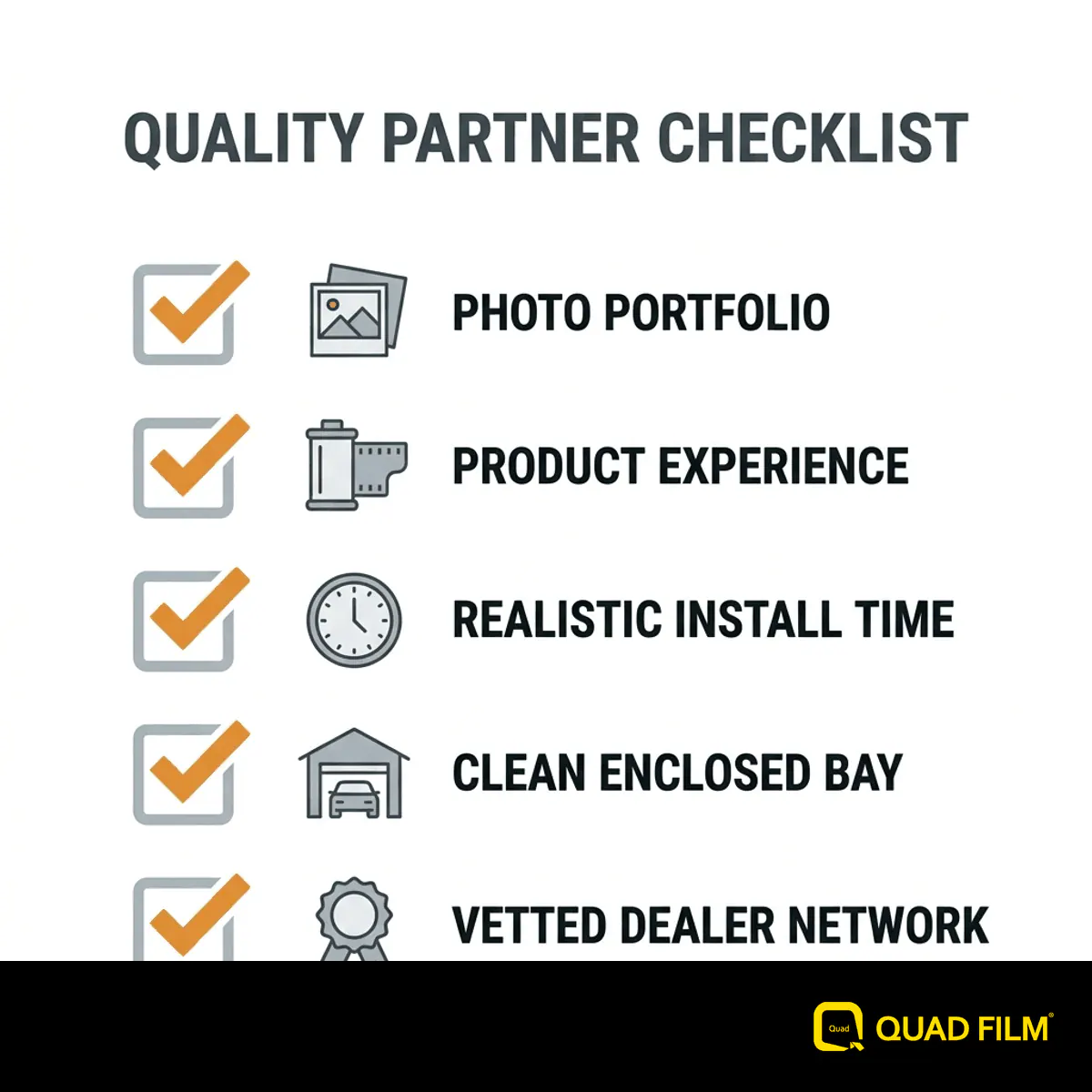
- Vet the installer the way you vet the film, by portfolio, comparable premium work, and a realistic install time.
Getting multi-layer sputtered film installation right in Malaysia is far harder than most buyers realise, and it is the reason premium film sometimes fails within months. The film itself can be excellent, but a multi-layer metal stack molded badly around curved glass will haze, lift, or oxidise early. Choosing the film is one decision, choosing an installer who can actually fit it is the other, and very few shops are set up to do the second one well. This guide explains what makes the install so demanding and how to vet an installer before you commit.
Why the Installer Matters as Much as the Film
Tint is one of the few products where the quality of the result depends as much on the hands fitting it as on the material itself. A premium multi-layer sputtered film carries a 10 to 15 year warranty, but that lifespan assumes a clean, correct install. Trapped contamination, stretched layers, or poorly wrapped edges create the exact entry points that lead to early failure. In other words, you are buying two things at once, a film and an installation, and the second is easy to underestimate.
Three things in particular ride on the install rather than the film.
- Warranty validity: A 10 to 15 year warranty assumes a correct fit, so a sloppy install can leave you holding a long warranty that the failure pattern quietly voids.
- Heat rejection and clarity over time: The film can only reject heat and stay optically clean if the layers are intact, so molding damage undermines the exact performance you paid for.
- Edge life in our climate: Daily heat above 35 degrees, monsoon humidity, and open-air mall parking all stress the film edges, so clean sealing is what keeps water and heat from working in early.
What Makes Multi-Layer Sputtered Film Hard to Install
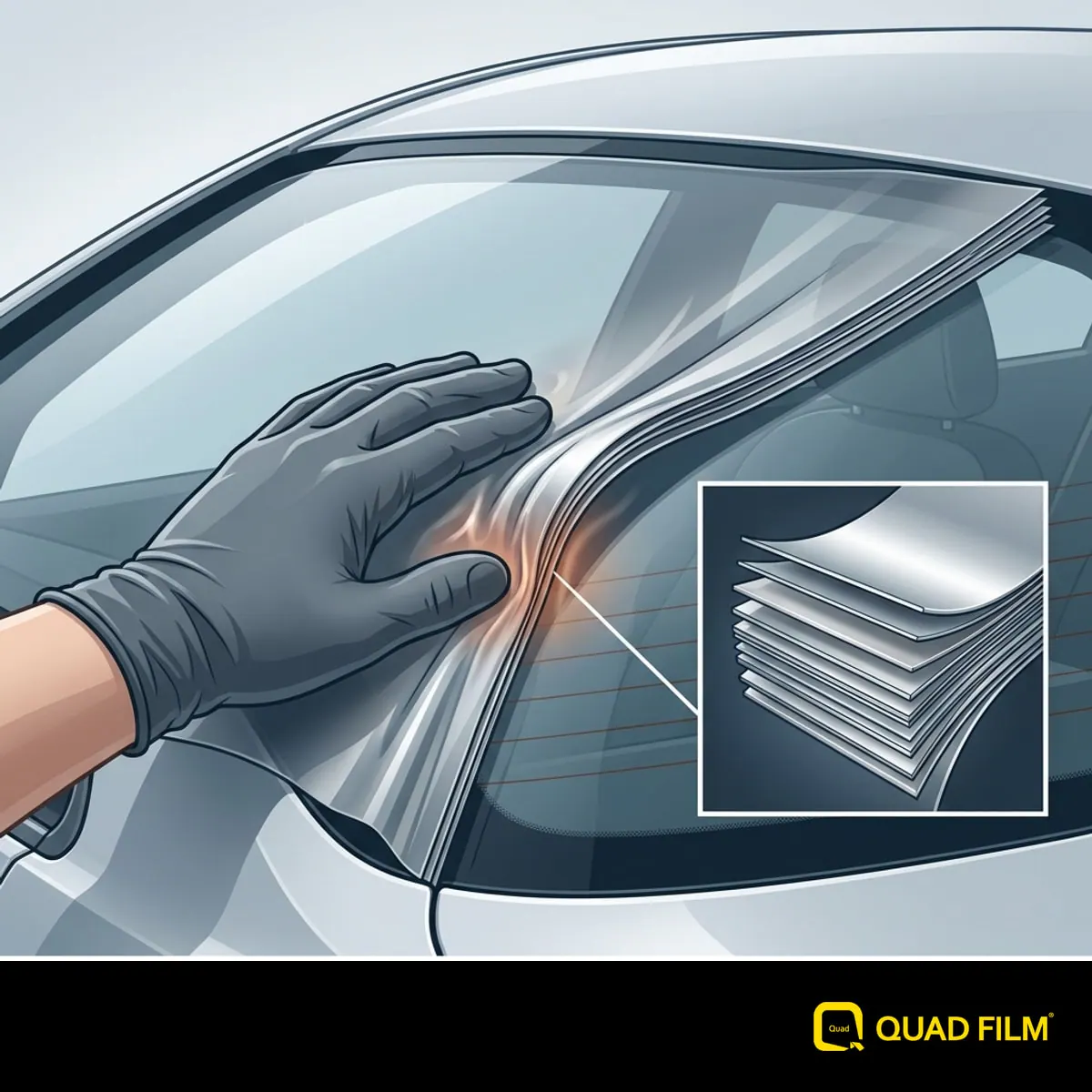
Multi-layer sputtered film is built from many ultra-thin metal layers. Quad Film MEGALUX uses 48 layers and METALUX uses 24 layers, each at 4 mil, made from 36 rare earth metals in a German Leybold dual-vacuum chamber. That construction is what gives the film its heat rejection and longevity, but it also makes it stiff and unforgiving compared with a simple ceramic film. To fit it on a curved rear windscreen or a complex door glass, the installer must mold the film with heat so it conforms to the curve without fracturing the metal stack. Too much heat or force damages the layers, too little leaves creases and lifting. It is a genuine craft skill, not a routine task.
The Stages Where Skill Shows
The difficulty is not one moment, it is several stages where a weak installer loses the job.
- Pattern cutting: The film must be cut to the exact glass profile, often with computer-cut patterns, so it sits without forcing or trimming on the glass itself.
- Heat molding: The stiff metal stack has to be relaxed with controlled heat and shrunk to the curve of a rear windscreen, the single hardest step on multi-layer film.
- Edge wrapping and sealing: Edges must be tucked and sealed cleanly, since this is where lifting and oxidation begin if the work is rushed.
- Contamination control: The whole fit has to happen in a clean enclosed bay, because a single trapped speck under a 4 mil metal film shows as a permanent defect.
This is also why a quick quote and a same-hour turnaround on multi-layer film is a warning rather than a convenience.
How a Bad Install Fails
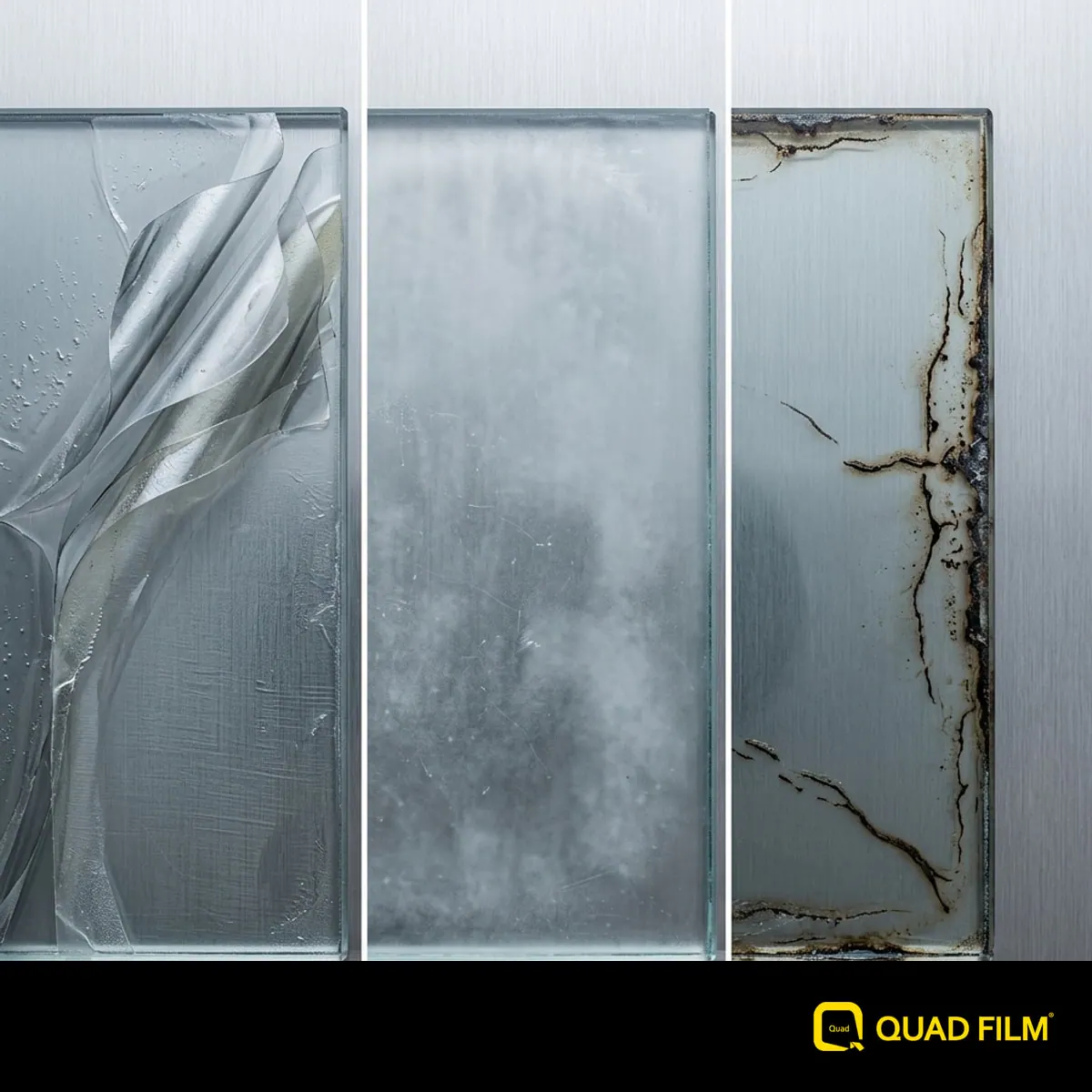
When the install goes wrong, the symptoms look like a film fault but are really a workmanship fault. Knowing the signs helps you judge a shop's past work.
Delamination
If the metal layers are stressed or the film is poorly bonded, the layers can separate over time. This is the failure sometimes described as the film coming apart, and it is an install-quality risk, not a defect in the film.
Hazing and micro-fractures
Overheating or overstretching during molding can create tiny fractures in the metal stack that scatter light, leaving a haze that no cleaning removes. It often appears first on the most curved sections.
Premature oxidation lines
Poor edge sealing lets moisture reach the metal layers, which can create oxidation lines along the edges far sooner than the warranty period. Clean edge work is what prevents this.
Bubbling and Lifting
Trapped air or moisture and weak adhesion can leave bubbles or lifting edges that show up in the first weeks. On a premium film this is almost always a fit problem rather than a material one, and it is covered in detail in our guide on tint bubbling and how to prevent it.
The common thread is that none of these failures point to the film. A premium multi-layer sputtered film fails early almost only when the install is wrong, which is why judging a shop's past work tells you more than any sales claim.
The Two-Tier Decision Framework: Brand Plus Installer
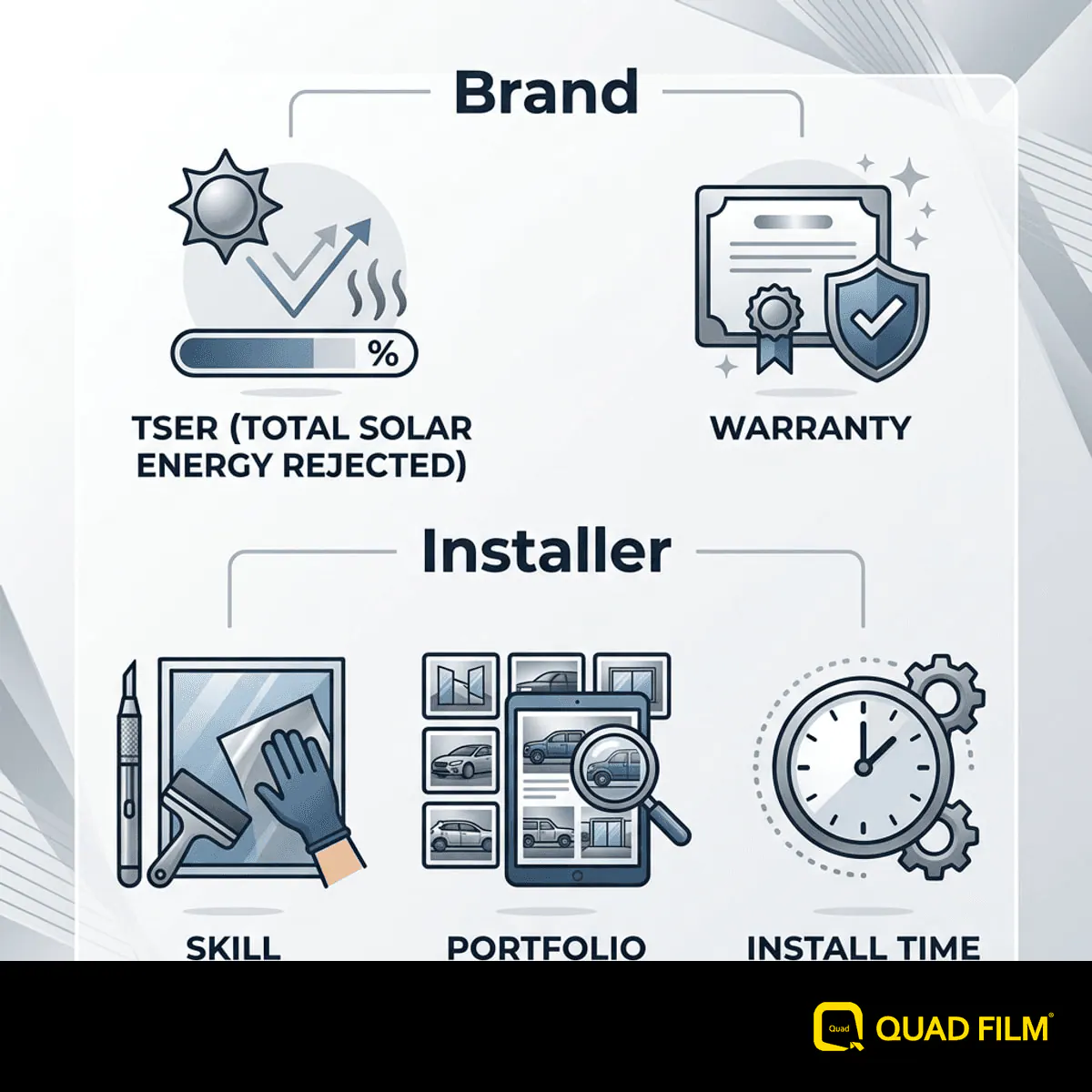
The smart way to buy premium tint is to treat it as two decisions stacked together. The first tier is the film, where you confirm the brand, the series, the TSER, and the warranty. The second tier is the installer, where you confirm the skill to fit that specific film correctly. A great film with a weak installer gives you a short-lived result, and a great installer can only do so much with a poor film. You need both tiers to land for the warranty to mean anything. Most buyers focus entirely on the first tier and forget the second.
To make the framework practical, here is what each tier should include before you pay.
- Tier one, the film: Confirm the brand and named series, the layer count and warranty length, and that the spec sheet is real. Quad Film MEGALUX at 48 layers with a 15-year warranty and METALUX at 24 layers with a 10-year warranty are examples of named, verifiable series.
- Tier two, the installer: Confirm curved-glass experience with that exact film, a realistic install time, a clean enclosed bay, and vetted dealer status.
Both boxes have to be ticked. A flagship film fitted poorly fails early, and a skilled installer cannot rescue a no-name film with no warranty behind it.
How to Vet a Multi-Layer Sputtered Installer
You can judge an installer before you book with a few direct checks.
- Ask to see a portfolio of finished multi-layer sputtered or comparable premium work, ideally on curved glass.
- Ask how long they have fitted this specific film, since experience with the exact product matters.
- Ask about the install time, because a proper multi-layer fit takes longer than a quick ceramic job and a rushed timeline is a warning sign.
- Confirm they work in a clean, enclosed bay rather than an open-air space that traps dust.
- Ask whether they are part of the film maker's vetted dealer or installer network. Quad Film runs a vetted dealer and installer network with training and marketing support, which is a useful signal of capability.
Red Flags to Walk Away From
A few answers should make you pause before booking.
- No curved-glass portfolio: If a shop cannot show finished work on rear windscreens or complex door glass, you have no proof they can mold the metal stack.
- A same-hour promise: A multi-layer fit quoted as fast as a ceramic job usually means corners on molding or contamination control.
- An open-air or dusty bay: Any workspace that cannot keep dust off a 4 mil metal film is a setup for permanent defects.
- Vague film naming: If the shop will not name the exact series and warranty, you cannot hold either the film or the fit to account.
- No vetted or trained status: Without manufacturer training, you are trusting general tinting experience to carry a specialist job.
Why Most Shops Push Easy Ceramic Instead
This is the core reason the skill is so rare. Multi-layer sputtered film is slower and harder to fit, and it ties the shop to a long warranty, so many shops simply default to ceramic, which is forgiving and quick. That commercial preference, not any weakness in the film, is why so few installers genuinely master the multi-layer fit. Saying that less than one percent can do it well is a positioning statement about how uncommon the skill is, not a measured survey, but the underlying point holds. If you are a shop that does invest in the skill, becoming a vetted dealer turns that capability into a real advantage. For the customer view of this dynamic, see our piece on why tint shops push ceramic film.
For a shop, the maths usually favours the easy fit, since a faster job with a shorter warranty means more cars through the bay and less risk to carry. The flip side is that the few shops willing to master the multi-layer fit face very little real competition for premium work. Investing in the skill and joining a vetted dealer network, with the training and marketing support that comes with it, turns a hard install into a genuine point of difference rather than a job to avoid.
How to Choose
Start with the film, then qualify the installer just as hard. Confirm the named series and warranty, then ask to see curved-glass work, check the install time, and confirm a clean bay and vetted status. The extra diligence is what protects the long warranty you are paying for. Ask a verified installer to show their multi-layer work and quote a realistic timeline. You can compare the film range on the Quad Film window tint page and find a vetted fitter through the installer directory.
Closing
Premium multi-layer sputtered film rewards you with years of heat rejection, but only when it is fitted by someone who can mold the metal stack cleanly around your glass. Treat the install as a second, equal decision, vet the installer the way you vet the film, and you avoid the early failures that get wrongly blamed on the product. For more, start with our complete car tint guide, then read how sputtered and multi-layer sputtered film differ, how nano-ceramic compares to sputtered film, what causes tint bubbling and how to prevent it, and the difference between factory and aftermarket tint.
Frequently Asked Questions
How do I know if a tint installer can fit multi-layer sputtered film?
Ask to see a portfolio of finished multi-layer or comparable premium work on curved glass, ask how long they have fitted that specific film, and confirm they work in a clean enclosed bay. Vetted dealer status is another useful signal.
What goes wrong with a bad sputtered film install?
The common failures are delamination where the metal layers separate, hazing and micro-fractures from overheating or overstretching, and premature oxidation lines from poor edge sealing. These are workmanship issues, not film defects.
How long should a proper installation take?
Longer than a quick ceramic job. A correct multi-layer fit takes time to mold the film cleanly around curved glass, so a rushed timeline is a warning sign rather than a convenience.
Can any tint shop install premium film?
Many can stock it, but far fewer can fit it well, because molding the metal stack around curves without damaging it is a genuine skill. That is why vetting the installer matters as much as choosing the film.
What should I ask a tint installer before booking?
Ask for the named film series and warranty, a portfolio of curved-glass work, their experience with that exact film, the expected install time, and whether they are part of the maker's vetted network.
Why do so few installers fit multi-layer sputtered film?
Because molding a stiff 4 mil metal stack around curved glass without fracturing the layers is a real craft skill, and it ties the shop to a long 10 to 15 year warranty. Most shops default to forgiving ceramic instead, so genuine multi-layer experience stays uncommon rather than impossible to find.
Is a bad install covered by the film warranty?
A film warranty covers material defects, not workmanship errors. Delamination, hazing, and oxidation lines from a poor fit are install faults, which is exactly why vetting the installer matters as much as the film. A vetted dealer with manufacturer training reduces that risk.
Is multi-layer sputtered film worth the harder install?
For drivers who keep a car for years and want long-term heat rejection, yes. Quad Film MEGALUX carries a 15-year warranty and METALUX a 10-year warranty, but that lifespan only holds with a clean fit, so the harder install is the price of the longer result.
Protect your Investment today
Don't wait for stone chips to ruin your paint. Speak to our experts about custom PPF and Tinting solutions.