
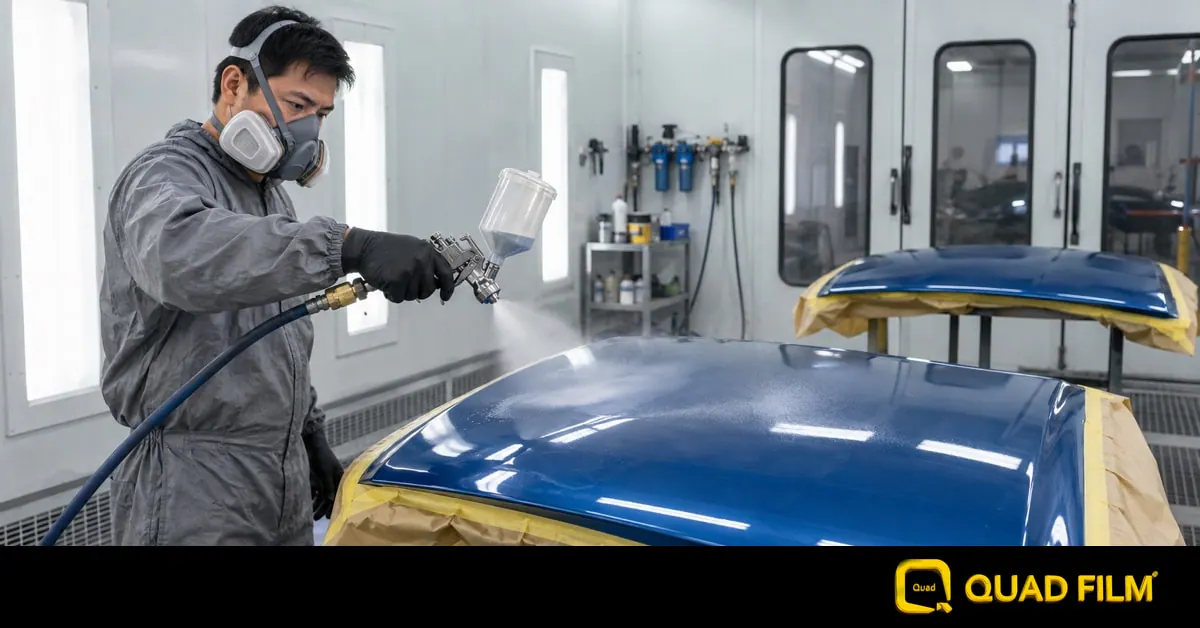
- Spray-on paint protection film (PPF) is sprayed on as a liquid and hardens on the car, while sheet PPF is a clear film cut from a roll and stuck onto the paint.
- It helps to get the exact product name from the installer. With that name, you can find out what the product has been tested against and how thick the finished layer should be.
- Before booking, it is worth asking how a damaged area would be repaired and how the protection would come off later.
- Spray-on PPF and ceramic coating are different products. Ceramic coating is a thin surface treatment, often used to make cleaning easier.
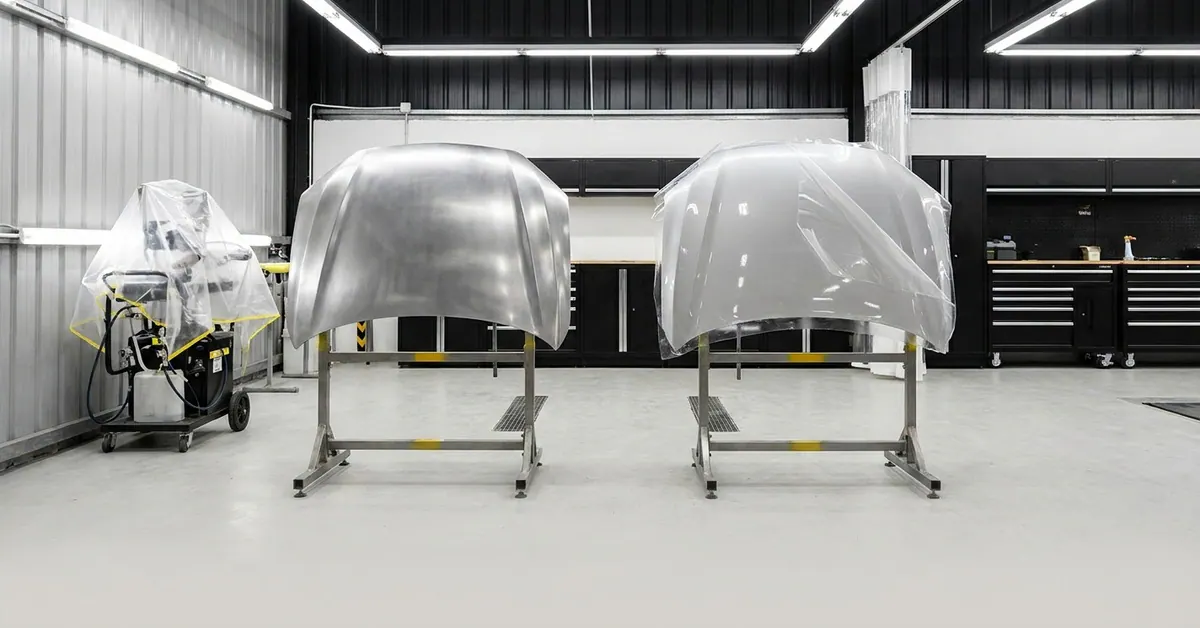
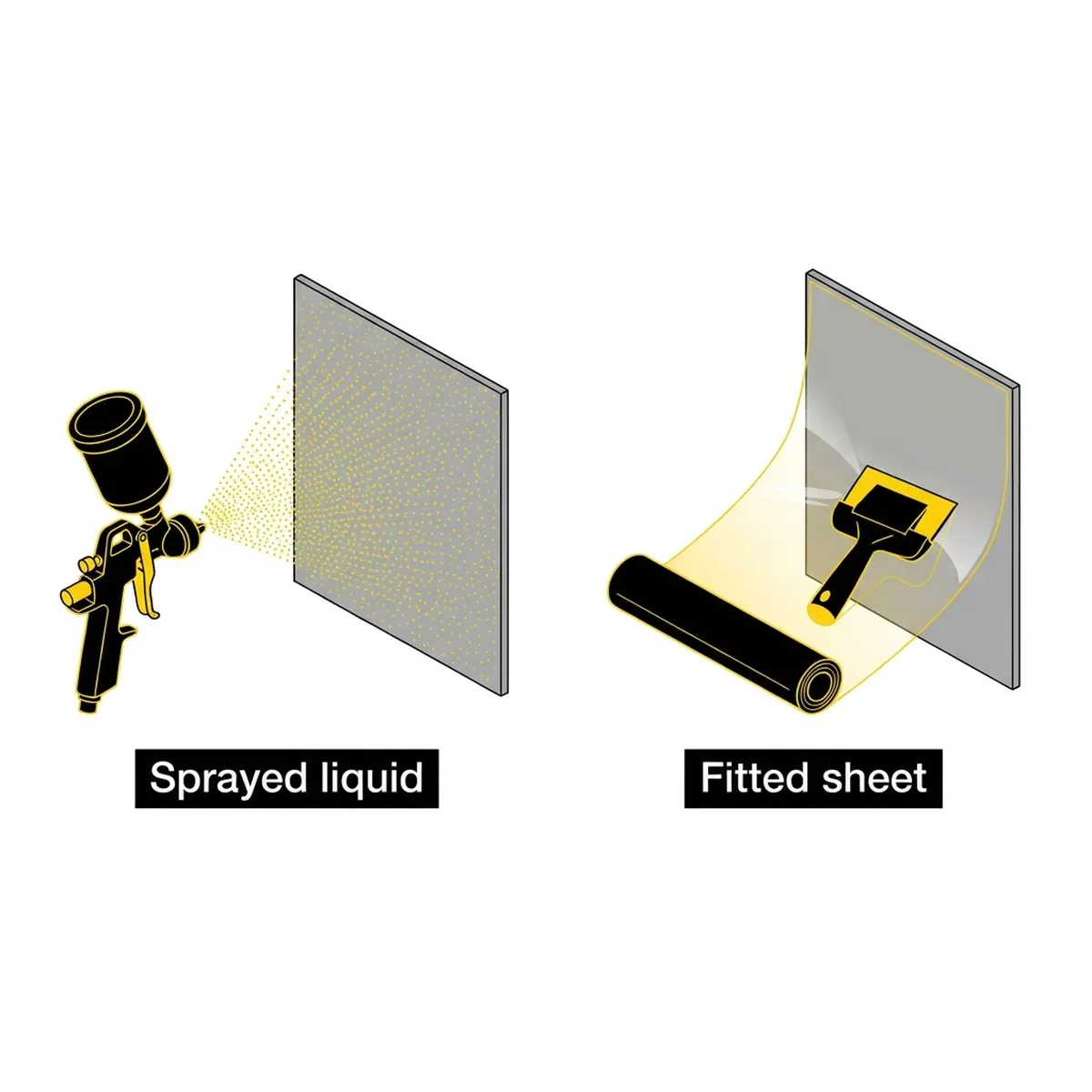
Spray-on PPF goes onto your car as a liquid and hardens into a clear protective layer. Sheet PPF comes as a film on a roll, cut to fit each panel and stuck to the paint with adhesive. Knowing how a product is applied does not tell you how well it protects your paint. That depends on the exact product.
You may also see spray-on PPF sold as sprayable or peelable paint protection. Some products are designed to peel off later. Their materials and application methods differ between suppliers.
If a shop has offered you spray-on PPF, the name alone will not tell you whether it suits your car. Compared with the sheet paint protection film most installers fit, it can need different repairs and a different method of removal.
How are spray-on and sheet PPF applied?
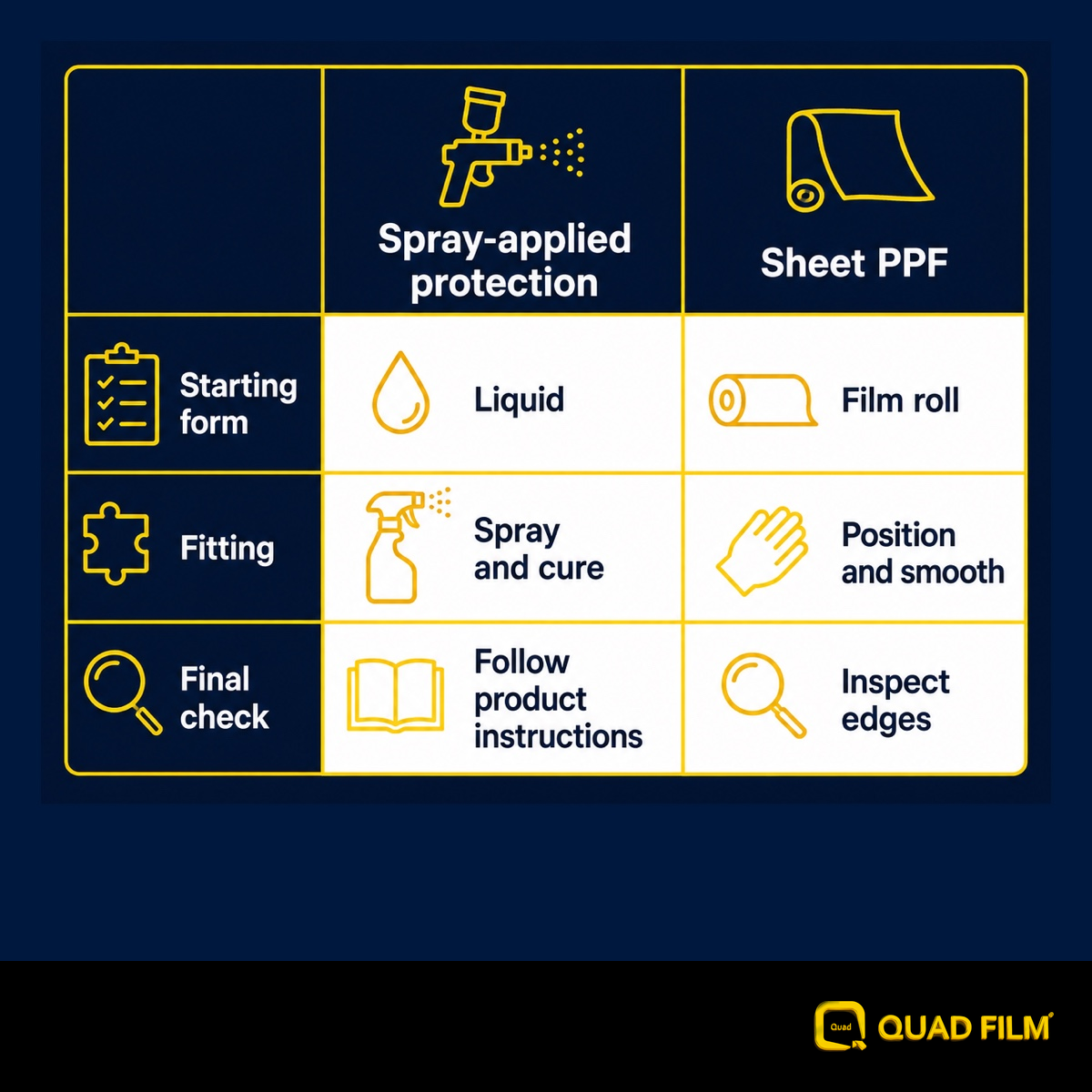
For spray-on PPF, the installer covers up the parts of the car that should not be coated, prepares the paint surface and then sprays the liquid on. It is left to harden for as long as the supplier's instructions say.
Ngenco, a brand of spray-on protection, describes its product on its website as spray-applied protection that can be removed later. That description only covers Ngenco's own product, not every liquid sold as spray-on PPF. You can ask the installer which product they are quoting and whether you can see its written application instructions.
With sheet PPF, the installer lays the film on the panel, smooths it into place and trims or tucks it in at the edges, so you may see a film edge where one piece ends.
There are two different jobs to assess here. For a sprayed product, the shop has to explain how it protects the surrounding trim and glass while applying the material. For sheet film, it has to explain how it fits a flat sheet around the panel's curves and finishes the edges. Neither description tells you that the finished result will be neat without looking at the work.
It is also worth separating application from collection. A panel may have been sprayed or covered while the job still needs time and checks before you take the car home. The quote should account for those stages rather than only the time someone holds a spray gun or a squeegee. That makes the booking easier to compare with another shop's offer.
Does spray-on PPF protect better?
Neither method is automatically better. What matters is the exact product, its test results and how carefully it is applied. With spray-on PPF, the finished thickness depends on the installer following the application instructions. Your installer can explain how that thickness is checked once the work is done.
Sheet PPF comes off the roll at a fixed thickness. Even so, how well the paint is cleaned and how carefully the film is fitted still affect how it turns out.
Even two layers of PPF do not automatically give twice the protection. Test results for the exact product tell you more than a claim based only on thickness or on how it is applied.
A claim about stone chips needs to be about that type of damage. Water beading on a bonnet shows how water behaves on the surface, not how the material handles a stone strike. A scratch demonstration answers another question again. You can reasonably ask what the demonstration shows and what it leaves out, rather than treating every impressive result as proof of the same protection.
Sheet PPF is a physical film over the paint. It can take some light scratches and stone hits in place of the paint, but a general demonstration of that role is not a comparison with a named spray-on product. To choose between them, you need information about the actual products being quoted, not just the application method.
The same caution applies to a thickness figure. It is useful to know what has been measured, but a larger number is not a complete description of the material or of the finished job.
Where will the PPF edges show?
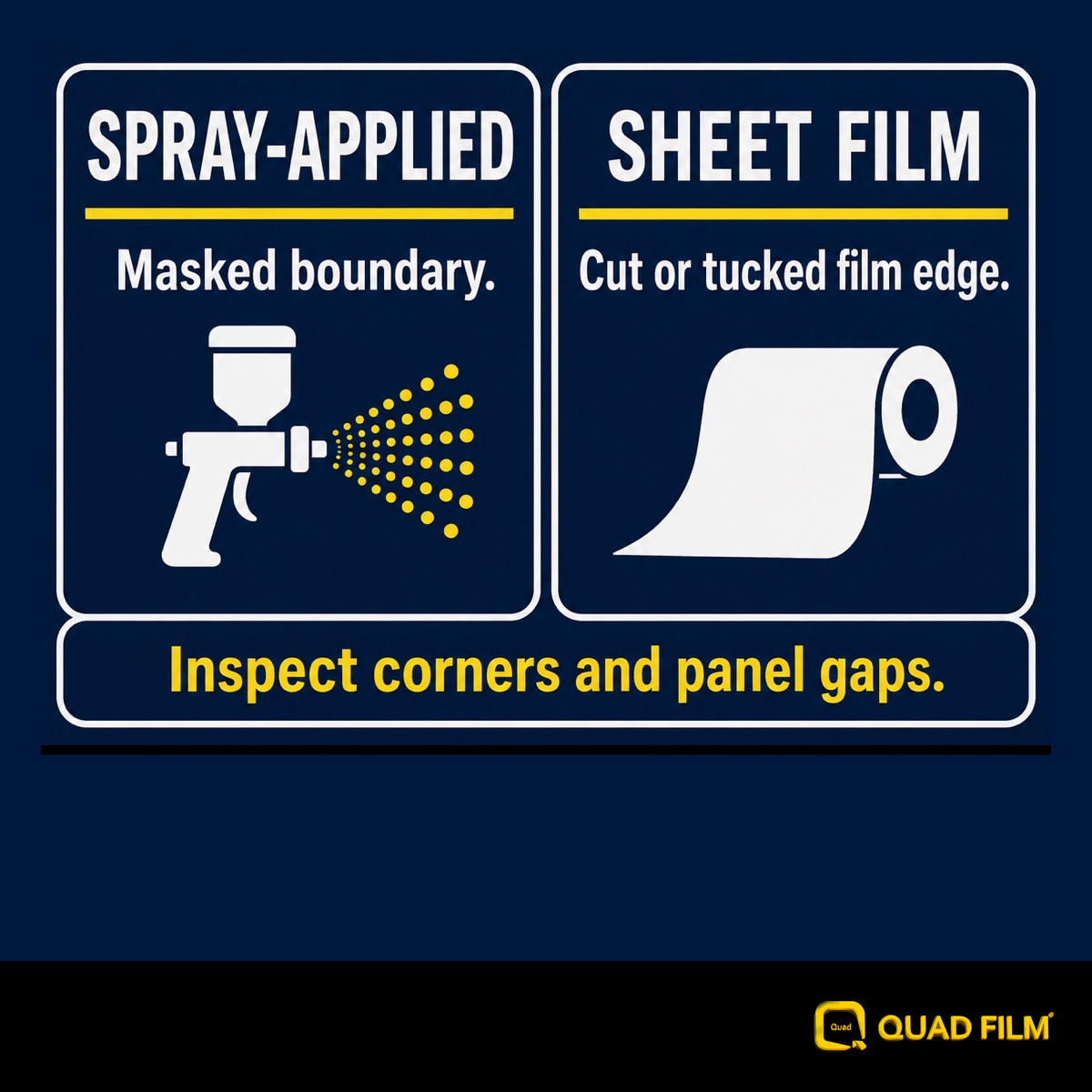
With spray-on PPF, the edge sits wherever the installer masked off the area before spraying. With sheet PPF, it sits where the film was cut or tucked in at the edge of a panel. Around door handles, panel gaps and corners, you can see how neatly the installer has finished the job.
These edges are easier to judge when you look at a finished car in person rather than in photos.
A bonnet with one continuous finish is different from a bonnet protected only across its leading section. In the second case, there is a stopping point across the face of the panel, whichever application method is used. Before booking, the useful question is where that stopping point will be on your car, not whether a brochure calls the result invisible.
Sheet PPF still needs trimming and finishing after it has been positioned. The installer has to control the cut and leave the film neatly fitted around the panel. With a sprayed product, masking defines that boundary instead, so the finishing questions are different.
Corners, handles and narrow gaps deserve their own discussion because a wide photograph of the bonnet may not show them. A finished example is most useful when it has a similar coverage boundary to the one you are considering. If you prefer not to see a line across a panel, that is something to resolve while comparing coverage, before material goes onto the paint.
How are spray-on and sheet PPF repaired or removed?
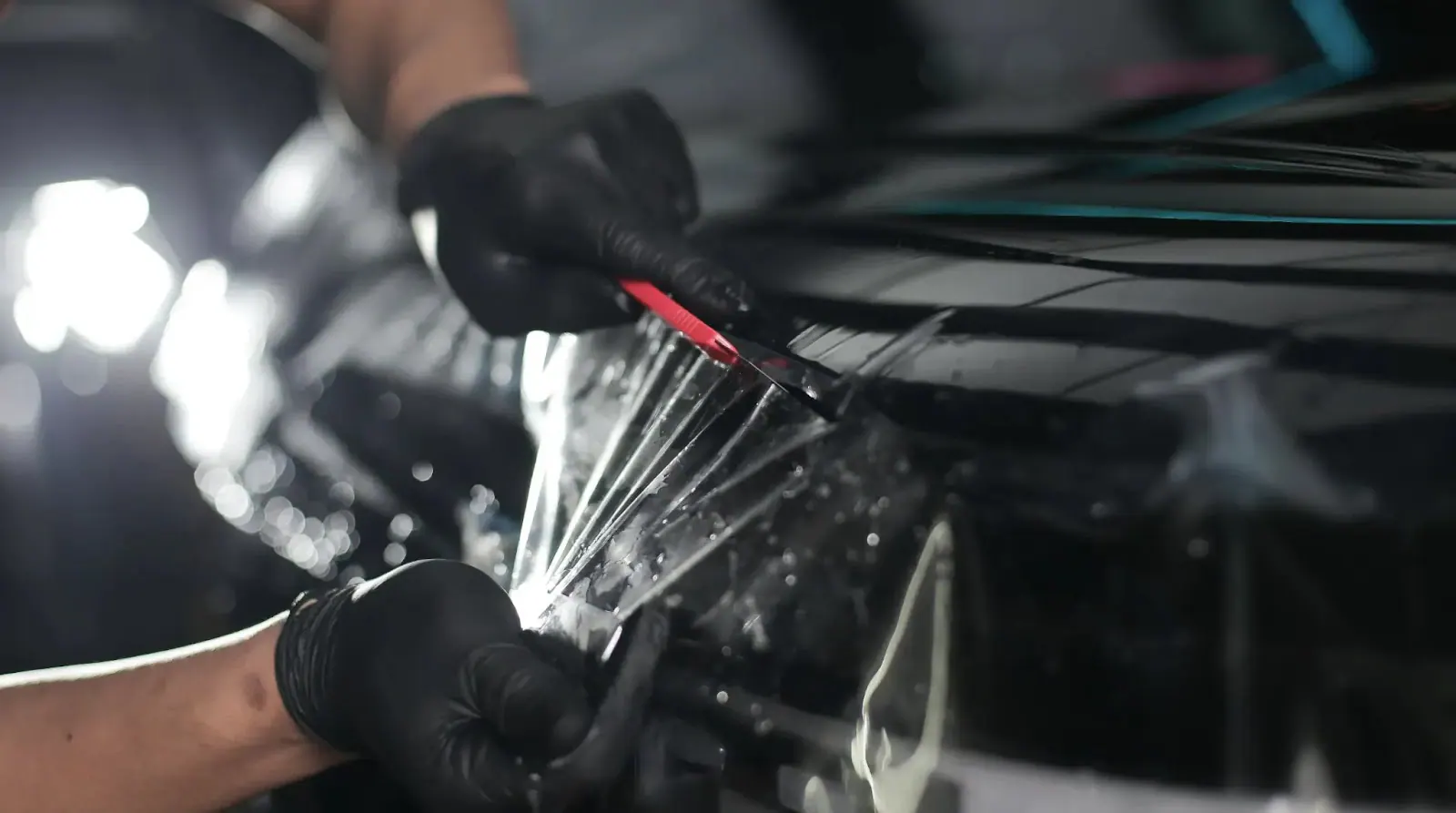
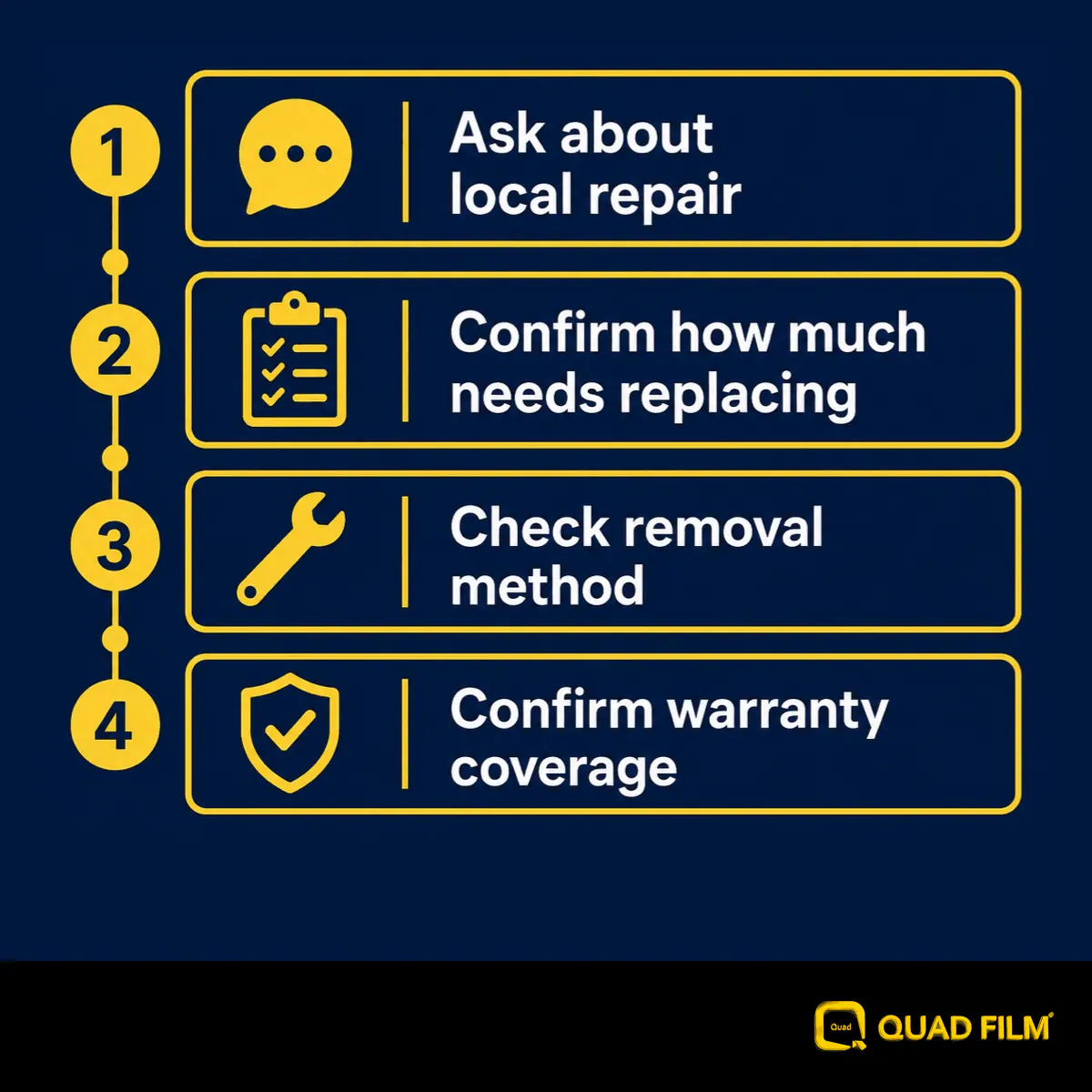
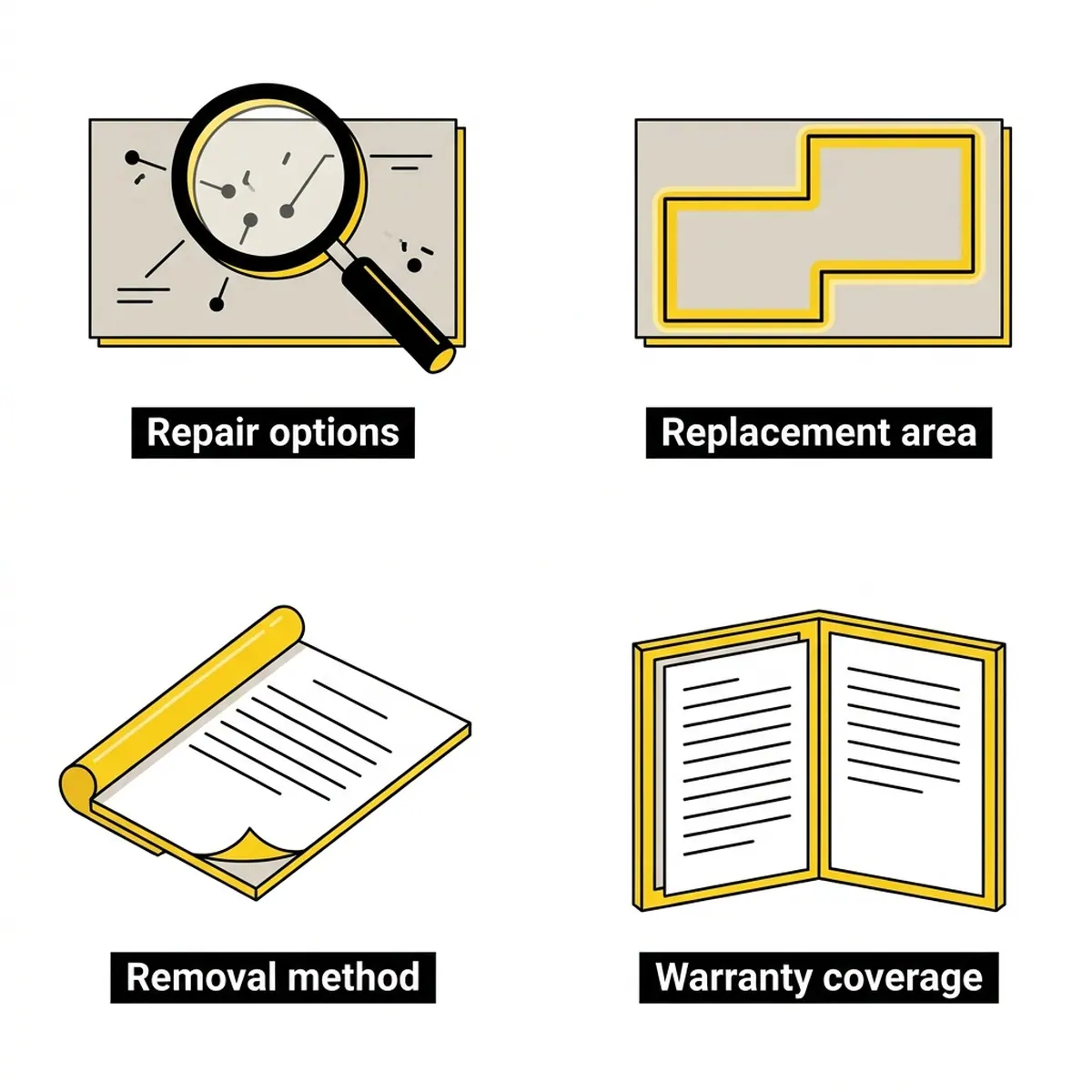
If a piece of sheet PPF gets damaged, it can often be taken off and replaced. How much film needs replacing depends on where that piece of film starts and ends, and whether the damage has gone through to the paint. A damaged area of spray-on PPF may be repaired on just that spot, or a larger area may need to be sprayed again.
Your installer can explain which repair the product allows and whether the repaired spot might look different from the surrounding area.
Removal matters too, because even a product sold as peelable may not come off cleanly from every painted surface. If your car has any repainted panels or paint that is already peeling, it is better to tell the installer before anything is applied. For a wrapped car, the installer can check whether the product's maker approves it for use over vinyl wrap. Before you book either type, you can also check whether the warranty covers how you plan to use the car.
It also matters whether the repair quote includes checking the paint below. A mark in the protection and a chip through to the paint are not the same repair. Replacing a protective layer cannot put missing paint back. If paint work is needed, the shop should explain that separately instead of promising that new protection will hide everything.
A repair plan is more useful when it names the area to be redone. For example, replacing a piece across a bonnet is a different amount of work from replacing a small separate piece. The repair quote should identify the affected area and the work that has to be repeated. That gives you something specific to compare before agreeing to the repair.
Is spray-on PPF the same as ceramic coating?
No. Ceramic coating and PPF do different jobs on your car. Ceramic coating is a thin surface treatment, often used to make cleaning easier, so it is not a replacement for a protective layer meant to take wear and small stone hits instead of your paint.
If you plan to add ceramic coating as well, the usual order for applying sheet PPF and ceramic coating does not automatically apply to spray-on PPF. The spray-on product's own instructions tell you whether a ceramic coating can go on top and how the sprayed layer should be washed.
This distinction is easy to lose when a quote uses words such as liquid protection without naming the product. Two products can both be applied as liquids and still be sold for different purposes. The name, the intended surface and the written care instructions tell you more than the fact that neither comes off a roll.
Ceramic coating is applied as a liquid treatment rather than fitted as a sheet. That does not make it interchangeable with spray-on PPF. If your main concern is chips on the front bumper, the proposal needs to address chips rather than only a glossy finish or easier washing.
Combining treatments also adds another compatibility question. A coating recommended for one sheet film does not automatically suit a sprayed protective layer. The shop needs to check the actual products rather than carry over a familiar process from a different job. You can decline an extra coating if the installer cannot explain what it adds for the protection you have chosen.
How does the finished protection need to be cared for?
Care instructions need to match the exact protection on your car. They should explain when the first wash is allowed, which cleaning products are suitable and what to do if you notice damage. Collection day and the first safe wash may be different points in the schedule, so both need a clear answer.
A familiar wash routine is not automatically suitable for a different product. If you currently use a strong cleaner, a polishing product or a quick-detailing spray, the installer can check it against the new protection's instructions. Keeping the product name is more useful than trying to remember a general warning to be careful with the paint.
The instructions should also distinguish routine cleaning from a problem that needs inspection. A mark that will not wash off, an edge that looks wrong or damage after an impact is worth showing to the shop. Trying to polish, pull or peel the protection yourself can make it harder to work out what happened.
For a sprayed product, care and repair information needs to come from its own supplier. For sheet PPF, it needs to match the fitted film. A handover that only says wash as normal leaves you guessing about the stage the job has reached and the products you can use.
What should a spray-on or sheet PPF quote include?
A useful quote identifies the protection, the panels covered and the preparation included. It also records any proposed coating, the expected collection time and where to find the repair and removal terms. With that information, you can compare two offers without assuming that the same package name means the same work.
Your car's history belongs in that conversation. Repainted panels, existing protection and a vinyl wrap may change what the installer can recommend. Mentioning them before the booking gives the shop a chance to inspect the surface rather than discover something important after work has started.
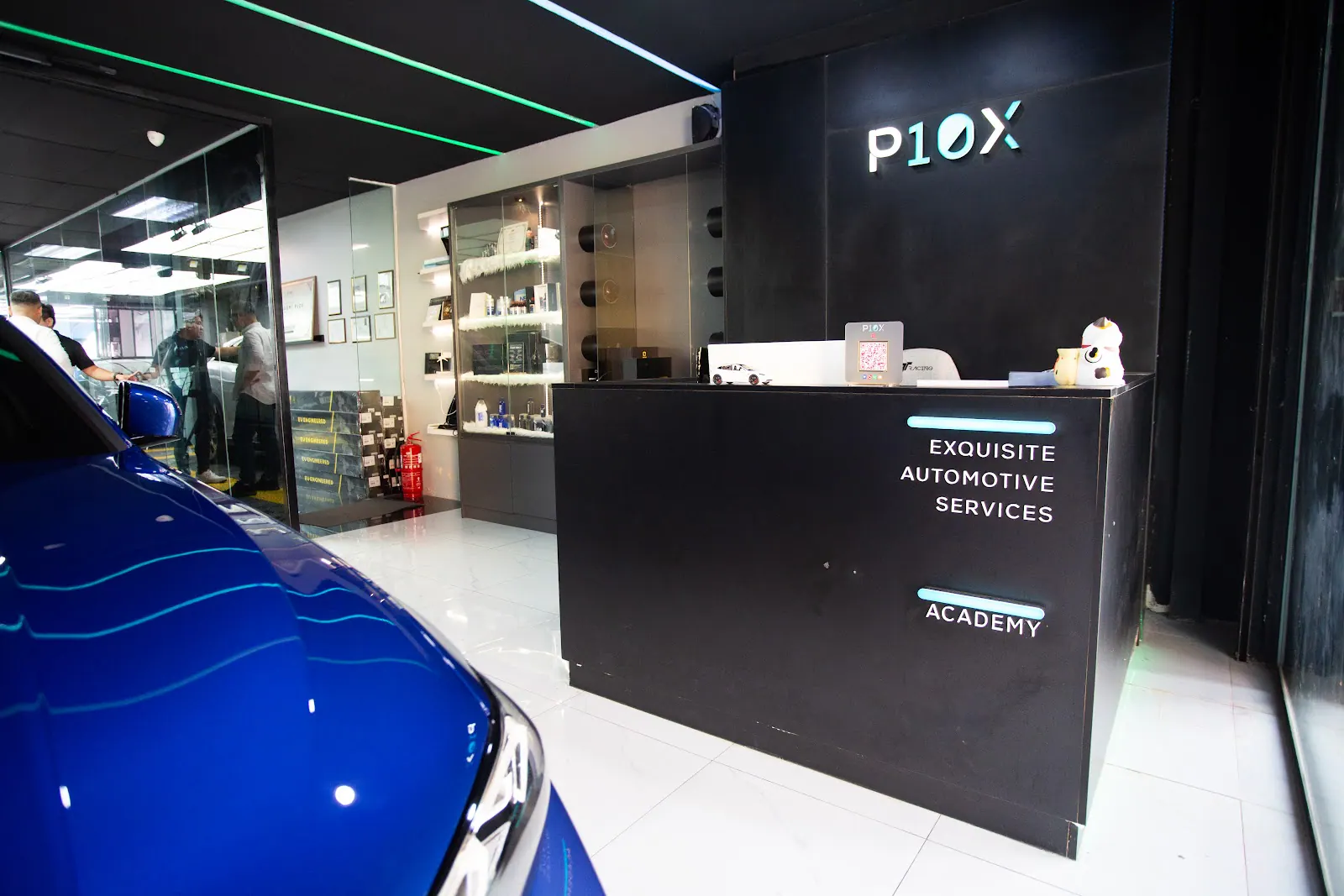
At Quad Film Sunway in Bandar Sunway, the service-counter discussion can cover the sheet film proposed, the panels to protect and the car's history. A paint inspection may still be needed before the work is confirmed. Quad Film fits sheet PPF, so a quote for our service should identify that film rather than leave the application method unclear.
If the two quotes differ, it helps to compare one difference at a time. Wider coverage is not the same upgrade as a different film. Extra preparation is not another protective layer. A clear explanation of those differences lets you decide what you actually want, instead of choosing by an attractive total and discovering the exclusions later.
When is replacing existing protection the better discussion?
Existing protection changes the question from which new product to buy to what should happen to the material already on the car. Film that is lifting or a surface that is damaged needs assessing first. Applying another product over it should not be treated as a way to avoid finding out what has failed.
There may be a sensible repair for a small area, or the shop may recommend removing a larger section. The important part is the reason for that proposal. You can ask whether the problem is in the protection, in the paint or at the boundary between them, and what the proposed work is intended to correct.
This is also the point to separate paint repairs from protection. If both are required, their order and waiting periods need to be included in the plan. Neither spray-on nor sheet PPF is a substitute for repairing paint that you want restored before it is covered.
Which differences matter when choosing spray-on or sheet PPF?
At Quad Film, we fit sheet PPF. Our paint protection film range lists the thickness and finish of each series. When comparing it with a spray-on product, the repair options and written removal instructions matter as well as the specification.
Frequently Asked Questions
What is spray-on PPF?
Spray-on PPF starts as a liquid that is sprayed onto the car and hardens into a protective layer. What it is made of and how it comes off depend on the exact product.
Is spray-on PPF the same as sheet PPF?
No. Spray-on PPF goes on as a liquid, while sheet PPF is a film cut from a roll and stuck to the paint with adhesive.
Does spray-on PPF protect better than sheet PPF?
Spray-on PPF does not protect better just because it is sprayed on. It depends on the exact products, so you can compare what each one has been tested against, how thick the finished layer is, how a damaged area is repaired and what the warranty covers.
Can damaged spray-on PPF be repaired?
It depends on the product and on how big the damaged area is. Some damage can be fixed in one spot, while other damage may need a larger section sprayed again. Before booking, you can ask the installer how they would repair damage on the product they use.
Is spray-on PPF the same as ceramic coating?
No. Spray-on PPF is sold as a protective layer that takes wear instead of your paint, while ceramic coating is a thin surface treatment mostly used to make washing easier.

Aaron Cheah
Car Detailing Expert, Blog Contributor
"He is a car detailing specialist focused on helping Malaysian drivers protect and maintain their vehicle’s paintwork and interior for the long run. He prioritizes clear comparisons, maintenance best practices, and decision checklists so readers can choose the right protection for their budget and avoid costly mistakes. The goal is to make detailing topics easy to understand while setting clear expectations on durability, care routines, and results."
View All ArticlesProtect your Investment today
Don't wait for stone chips to ruin your paint. Speak to our experts about custom PPF and Tinting solutions.