
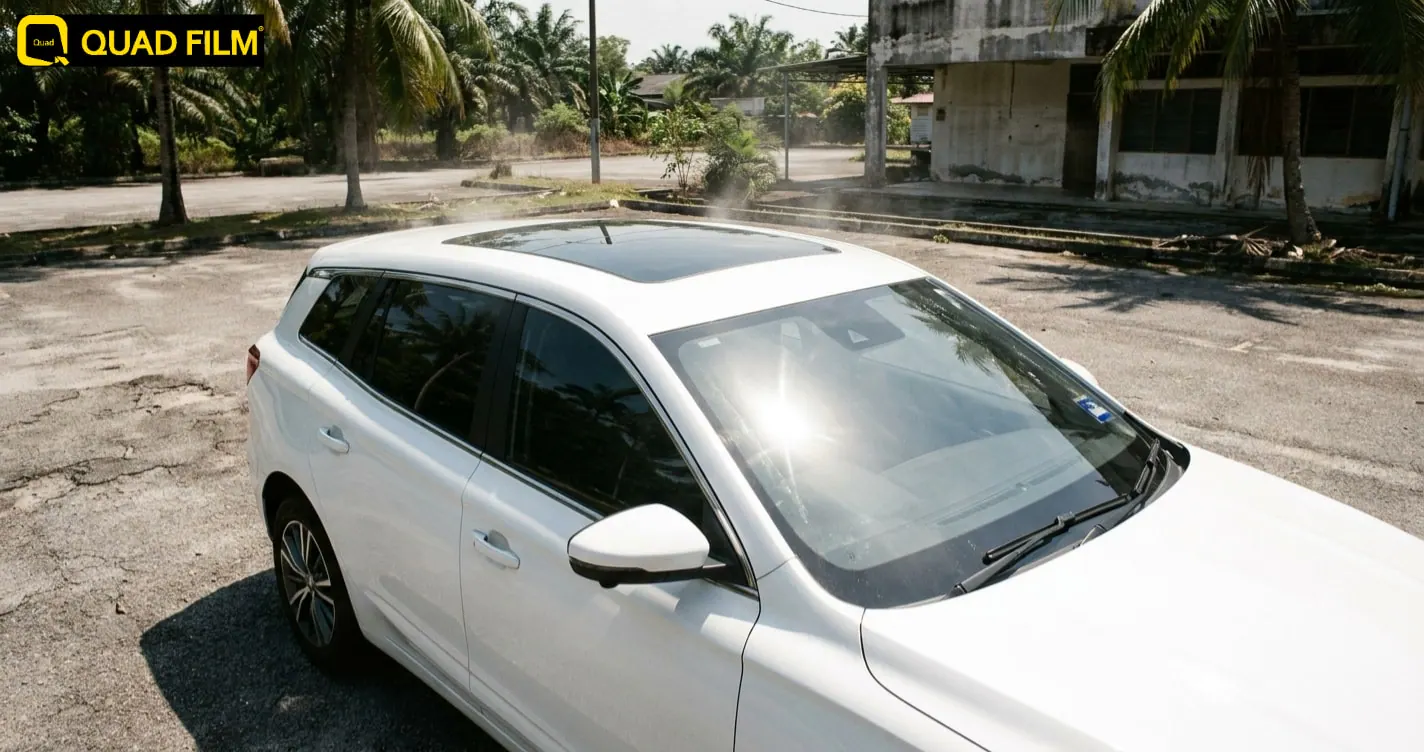
- The panoramic glass roof is the main heat source on the MG S5 EV, so the real fix is sunroof film plus the right window tint, not side windows alone.
- A signal-friendly nano-ceramic film on the windscreen protects the MG Pilot camera area while staying legal.
- Multi-layer sputtered film on the side and rear glass holds its heat rejection for years where cheap film fades.
- Lower cabin heat means less A/C load, which a controlled Quad Film test linked to about a 10 percent power saving.
The right MG S5 EV window tint in Malaysia decides how hot your cabin gets, how hard the air conditioning works, and how much range you give up to heat, and the biggest factor is the panoramic glass roof that owners quietly complain about. The MG S5 EV is an appealing electric SUV, but a large fixed glass roof under tropical sun turns the cabin into a greenhouse if it is left untreated. This guide explains the heat problem honestly and shows the film setup that solves it without dimming the sky view or upsetting the driver assistance system.
The Gap Between the Panoramic Sunroof Promise and Malaysian Heat
MG markets the panoramic roof as a bright, open sky-view experience, and it looks superb in the showroom. Under a Malaysian midday sun the same glass becomes the single largest heat gateway in the car. Owners want to keep the open feeling, not black it out, which is exactly why the solution has to be a heat-rejecting film made for glass roofs rather than a heavy blackout.
It helps to picture how an MG S5 EV actually lives here. It spends hours in open-air mall lots and roadside bays, crawls through traffic under a midday sun that can push the UV index to 11 to 13, and sits out the odd monsoon downpour. The flat glass roof faces straight up at that sky, so on a 35 degree afternoon it gathers far more heat than the vertical side glass ever does.
Why MG S5 EV Owners Feel the A/C Struggle
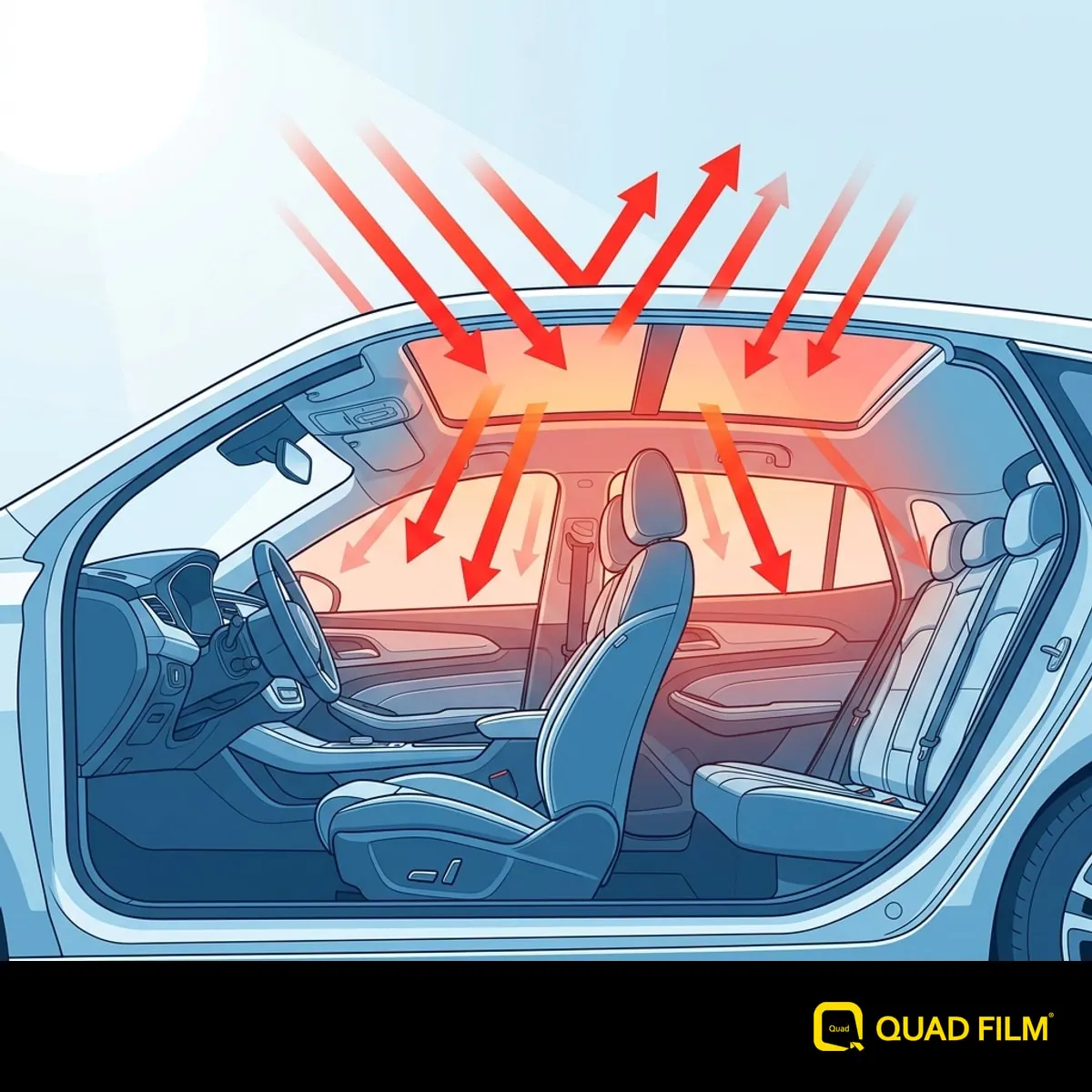
In local MG owner discussions, a recurring theme is that the air conditioning feels like it is working hard, with aggressive recirculation and remote cooling that takes time to bite on a hot day. That is what a large solar load through the glass does, since the cabin keeps absorbing heat faster than the system can shed it. Cutting the incoming heat at the glass is the most direct way to ease that load.
A few factors stack up to make the cabin feel like a greenhouse:
- A large flat glass roof. It lies open to the sky and takes the full overhead sun, unlike vertical side glass that only catches slanted light.
- Open-air parking. Hours in uncovered mall lots and roadside bays let the cabin soak up heat long before you get in.
- Stop and start traffic. Crawling under a midday sun on the PLUS or KESAS gives the air conditioning little chance to get ahead of the heat.
- Remote pre-cooling that runs late. If the glass keeps pouring heat in, remote cooling has to fight a rising load rather than a stable one.
How Window Tint and Sunroof Film Cut Heat on the MG S5 EV
Heat enters through every pane of glass, but not equally. Side and rear windows are vertical and catch slanted light, while the panoramic roof lies flat to the sky and takes the full overhead load. That is why a complete answer treats the roof and the windows as two different jobs with two different films, each chosen for its surface.
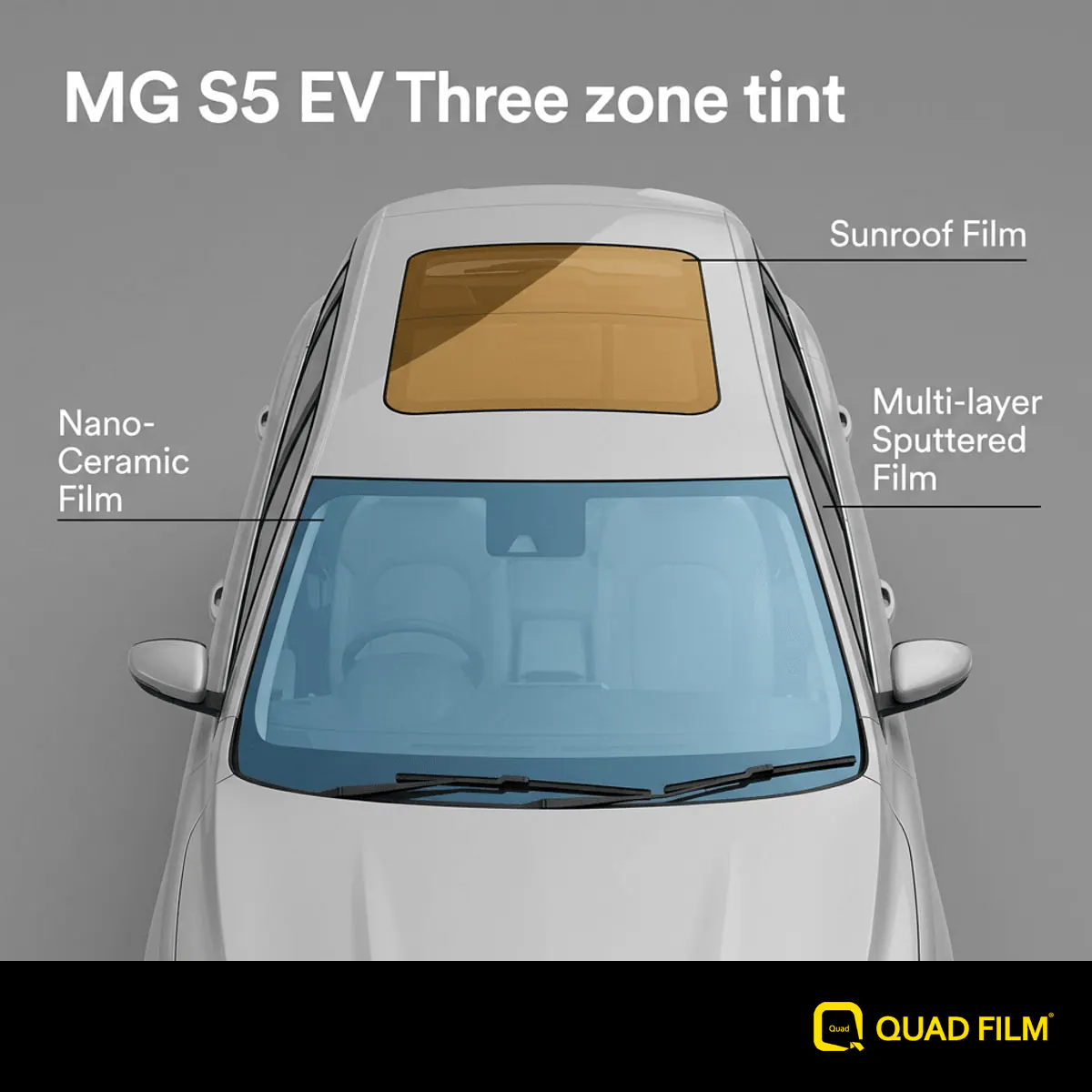
Think of the glass as three separate jobs rather than one. Each surface faces the sun differently and carries a different legal or technical constraint, so the right film changes from pane to pane:
- The panoramic roof takes the heaviest overhead load and needs a dedicated heat-reflecting sunroof film.
- The side and rear glass can run a darker, long-life film for steady heat rejection over many years.
- The windscreen has to stay legal and keep the MG Pilot camera and radio systems clear, so clarity and signal safety come first.
The Three-Layer Tint Setup for the MG S5 EV
Windscreen
Use a high-clarity nano-ceramic film. Quad Film MATRIX is non-conductive and friendly to SmartTag and RFID, which keeps the MG Pilot camera area, toll tag, and keyless entry working while staying within the legal limit. A nano-ceramic film is the right pick here because it is non-conductive, so it avoids the radio interference that some metal films can cause, while its high clarity keeps the camera view and night vision clean.
Side and rear glass
Use a multi-layer sputtered film for long-term heat rejection. Quad Film MEGALUX is a 48-layer film with a 15-year warranty, and METALUX is a 24-layer film with a 10-year warranty, both holding performance far longer than cheap dyed film. Multi-layer sputtered film resists the oxidising and colour shift that age cheaper film early, and it is judged on TSER, the total solar energy it rejects across the full spectrum. Because JPJ sets no limit on the rear glass, you can run a darker, higher-rejection film there.
Panoramic roof
This is the key upgrade. Quad Film EV Sunroof PPF uses 24 layers of rare earth metals, reflects more than 95 percent of heat, blocks more than 99 percent of ultraviolet, keeps a 72 percent visible light level so the roof still feels open, and carries a 5-year warranty. In Quad Film testing it reduced interior temperature from 52 to 22 degrees. A dedicated roof film matters because the flat glass takes the full overhead sun, and keeping a 72 percent visible light level means the sky view stays bright rather than blacked out.
| Glass zone | Recommended Quad Film | What it does | Warranty |
|---|---|---|---|
| Windscreen | MATRIX nano-ceramic | Signal friendly clarity for MG Pilot, toll and keyless, stays legal | 5 years |
| Side and rear glass | MEGALUX 48-layer or METALUX 24-layer | Long-life heat rejection that holds for years | 15 or 10 years |
| Panoramic roof | EV Sunroof PPF, 24 rare earth layers | More than 95 percent heat reflection, more than 99 percent UV, 72 percent VLT, 52 to 22 degrees | 5 years |
Tint and the MG Pilot Driver Assistance and Cameras
The MG Pilot system reads the road through optical cameras, and owners are sensitive to anything that disturbs it. A correctly chosen, high-clarity windscreen film does not block an optical camera, and a non-conductive nano-ceramic film avoids the radio interference that some metal films can cause. For the same reason, note that Touch n Go SmartTAG works on infrared and is not affected by window film at all. The safe approach is a signal-friendly film on the windscreen and a clean install around the camera housing. In practice that means:
- Use a non-conductive nano-ceramic film on the windscreen. It keeps radio systems like RFID toll and keyless entry clear.
- Keep the film high clarity. The MG Pilot camera is optical, so a clean, clear film does not block it.
- Insist on a tidy install around the camera housing. Bubbles or misalignment near the sensor area are what cause complaints, not the film itself.
- Remember SmartTAG is infrared based. It is not affected by window film at all.
What Tint Does for MG S5 EV Range
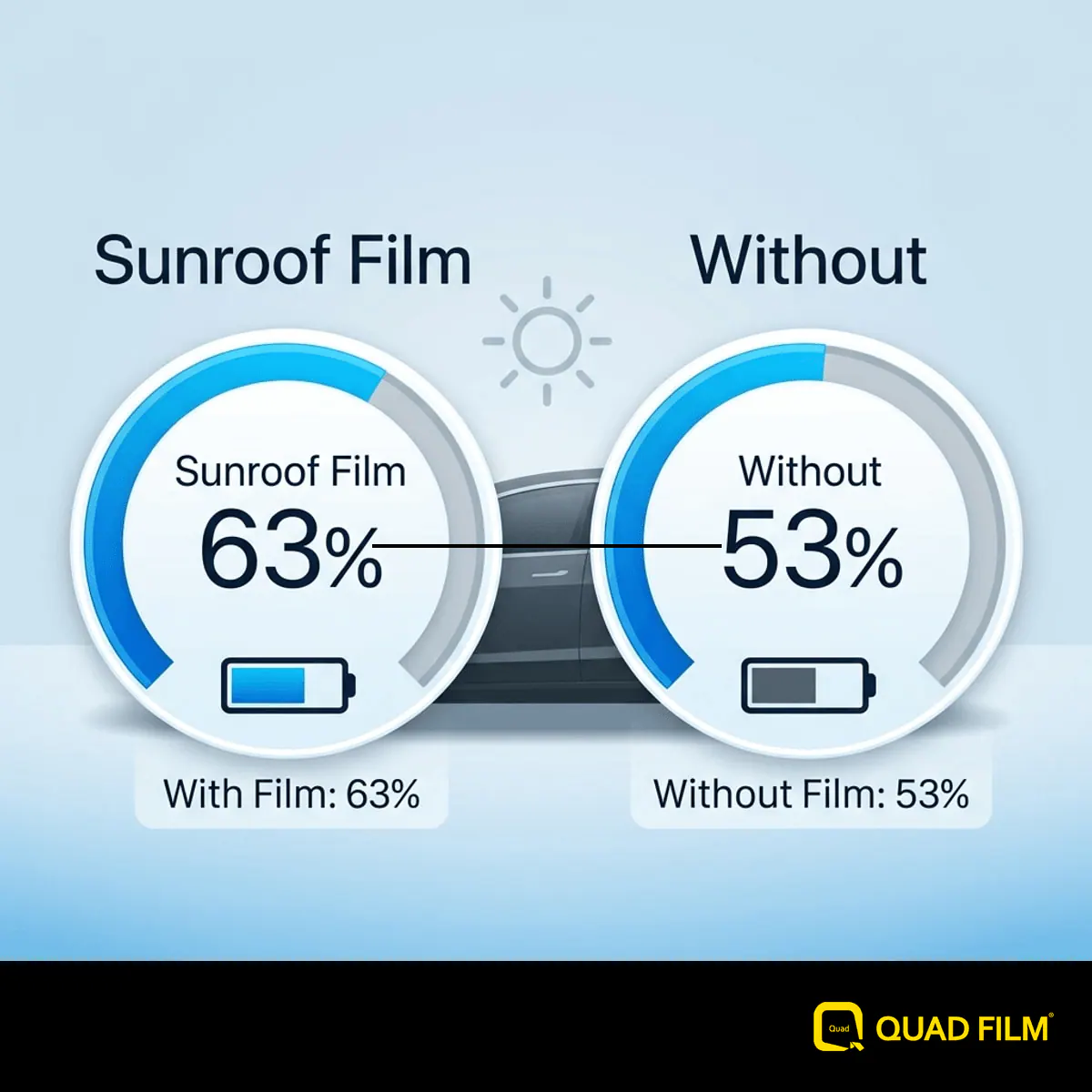
On an electric car the air conditioning is one of the largest loads after the motor itself. When the cabin starts cooler and stays cooler, the system draws less power, and that shows up as usable range. In a controlled Quad Film comparison, a vehicle protected with the sunroof film held 63 percent battery against 53 percent for an unprotected reference after 140 km, which points to roughly a 10 percent power saving in those conditions. Treat that as an indicative figure rather than a guarantee, since real range depends on how you drive.
The reason is simple. When the sunroof film holds the cabin closer to a comfortable temperature, the air conditioning spends less time on full blast and the aggressive recirculation eases off. Every bit of load the climate system does not draw is energy left for range. The effect is largest on the hottest days and after the car has been parked in open sun, which is exactly when Malaysian owners feel the pinch.
JPJ Tint Limits for the MG S5 EV
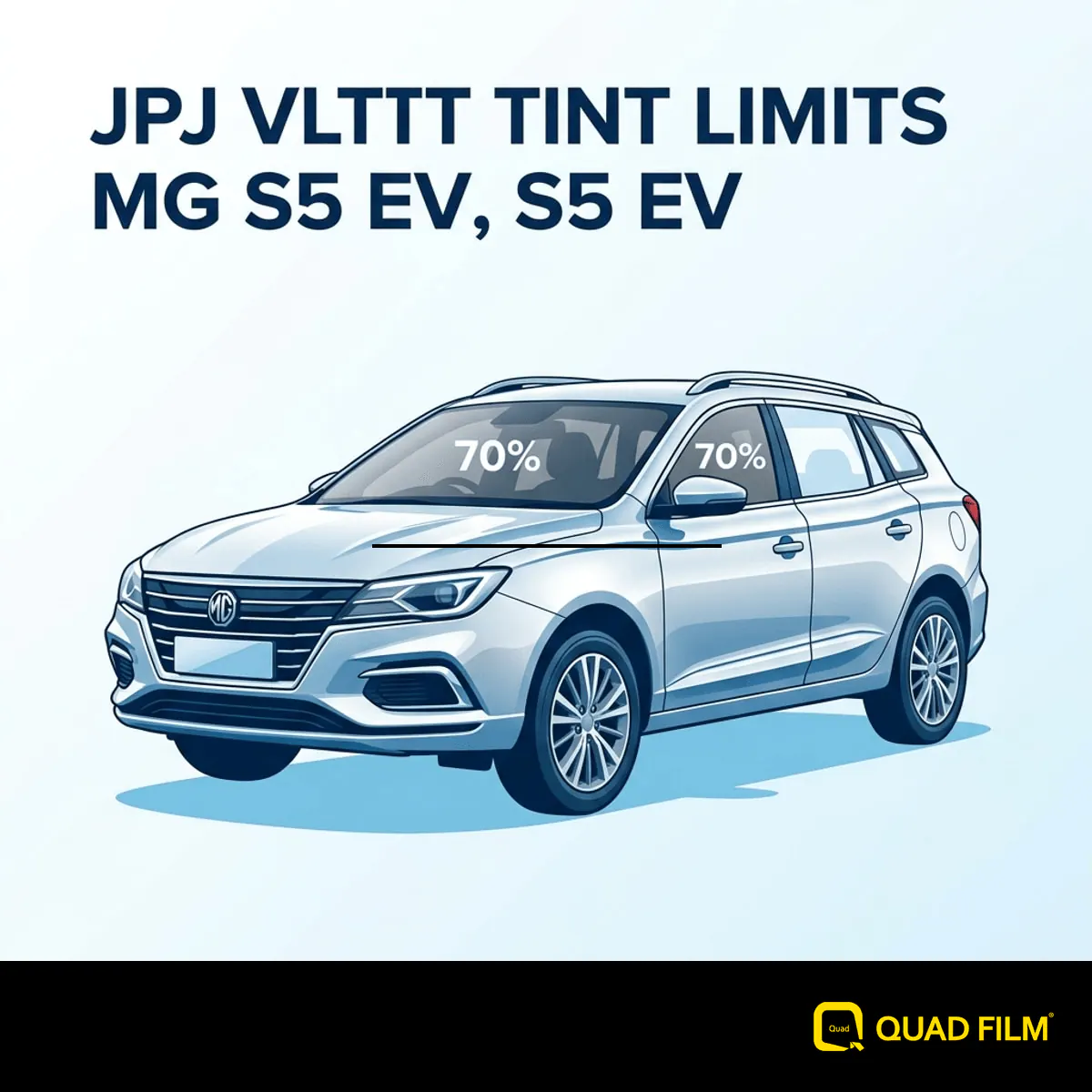
The law is simple. The windscreen and front side windows must allow at least 70 percent of visible light through, and the rear windows have no limit. A reputable installer measures the glass and keeps the front legal while applying darker, high-rejection film to the rear where it is allowed.
Common Mistakes MG S5 EV Owners Make
The first mistake is tinting the side windows but leaving the panoramic roof untreated, which leaves the largest heat source open. The second is fitting a cheap metallic film on the windscreen that interferes with signals. The third is buying on darkness rather than on TSER heat rejection. The fourth is choosing a film with a short or vague warranty that fades within the first couple of years.
A few more traps are worth calling out:
- Accepting a dusty open-air install. Specks and bubbles trapped under the film are permanent and most visible on the large roof panel.
- Not asking for the TSER figure. Darkness is not heat rejection, so compare films on TSER rather than on how dark they look.
- Skipping warranty verification. Confirm the warranty is written and registered before you pay, not promised verbally.
Choosing Tint for Your MG S5 EV
Match the film to the glass. Put a signal-friendly nano-ceramic film on the windscreen, a long-life multi-layer sputtered film on the side and rear, and a dedicated sunroof film on the panoramic roof. That combination keeps the cabin cool, protects the MG Pilot system, and preserves the open sky view that made you choose the car. Ask a verified installer to measure your glass and quote the three-zone setup. You can compare options on the Quad Film window tint page and the EV sunroof film page, then book through the installer directory.
Is the Three-Zone Tint Setup Worth It on the MG S5 EV
For most owners in Malaysia, yes. The panoramic roof is the single largest heat source, so treating it along with the windows pays back in daily comfort, less strain on the air conditioning, and the indicative power saving a cooler cabin brings. You also protect the interior from more than 99 percent of ultraviolet and keep the open sky view that made the car appealing. Set against years of fighting a hot cabin, a quality three-zone setup is the cheaper choice over the life of the car.
Closing
The panoramic roof is the best and the hardest part of living with the MG S5 EV in Malaysia. Treat the roof and the windows as separate jobs, choose signal-safe film where it matters, and you turn the greenhouse back into the bright, comfortable cabin MG promised. For more, see why metal film wins for EVs, how sputtered and multi-layer sputtered film differ, and the same setup for the iCaur 03.
Frequently Asked Questions
Will tint affect MG iSMART or remote A/C?
No. A signal-friendly nano-ceramic film on the windscreen does not block the radio systems behind iSMART, and remote A/C simply has less heat to fight once the glass is treated.
Will the panoramic sunroof still feel open after film?
Yes. The Quad Film EV Sunroof PPF keeps a 72 percent visible light level, so the roof stays bright and open while rejecting more than 95 percent of heat.
How much range can window tint add to an EV?
It is an indirect gain through lower A/C load. A controlled Quad Film test pointed to about a 10 percent power saving, which varies with conditions and driving style.
Is metallic tint safe for MG Pilot driver assistance?
The assistance camera is optical, so a high-clarity film does not block it. Avoid conductive metal film on the windscreen and use a non-conductive nano-ceramic film to keep radio systems clear.
What VLT is legal on the MG S5 windscreen?
The windscreen and front side windows must allow at least 70 percent visible light. The rear glass has no legal limit.
Should I tint the panoramic roof or only the side windows?
Treat the roof first. It is the largest heat source on the MG S5 EV because the flat glass takes the full overhead sun. A dedicated sunroof film reflects more than 95 percent of heat while keeping a 72 percent visible light level, so the cabin cools without losing the open sky view.
Why compare MG S5 EV tint on TSER instead of IRR?
TSER, the total solar energy rejected, measures heat blocked across the full solar spectrum. A single infrared rejection number only describes part of the spectrum, so it can look impressive while the film rejects less total heat. Always compare films on TSER.
Is darker tint cooler on the MG S5 EV?
Not necessarily. Heat rejection comes from the film technology and its TSER, not from how dark the glass looks. A lighter high-rejection film can keep the cabin cooler than a dark dyed film while keeping the front windows legal.
Protect your Investment today
Don't wait for stone chips to ruin your paint. Speak to our experts about custom PPF and Tinting solutions.